
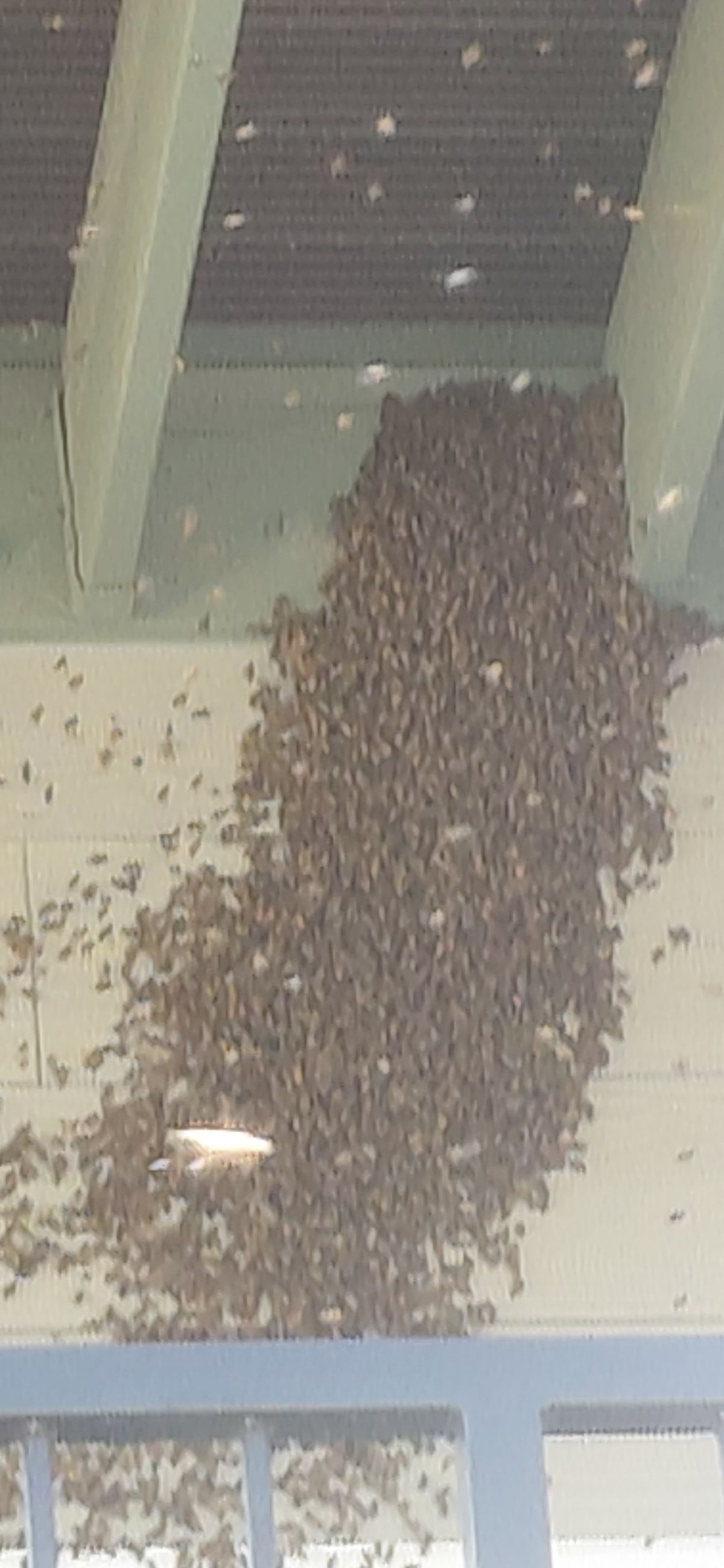
A Beekeeper's Guide to Swarm Season in California
California's Golden Opportunity: Harnessing the Spring Swarm For beekeepers across California, the arrival of spring signals more than just almond blossoms and wildflo...
Read More...May 18, 2026
Home > Blog > Air Pollution’s Hidden Toll on Pollinator Health | Swarmed
January 17, 2026

Pollinators, essential players in our global food systems, are continuing to face significant threats. This year, beekeepers in the United States reported the loss of nearly half (opens in a new tab) of their managed honey bee colonies. Loss of habitat, pesticide use, climate change, and pests and pathogens have all been identified among the causes of this decline.
Now, a growing body of literature is showing that air pollution, generally thought of as mainly a threat to humans, also significantly impacts the health of honey bee colonies. New research underscores the alarming effects of air pollution on bees’ foraging efficiency, memory, and overall health.
Ground-level atmospheric ozone is a main air pollutant and the primary component in urban “smog”. In high concentrations, ozone is already known to cause respiratory problems in humans and reduce yields and growth (opens in a new tab) in plants.
Nitrogen oxide (NOx), produced by burning fossil fuels, is another common pollutant that has the potential to significantly reshape ecosystems and affect pollinators. NOx, along with atmospheric nitrogen, adds excess nutrients to the environment, changing ecosystems and reducing the diversity of pollinator host plants. Studies have also shown an increase in dead and injured bumblebees (opens in a new tab) in colonies that visited plants enriched with excess nitrogen.
Several pollinators, including honeybees, locate and identify flowers by using their antennae to recognize Volatile Organic Compounds (VOCs) in the air. What we think of as the scents of flowers, are really molecules that are carried by the wind and air over long distances, creating trails for pollinators to follow.
In a recent study (opens in a new tab), scientists found that increased ozone concentrations affected the emission of VOCs by plants, changing how long they remained present in the air. Their findings also showed that exposure to ozone leads to decreased antenna activity, and a reduction in the honey bees’ ability to recall scent. This means that not only do the scents of flowers become harder to detect, but the bee’s ability to pick up on scents is also reduced, making it harder for them to find and remember food sources. Colonies depend on scout bees to find flowers in bloom, remember their location, and return to the hive to share the information with forager bees who then return en masse. The researchers also identified for the first time that ozone decreased the amount of superoxide dismutase enzyme, an antioxidant that protects bees from oxidative stress.
This study supports the findings of earlier research (opens in a new tab), which has shown that exhaust fumes from cars, which cause the creation of ozone and NOx in the air, led to an 83–90% decrease in flower visits by pollinators. Further studies have also shown that pollinators can be harmed by particulate pollution. Fine, electrically charged hairs on bees’ bodies, designed to attract pollen, can also draw in other small particles such as dust and heavy metals (opens in a new tab).
Pollinators are not just important in natural ecosystems, they are also indispensable workers in the global food system. According to the UN Food and Agriculture Organization, a third of the world’s food production depends on bees (opens in a new tab).
Honeybees also provide us with honey (roughly 1.8 million tons annually), royal jelly, beeswax, bee bread, pollen, propolis, and honey bee venom. The 2019 Science-Policy Platform on Biodiversity and Ecosystem Services (IPBES) (opens in a new tab) report emphasizes, “Sacred passages about bees in all the worlds’ major religions highlight their significance to human societies over millennia.”
By understanding the effects of air pollution on honey bees, we may be able to use some of the more than 100 million (opens in a new tab) bee colonies across the world as bio-detectives, providing a window into the health of other pollinators and ecosystems at large. Honey bees appear to be acutely sensitive to air pollution, displaying changes in behavior even at average environmental ozone concentrations, and more extreme responses when levels peak.
As the only pollinators that live in such large colonies, honey bees can be used to monitor how environmental changes may be impacting the vast majority of pollinating insects that live seasonally in solitary burrows.
Swarmed offers a unique approach to supporting pollinator health by collecting and analyzing swarm data. By aggregating this data, researchers can identify patterns and trends that may indicate environmental stressors or emerging threats. This information can be used to develop targeted strategies for improving pollinator habitats, mitigating the impact of air pollution, and supporting the overall health of pollinator populations.
Understanding the threats faced by honey bees and other pollinators is essential for researchers, beekeepers, and farmers to be able to continually plan and adapt to changing conditions. Their work is key to achieving UN Sustainable Development Goal 2, ensuring secure global food systems in a changing world.
California's Golden Opportunity: Harnessing the Spring Swarm For beekeepers across California, the arrival of spring signals more than just almond blossoms and wildflo...
Read More...May 18, 2026

A Beekeeper's Guide to Swarm Collection in Idaho Spring has arrived in the Gem State, and with it, the unmistakable hum of honey bee swarms. For beekeepers, this is a...
Read More...May 18, 2026