
How to Identify a Bee Swarm: What You're Looking At and What to Do
Written by Mateo Kaiser, University of California certified Master Beekeeper and 5th generation beekeeper.
Last updated
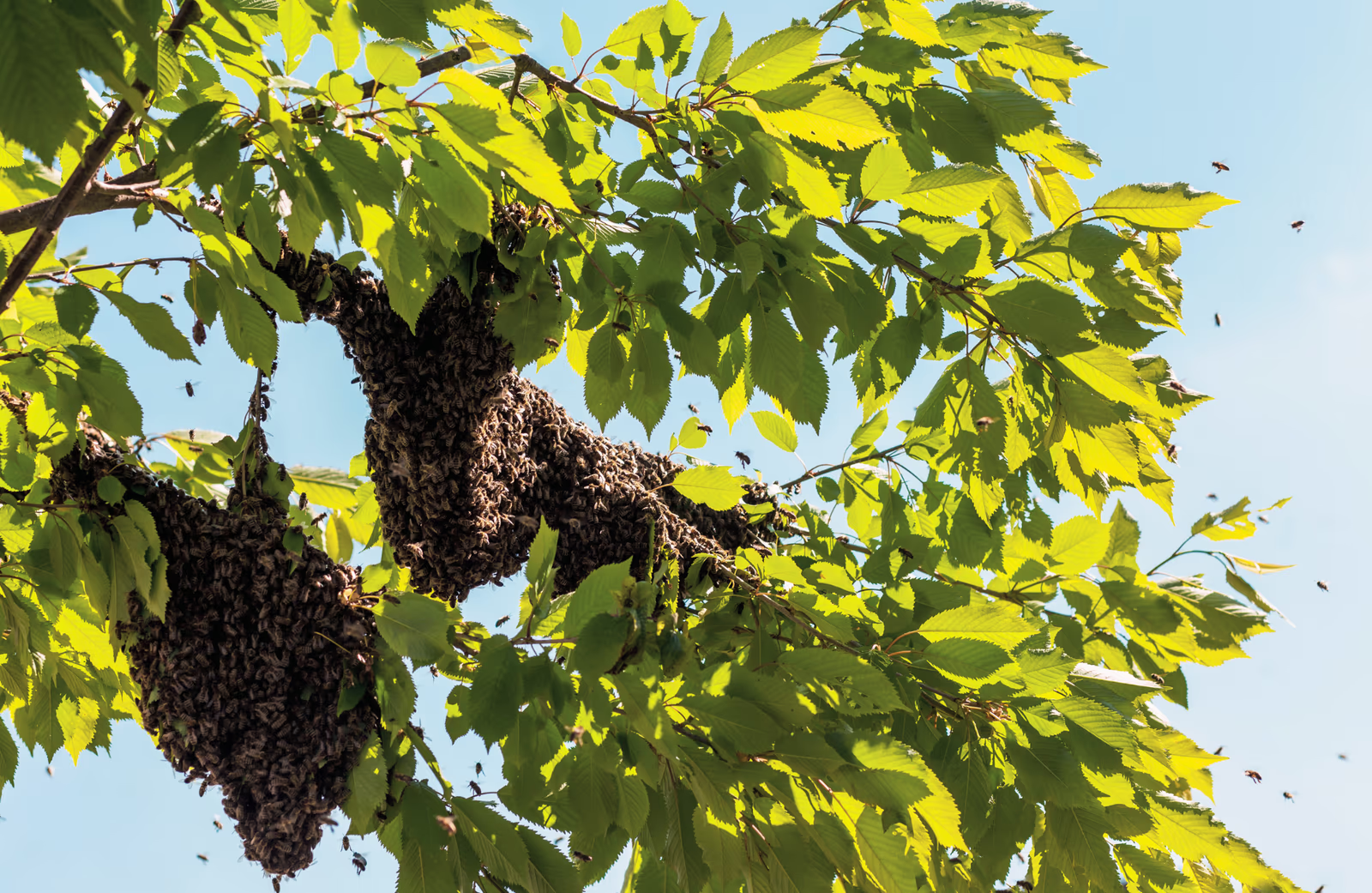
A bee swarm is a honey bee colony moving house. It looks like a dense, teardrop-shaped cluster of thousands of bees hanging in the open from a branch, fence, or eave, with no comb around it. It is calm, and it usually moves on within a few hours to a few days. Bees flying in and out of a gap in a wall, roof, or tree are something else: an established colony.
Add a photo and we'll tell you in seconds what you're looking at. The guide below shows you how to check the answer yourself.
Use this guide to identify what you're looking at. If you're unsure, report it anyway, whether it's honey bees, wasps, hornets, or bumble bees, we'll help you figure out the right next step.
Swarms appear most often during swarm season in spring and early summer. You can track current activity in our bee swarm season report.
Turned out to be wasps or hornets? See wasp and hornet removal options
Common Honey Bee Swarm

Honey Bees (Apis mellifera)
This is the species Swarmed is designed for. Honey bee swarms are often calm while scouts search for a new home.
Swarm Appearance
Honey bee swarms are commonly found clustered on tree branches, fence posts, or building eaves while scouts search for a permanent home. A large, tightly packed cluster of bees hanging from a branch, fence, or other structures. Swarms can contain thousands to tens of thousands of bees.
Key Characteristics
- Size
- Medium, about 15 mm in length.
- Color
- Golden-yellow with dark brown bands.
- Behavior
- Honey bees are social insects and work together in large colonies. Swarms are their way of starting a new colony and are generally very docile. Swarming honey bees are looking for a new home and are less likely to sting unless provoked.
Why Honey Bees (Apis mellifera) Matter
Honey bees are crucial pollinators and are often protected due to their importance in pollinating food crops and wild plants. If you spot a honey bee swarm, reporting it through Swarmed connects you with a local beekeeper who can relocate the colony safely. According to research by Dr. Thomas Seeley at Cornell University, fewer than 1 in 4 swarms survive on their own. A beekeeper changes those odds entirely.
Swarm or established colony? What 17,512 reports show
Swarmed received 17,512 bee reports between March 2024 and August 2026. Two things in them separate a swarm from a colony that has already moved in: where the bees are, and how long they have been there.
| Clue | Swarm | Established colony |
|---|---|---|
| Where it is | In the open: on a branch, a bush, a fence post, or an eave | Inside something: a wall, a roof, a chimney, or a hollow tree |
| What you see | A hanging cluster of bees, with no comb | Bees flying in and out of one gap, with the comb hidden inside |
| How long it has been there | 78% of clusters on a tree or bush had been there a day or less | 73% of colonies inside a building had been there a week or more |
| What happens next | It leaves within a few hours to a few days | It stays until it dies out or is removed |
| Who can help | A beekeeper collects it, usually for free | A beekeeper cuts it out of the structure, which is a bigger job |
Size helps too: two in three clusters reported in the open were between a rugby ball and a basketball (68%).
“Swarm clusters are ephemeral by nature and therefore generally don't need to be managed.”
How we counted: every report made to Swarmed from 20 March 2024 to 31 August 2026, leaving out test reports and reports our photo check flagged as wasps. How long the bees had been there is the reporter's own estimate: 7,083 people reporting bees on a tree, a bush, or a building gave one. Size was optional, and 8,263 people reporting a cluster in the open gave it. People sometimes misjudge what they are looking at, so read these figures as a strong guide rather than a rule.
Common Look-Alikes
Not sure what you're looking at? Report it and we'll help you identify it.

Wasps
Swarm Appearance
Wasps do not swarm in the same way honey bees do. They are solitary or live in smaller colonies. If you see a large number of wasps, they are likely near a nest. Not sure if it's bees or wasps? Report it anyway and we'll help point you in the right direction.
Key Characteristics
- Size
- Variable, but generally slender and longer than honey bees, up to 30 mm.
- Color
- Bright yellow and black patterns.
- Behavior
- Wasps can be more aggressive than honey bees and are capable of stinging multiple times. They are carnivorous and often seen around human food sources. Unlike bee hives, wasp nests may be found in the ground.
Why Wasps Matter
Despite often being seen as a pest, wasps play an important role in keeping ecosystems balanced. They eat pests, and some wasps are also important pollinators, just like bees!
Confirmed it's a wasp or hornet nest and you need it dealt with? See our wasp removal options.
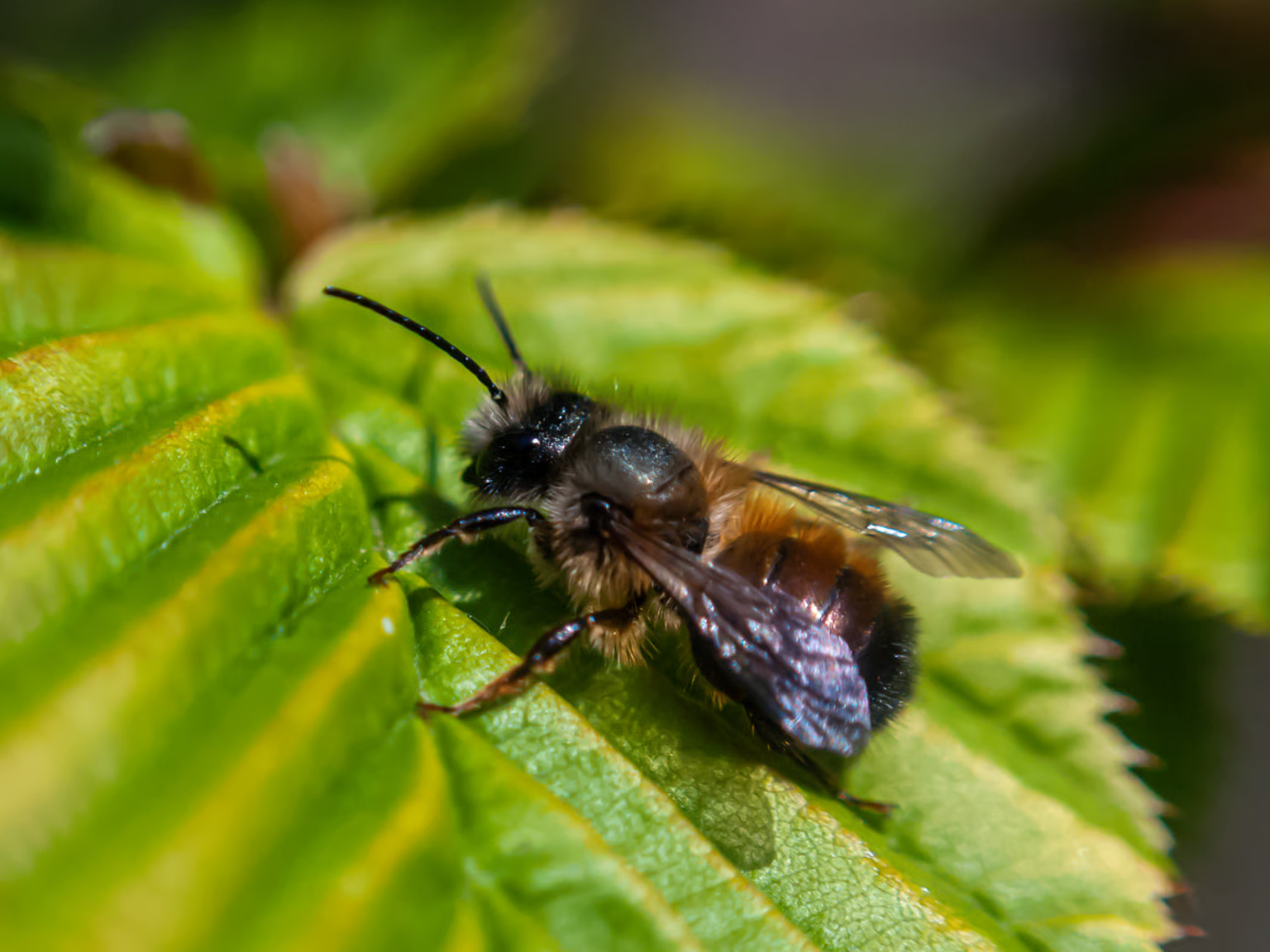
Mason Bees
Swarm Appearance
Since mason bees are solitary, you won't find them swarming. You might see many individual bees near nesting sites, often in holes in wood or the ground.
Key Characteristics
- Size
- Small, about 12 mm in length.
- Color
- Metallic blue or green.
- Behavior
- Mason bees are solitary and do not form colonies or swarms. They are excellent pollinators and are often encouraged in gardens.
Why Mason Bees Matter
Mason bees are peaceful and beneficial for pollination. They are a sign of a healthy garden and do not require intervention by a beekeeper or pest control service.
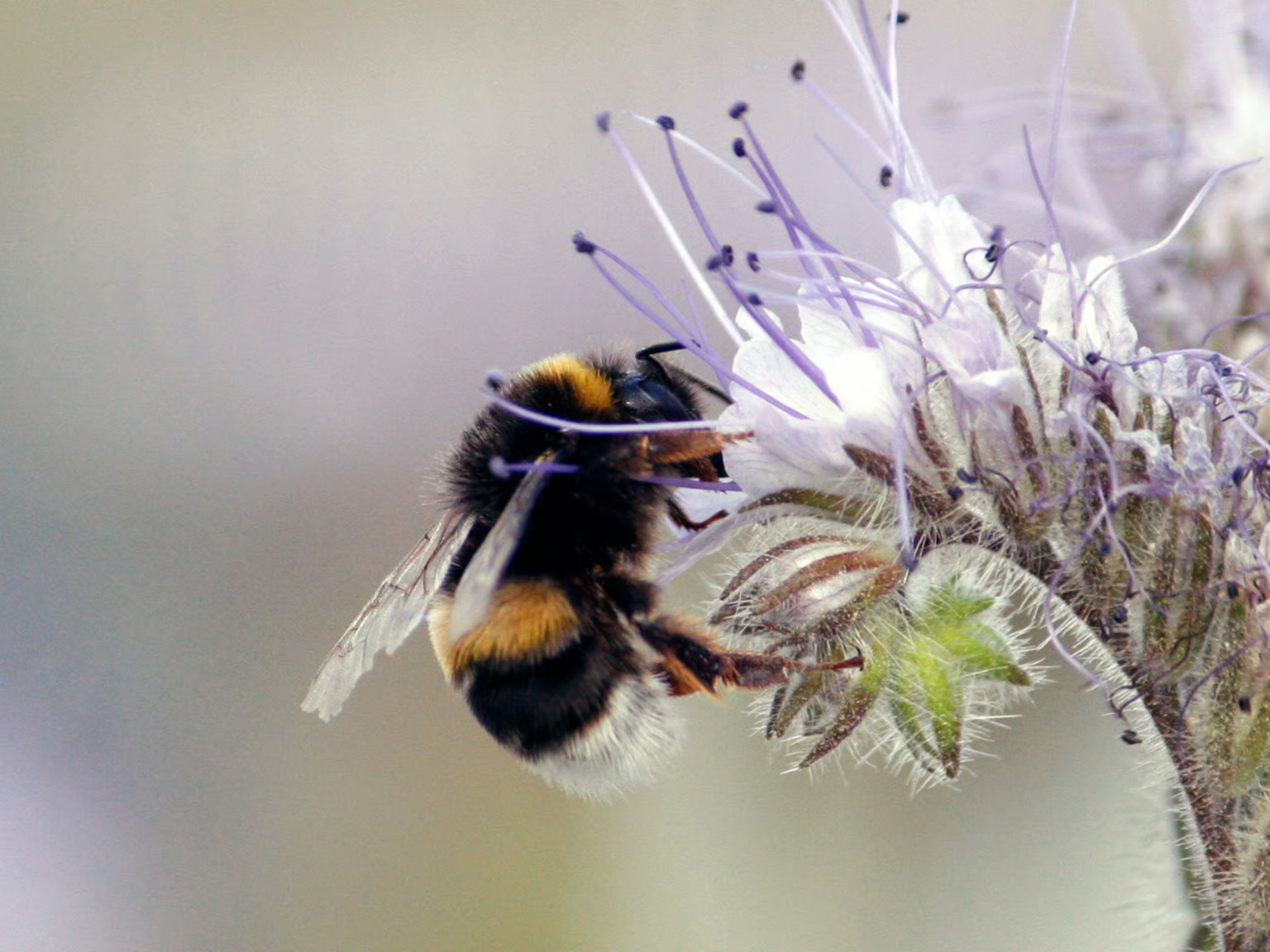
Bumblebees
Swarm Appearance
Bumblebees do not form swarms. If you see a group of bumblebees, they are likely foraging or have a nest nearby.
Key Characteristics
- Size
- Large and robust, up to 25 mm.
- Color
- Black with broad yellow or orange bands.
- Behavior
- Bumblebees are social but form smaller colonies than honey bees. They can appear aggressive but are less likely to sting unless their nest is disturbed.
Why Bumblebees Matter
They are important pollinators and are generally not a concern unless their nest is in a problematic location.
Frequently Asked Questions
↳A honey bee swarm appears as a large, tightly packed cluster of bees hanging from a surface, a tree branch, fence post, or building eave are common locations. Swarms can range from a few hundred to tens of thousands of bees and are usually teardrop or oval shaped.
↳Honey bee swarms are generally very calm. The bees have no hive to defend and are focused on finding a new home. Avoid disturbing them and they are unlikely to sting. Do not spray them with water or pesticide.
↳Honey bees are golden-yellow with dark brown bands and appear fuzzy due to their body hair. Wasps are slimmer, smoother, and have sharper yellow and black markings. Wasps also do not swarm in the same way honey bees do, if you see a large cluster hanging together, it is almost certainly honey bees.
↳Stay calm, keep people and pets away, and report it free on Swarmed. We'll connect you with a local beekeeper who can relocate the colony safely. Honey bee swarms are temporary and will usually move on within a few hours to a few days if left undisturbed.
↳A swarm typically stays in one location for a few hours to a few days while scout bees search for a permanent home. If you want the swarm removed before it moves on, report it through Swarmed for a fast beekeeper response.
↳Report it once and let the calling happen for you. In the UK you can also use the British Beekeepers Association's swarm collector map, which lists volunteer collectors by postcode for you to ring yourself. Swarmed works the other way round: you file one free report, we alert the nearest available beekeepers, and you are told who is coming. Both routes are free to the public.
↳Usually not. Most UK councils do not run a pest control service for bees or wasps and will point you to a private contractor. For honey bees that is rarely needed: a swarm resting in the open is normally collected free by a beekeeper. Bumblebee and solitary bee nests are best left alone and die back on their own. A wasp or hornet nest is the case where a private pest controller is the right call.
↳A swarm collector is a beekeeper who comes out to collect a honey bee swarm and rehome it. It is the usual term across the UK and Ireland, where North America would say swarm removal or swarm catching. County associations often appoint collectors, sometimes alongside a swarm coordinator or swarm liaison officer who fields the calls. On Swarmed the same job goes to whichever nearby beekeeper accepts your report first.
Found a bee swarm? Report it free and we'll connect you with a local beekeeper for bee-friendly removal.
Swarming: bees, wasps, and bumblebees
↳No. What people call a wasp swarm is not the same event at all. A honey bee swarm is a colony moving house: thousands of bees leave together with a queen and settle in the open as a hanging cluster while scouts look for a new home. Wasps never do this. A cloud of wasps means you are near their nest and they are defending it, so the crowd gets thicker the closer you go. A bee swarm has no nest and nothing to defend, which is why it stays put and stays calm.
↳No. Bumblebee colonies are small, often just a few dozen to a few hundred, and they do not reproduce by swarming the way honey bees do. If you are seeing a lot of bumblebees in one spot, there is a nest nearby, usually in a cavity like a compost heap, a bird box, decking, or a hole in the ground. You may see males hovering around the entrance, which looks like activity but is not a swarm. Bumblebee nests die back on their own at the end of the season, so the usual advice is to leave them alone.
↳A bee swarm is a structure made of insects: a dense, teardrop-shaped cluster on a branch, fence, or eave, mostly still, with a halo of bees flying around it. A so-called wasp swarm is loose insects around a structure: the papery nest stays put while the wasps fly fast and erratically around it. The simplest test is to look for something built. A grey papery shell, open cells, or a single entrance hole means a nest, so wasps or hornets. If the insects are themselves the shape, it is a swarm.
↳A swarm of bees is a honey bee colony in the middle of moving house. The old queen leaves with roughly half the workers, and they settle in the open, usually on a branch, a fence, or under an eave, in a dense hanging cluster while scout bees look for a permanent cavity. It is reproduction, not an attack: the colony has divided in two. The cluster is temporary and normally moves on within a few hours to a few days.
↳Usually a few hours, sometimes two or three days. The cluster holds while scouts search and argue over candidate cavities, and it leaves the moment enough of them agree on one. That is the whole window for a beekeeper to collect it, which is why swarm reports are worth making straight away rather than the next morning.
↳No, though it can look like it. Masonry bees, also called mortar or mason bees, are solitary: each female makes her own nest in soft mortar, brickwork, or a wall cavity. In spring dozens may fly around the same wall at once, which reads as a swarm but is many individuals nesting side by side rather than one colony moving house. They are not aggressive, rarely sting, and do not need removing.
Sources
- Thomas D. Seeley, Life-history traits of wild honey bee colonies living in forests around Ithaca, NY, USA, Apidologie, 2017.
- Thomas D. Seeley, Life history strategy of the honey bee, Apis mellifera, Oecologia, 1978.
- E. C. Mussen, Pest Notes: Removing Honey Bee Swarms and Established Hives, UC Statewide IPM Program (UC ANR Publication 74159).
- Swarmed report data, March 2024 to August 2026, counted as described above.
Still not sure what's outside your window?
Report it and a beekeeper will look at your photo. It's free, and it's the fastest way to a real answer.