

Report the Bees
Fill out a quick, free report.
Honey bee swarms should always be relocated by a beekeeper, never exterminated.
Report it free. We'll connect you with a local beekeeper near you for fast, bee-friendly removal and relocation.
11,000+ local beekeepers are ready to respond in minutes.
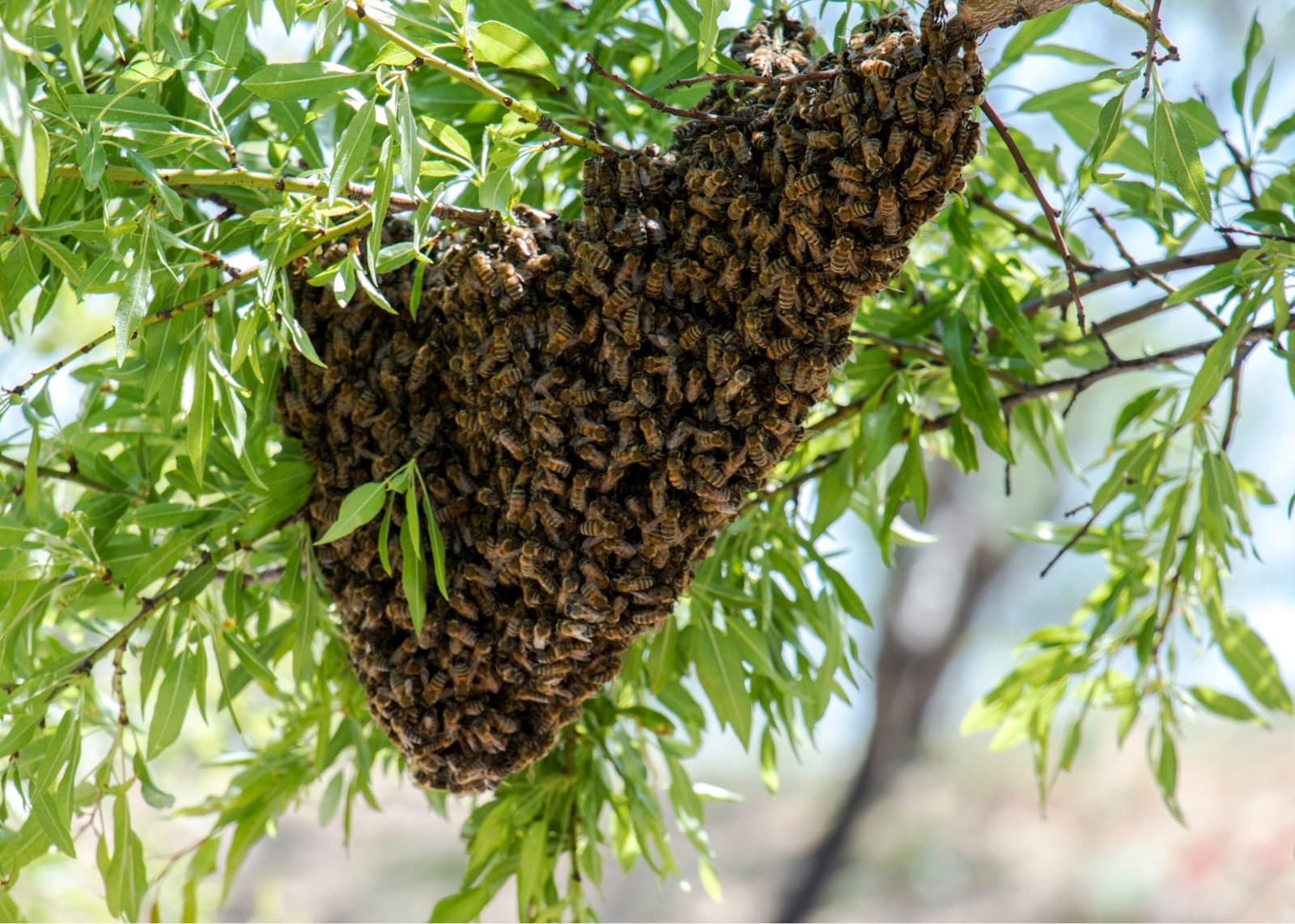
135 million bees protected, pollinating 353 billion blooms
focused on safe and ethical honeybee relocation
 May 2026
Also featured by




Fill out a quick, free report.
Honey bee swarms should always be relocated by a beekeeper, never exterminated.

We match you with your nearest available beekeeper.
Using Swarmed is free. For complex removals your beekeeper may offer a fair quote.
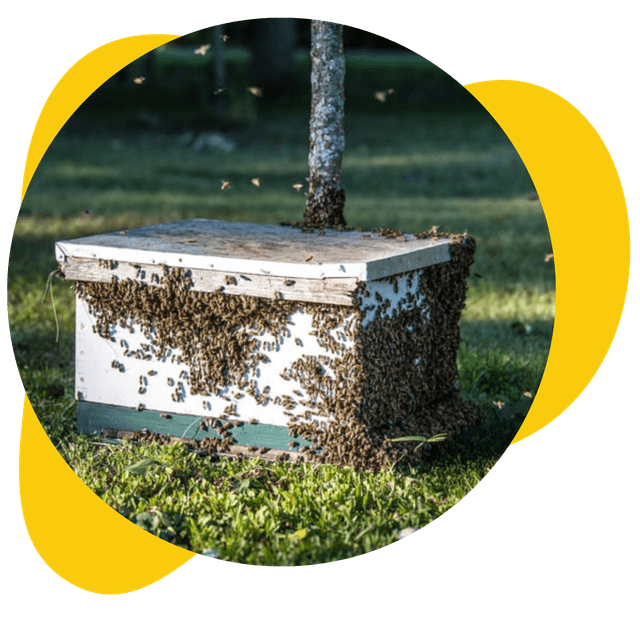
The bees are safely removed and rehomed.
Your beekeeper relocates the colony to a managed hive, protecting our critical pollinators.
Fill out a quick, free report.
Honey bee swarms should always be relocated by a beekeeper, never exterminated.
We match you with your nearest available beekeeper.
Using Swarmed is free. For complex removals your beekeeper may offer a fair quote.
The bees are safely removed and rehomed.
Your beekeeper relocates the colony to a managed hive, protecting our critical pollinators.
Trusted nationwide swarm response
Loading latest reviews...
Report a SwarmSwarming is how honey bee colonies reproduce. Thousands of bees leave their hive with their queen to find a new home, a hollow tree, a wall cavity, or wherever their scouts lead them. If you spot one clustered somewhere it shouldn't be, stay calm. They're not aggressive. Report it free on Swarmed and a local beekeeper will take it from there.
Not sure what you're looking at? Report it anyway. Whether it's honey bees, wasps, hornets, or bumble bees, we'll help point you in the right direction.


Our beekeeper network is ready to provide bee-friendly removal and relocation of honey bee colonies to managed hives where they can thrive.
According to Dr. Thomas Seeley (The Lives of Bees, 2019), fewer than 1 in 4 swarms survive on their own. A local beekeeper changes those odds entirely, keeping those colonies alive and pollinating 1 trillion blooms.
Reporting is always free, and a beekeeper collecting a swarm resting in the open normally charges nothing. The answers below cover the cases where that changes, who to call, what live removal means, and how beekeepers get the bees.
Reporting is free. Swarmed never charges the public to report a swarm or to be connected with a beekeeper, and a contribution to Swarmed is suggested afterwards but never required. Most reporters chip in around $12, but your report is handled either way. The removal itself is normally free too: a beekeeper collecting a swarm resting in the open does not usually charge. It can depend on the situation, though, and an unusually difficult retrieval or an established colony inside a structure may be quoted.
Usually, but not always, and it depends on the situation. A swarm is a cluster of bees resting in the open while they look for a new home, and a beekeeper will normally collect and relocate it at no cost. An unusually difficult retrieval, for example one very high up or hard to reach, may be quoted by the beekeeper. An established colony living inside a wall, roof, floor or tree cavity is a different job called a cutout: the comb and honey have to be removed, so that is paid work. Swarmed itself never charges the public either way.
Beekeepers, and only if they choose to. Swarmed's pricing page is for beekeepers who receive swarm alerts, not for the public. There is a free beekeeper plan, and a pay-what-you-want contributor plan that adds text message and WhatsApp alerts plus seasonal insights. Members of the public never pay Swarmed to report a swarm.
No. When a cutout is quoted, that arrangement is between the homeowner and the beekeeper or removal professional. Swarmed does not set the price, collect it, or take a share.
For a honey bee swarm, a beekeeper rather than an exterminator. An exterminator kills the colony with chemicals; a beekeeper collects the bees alive and relocates them to a managed hive, normally free of charge. One free report on Swarmed reaches the nearest available beekeepers, and the first to accept it contacts you. For wasps or hornets, a pest controller is the right call.
Live bee removal means the bees are collected alive and relocated instead of being killed. For a swarm resting in the open, a beekeeper coaxes the cluster into a box and rehomes it in a managed hive, usually within a day of the report and normally at no charge. For a colony living inside a wall, roof or floor, live removal is a cutout: the comb is cut out and the bees go with it, which is paid work quoted by the beekeeper.
By signing up free and setting the area they cover. Every swarm or cutout reported inside it is sent to them by email the moment it comes in, and contributors also get it by text message and WhatsApp. The first beekeeper to claim the report gets the reporter's details and keeps the bees. There is no association membership, no queue and no swarm list to get onto.
Spotted bees now? Report the swarm for free and a local beekeeper takes it from there.
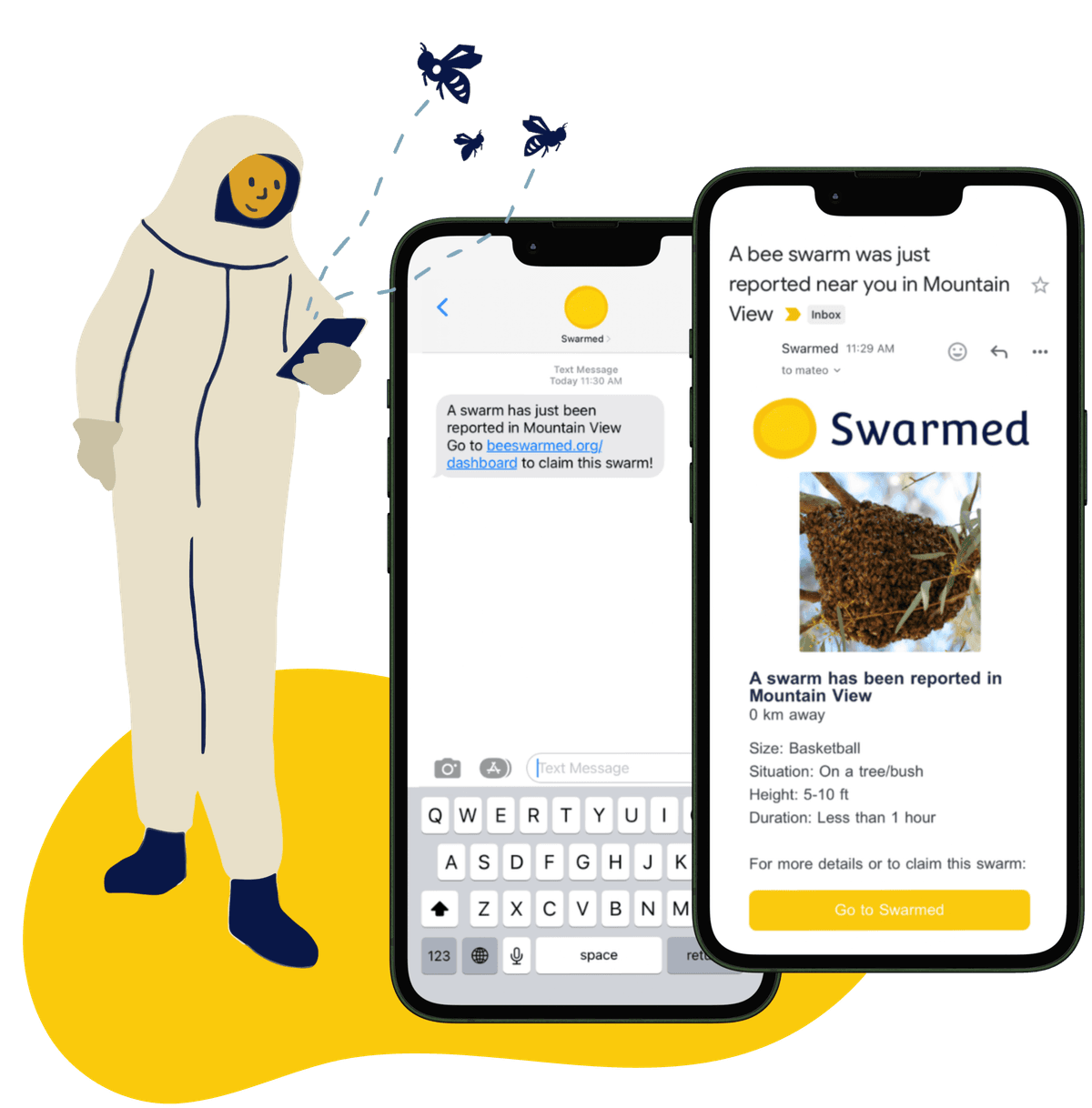
Get free text, WhatsApp, or email alerts the moment a swarm or cutout is reported near you. We've sent over 340,000 alerts to beekeepers while keeping your data private and giving you seasonal insights into local swarm activity.
Every report helps us understand where and when swarms happen. We've mapped over 22,000 swarm reports, and we use that research to build practical tools for beekeepers: seasonal swarm forecasts, regional activity maps, and local trend insights to help their colonies thrive.