A Sure Sign of Spring in the Cowboy State: The Honey Bee Swarm
Across the vast landscapes of Wyoming, from the high plains of Cheyenne to the riverbanks of Casper and the mountain valleys of Jackson, the arrival of warmer weather signals a remarkable natural event: the honey bee swarm. While the sight of a large, buzzing cluster of bees can be startling, it’s a positive sign of a healthy and growing honey bee population. Understanding the Wyoming bee swarm season is the first step in helping these essential pollinators and supporting local beekeepers.
Swarming is the natural method honey bee colonies use to reproduce. When a colony becomes too large for its current home, the queen bee will leave with about half of the worker bees to establish a new one. This traveling group is a swarm. The bees that remain behind will raise a new queen and continue the original colony. This process typically peaks during late spring and early summer, when flowers are in bloom and resources are plentiful.
Is a Bee Swarm Dangerous?
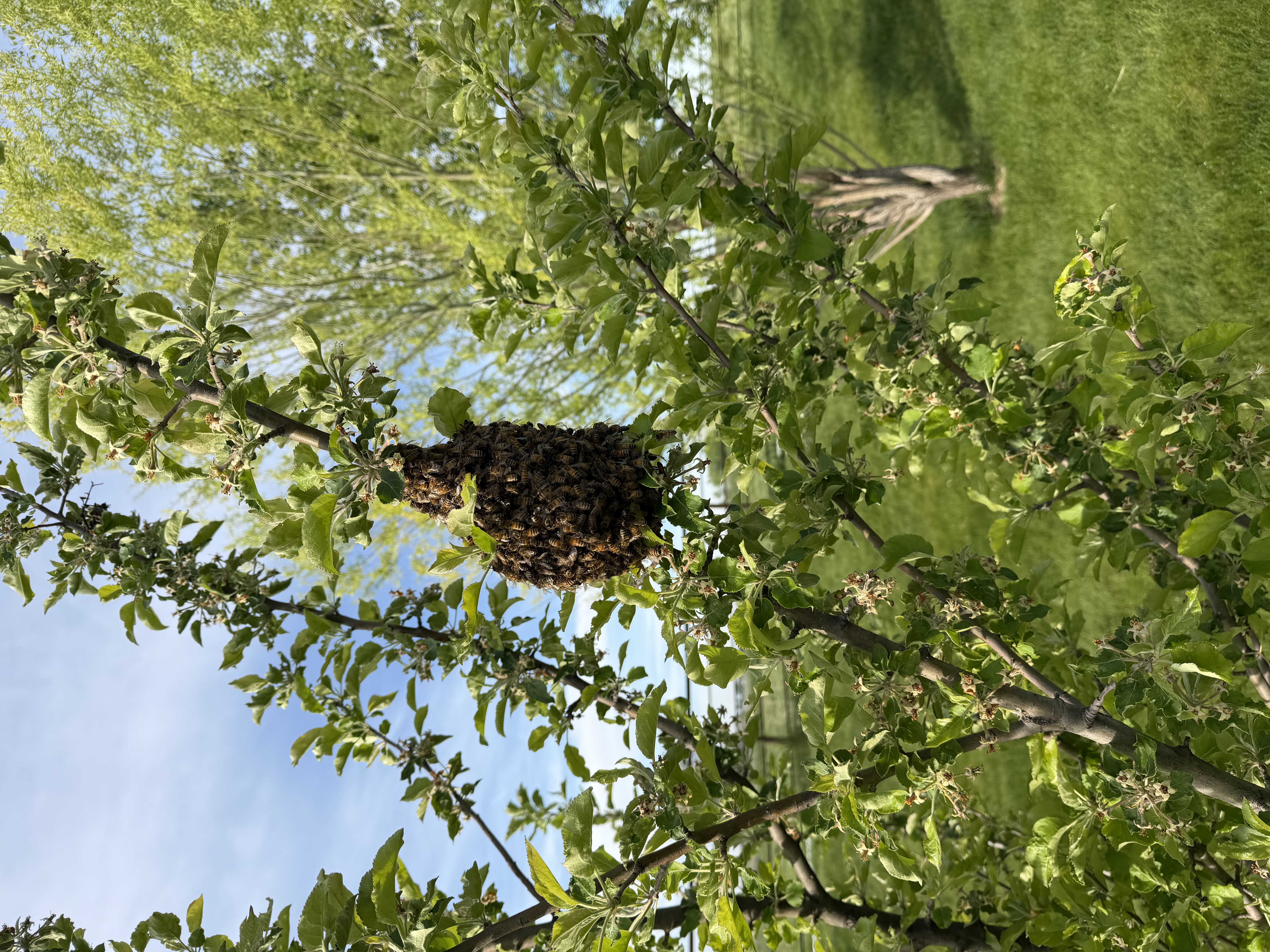
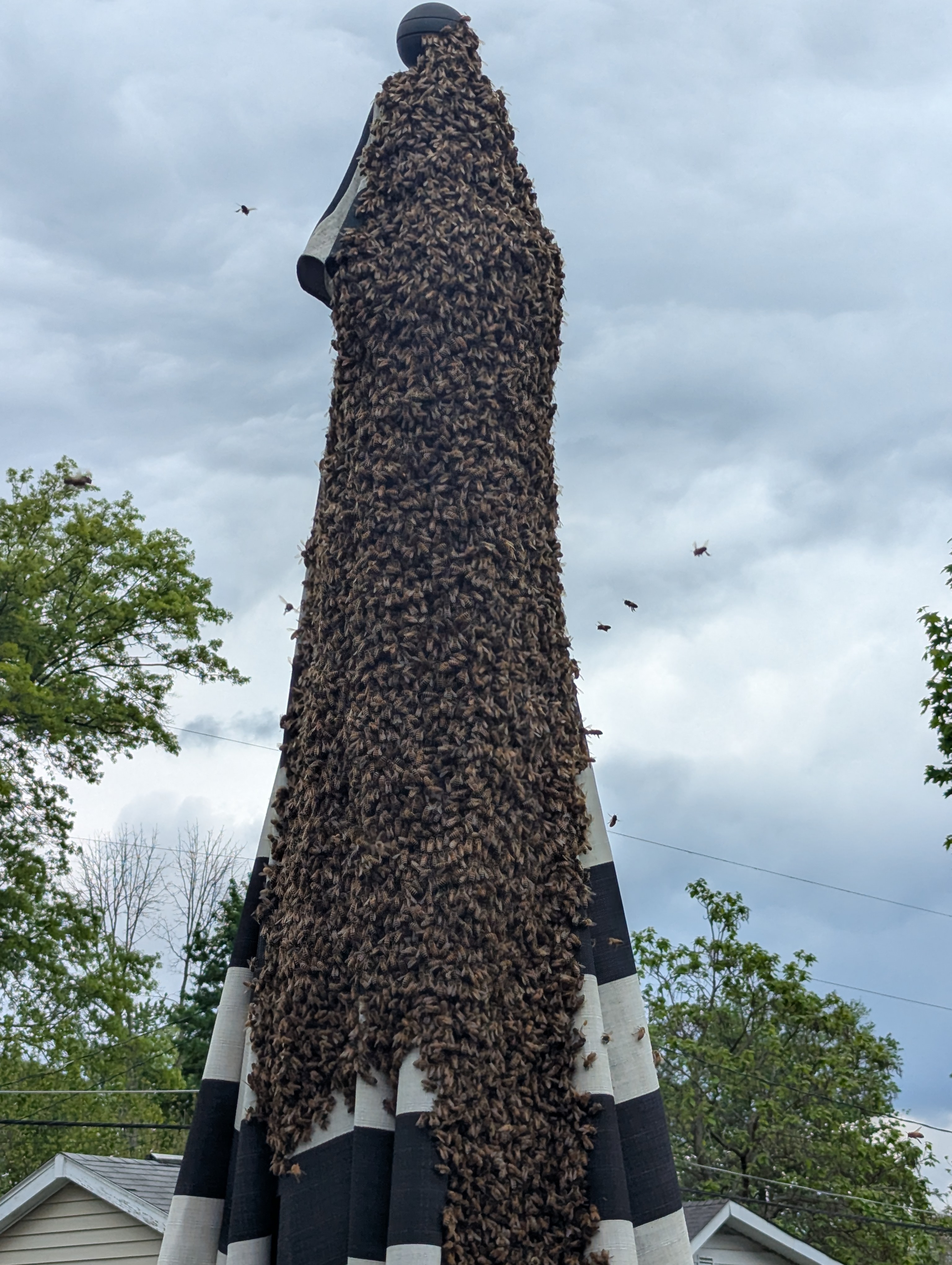
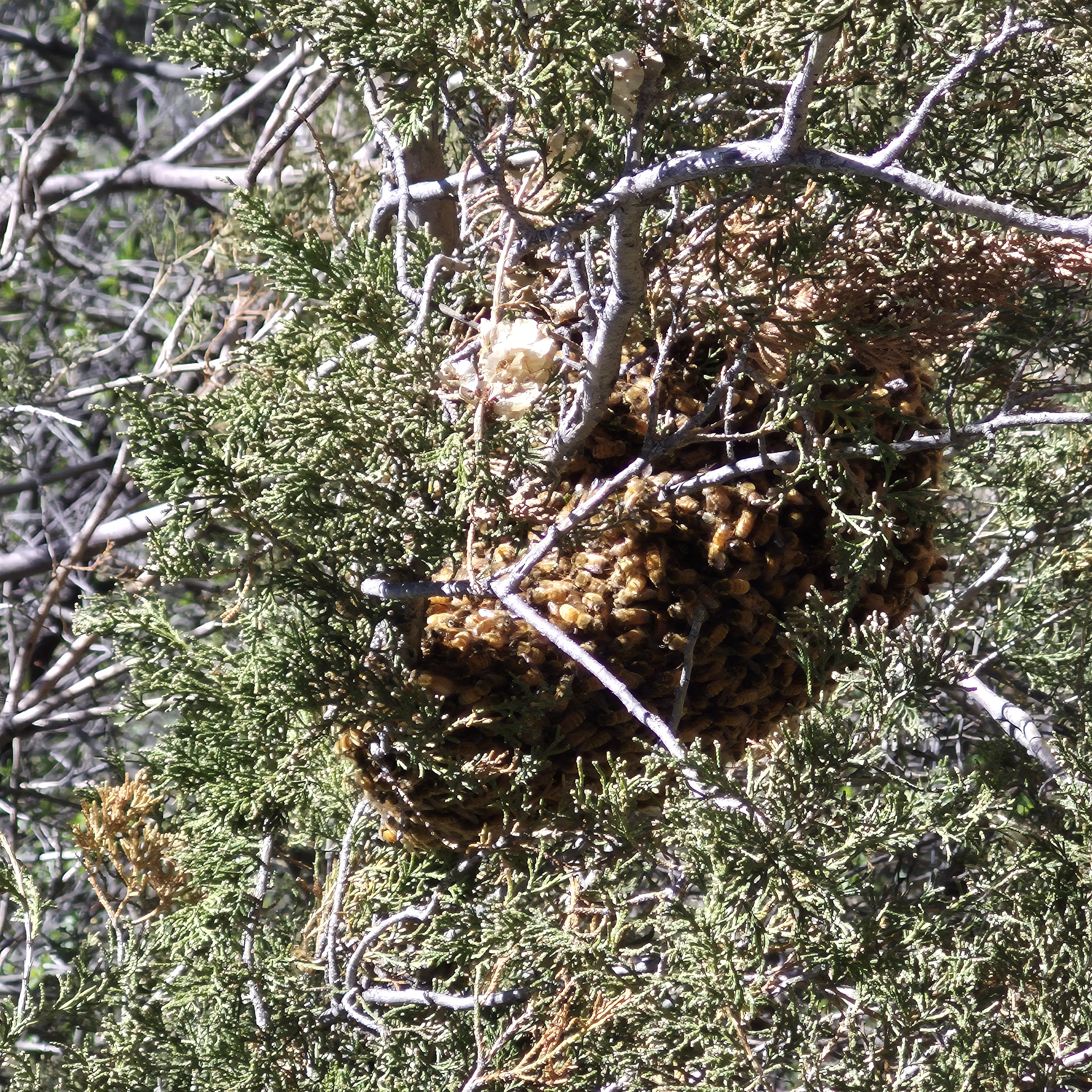
One of the most common misconceptions about honey bee swarms is that they are aggressive. In reality, bees in a swarm are at their most docile. Before leaving their old hive, the bees gorge themselves on honey to have enough energy for the journey. With full bellies and no home, brood, or food stores to defend, their focus is solely on finding a new place to live. They cluster together on a tree branch, fence post, or other surface to rest while scout bees search for a suitable permanent home. This temporary stop usually lasts only 24 to 72 hours.
This docile state makes it possible for trained beekeepers to safely and easily rescue the swarm, giving the colony a new, managed home where it can thrive.
The Critical Difference: Swarm vs. Established Hive
Knowing the difference between a swarm and an established hive is essential for anyone who encounters bees on their property. This distinction determines the type of professional help needed and the associated costs.
- A Honey Bee Swarm: This is a transient, temporary cluster of bees resting in the open. You'll see a ball of bees hanging from a branch, a sign, or the side of a building. They have not yet built any wax comb. Rescuing a swarm is a straightforward process for a beekeeper, and because beekeepers value these locally-adapted bees for their apiaries, swarm rescue is almost always free.
- An Established Hive or Colony: This is what happens when a swarm finds its permanent home. If bees have moved into a structural cavity—such as inside a wall, attic, shed, or hollow tree—they are no longer a swarm. They have started building wax comb, raising young (brood), and storing honey. These bees will be defensive of their home. Removing an established colony is a complex and labor-intensive process known as a “cutout.” It often requires specialized equipment, carpentry skills to access the colony, and structural repairs afterward. For this reason, removing an established hive is a paid service, and a beekeeper will provide a quote based on the complexity of the job.
How You Can Help: Connecting Bees with Beekeepers
When you see a honey bee swarm, you have a unique opportunity to help protect these vital pollinators and support your local community. The Swarmed platform connects people who find swarms with local Wyoming beekeepers who are ready to provide a safe new home for the bees.
The impact of community reporting is significant. In other western states, for instance, public reports through platforms like Swarmed have led to the rescue of over 100 swarms in a single season, a testament to what is possible when people get involved.
Here’s how you can help:
- Confirm it’s a swarm: Observe from a safe distance. If it’s a cluster of bees in the open without visible comb, it’s likely a swarm.
- Report the swarm: Visit https://beeswarmed.org/report-bee-colony (opens in a new tab) and provide a few key details, like the location, size, and height of the swarm, along with a photo if possible.
- A local beekeeper is alerted: Your report is instantly sent to nearby beekeepers on the Swarmed network. The first available beekeeper will claim the rescue and contact you to arrange a time for the collection.
Reporting a swarm is free to use, and it’s the best way to ensure the bees are rescued safely. To help maintain and improve this community service, we ask for an optional suggested contribution of $12 to help support the platform.
Supporting Wyoming's Beekeepers and Ecosystem
Local beekeepers are passionate stewards of honey bees. For them, a swarm is a valuable resource—a free, healthy, and genetically diverse colony that is already adapted to Wyoming's unique climate. By rescuing swarms, beekeepers can strengthen their apiaries, improve local pollination for gardens and farms, and continue producing local honey.
When a beekeeper arrives to rescue a swarm, they will typically place a box beneath the cluster and gently brush or shake the bees inside. The goal is to get the queen into the box, as the rest of the bees will follow her scent. The process is calm, efficient, and ensures the colony can be relocated without harm.
By taking a moment to report a swarm, you are doing more than just solving a potential nuisance. You are participating in a community-wide effort to protect honey bees, which are essential for the health of Wyoming’s natural and agricultural ecosystems.
Your Role in the Wyoming Bee Swarm Season
This spring, as you enjoy the beauty of Wyoming, keep an eye out for honey bee swarms. If you spot one in Cheyenne, Casper, Jackson, or anywhere in between, you know exactly what to do. Your simple act of reporting a swarm makes a direct, positive impact.
Help protect honey bees and support your local beekeeping community. If you see a swarm, report it to a local beekeeper through the Swarmed network. Visit https://beeswarmed.org/report-bee-colony (opens in a new tab) to make a report and become part of the solution.