The Rhythm of Spring in the Desert Southwest
As the desert landscape bursts into color, from the palo verde blossoms in Phoenix to the blooming cacti around Tucson, another sign of spring arrives: the hum of honey bees on the move. This is swarm season, a natural and fascinating spectacle that signals the health and vitality of local bee populations. For residents in cities like Mesa and Scottsdale, spotting a large cluster of bees can be alarming, but understanding the timing and nature of these swarms is the first step toward helping, not harming, these essential pollinators.
Arizona Bee Swarm Timing: When to Expect Activity
The primary question for many residents is when this activity reaches its peak. Honey bee swarm timing is closely tied to environmental cues. As temperatures warm and flowers produce a surplus of nectar and pollen, healthy honey bee colonies grow rapidly. When a colony becomes overcrowded, it prepares to divide in a process called swarming.
In the desert southwest, the peak of this activity typically occurs in late spring. You can expect to see the highest number of swarms from late April through early June. During this window, conditions are ideal for a new colony to collect resources and establish itself before the intense heat of summer sets in. This is the time when local beekeepers are on high alert, ready to respond to reports of swarms that need a new home.
What is a Honey Bee Swarm?
A swarm is a honey bee colony's natural method of reproduction. It is not an attack or a sign of aggression. Here’s what’s happening:
- A New Queen is Raised: The original colony raises a new queen to take over the existing hive.
- The Old Queen Leaves: The original queen leaves with about half of the worker bees (often 10,000 to 30,000 strong).
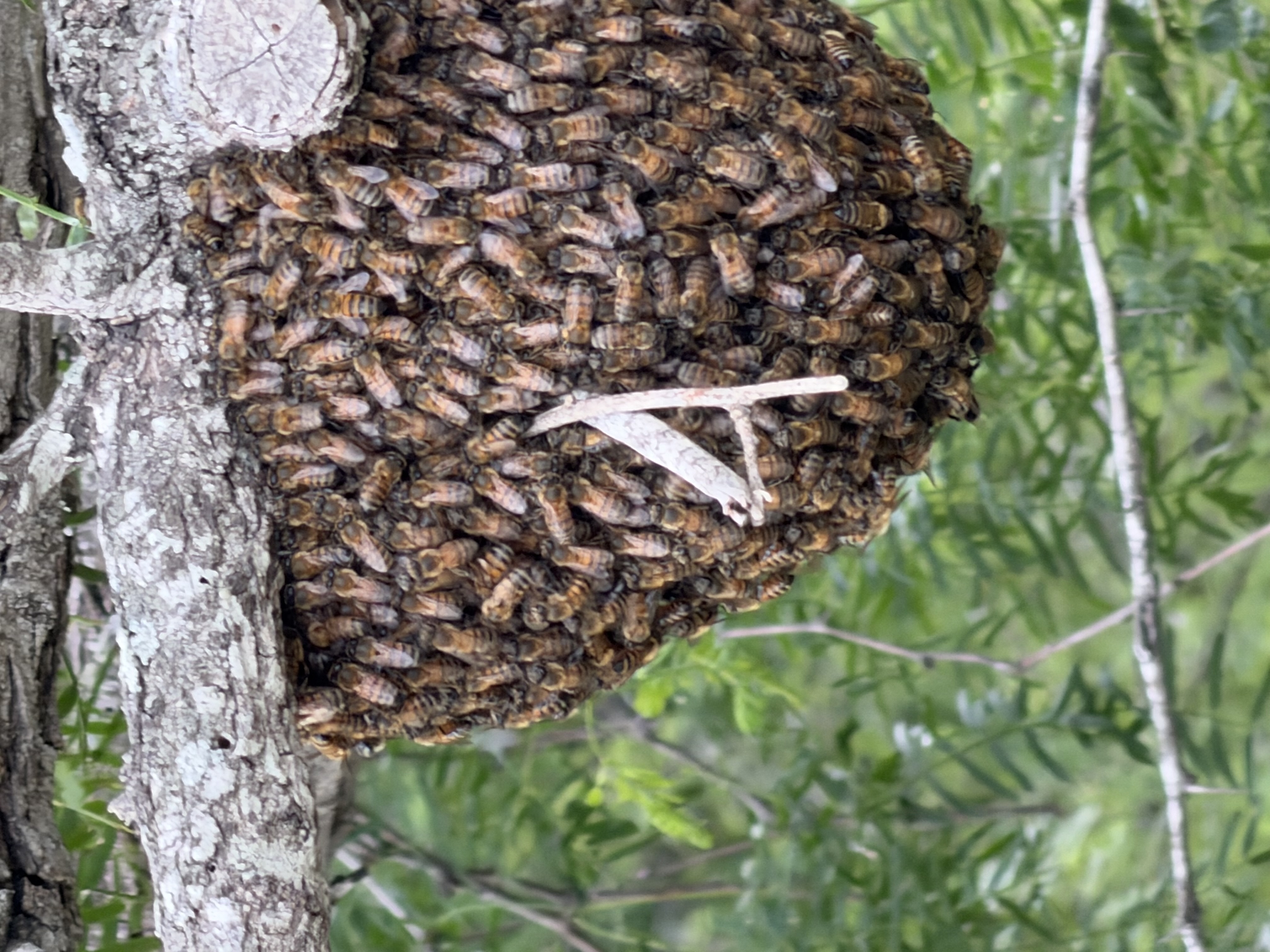
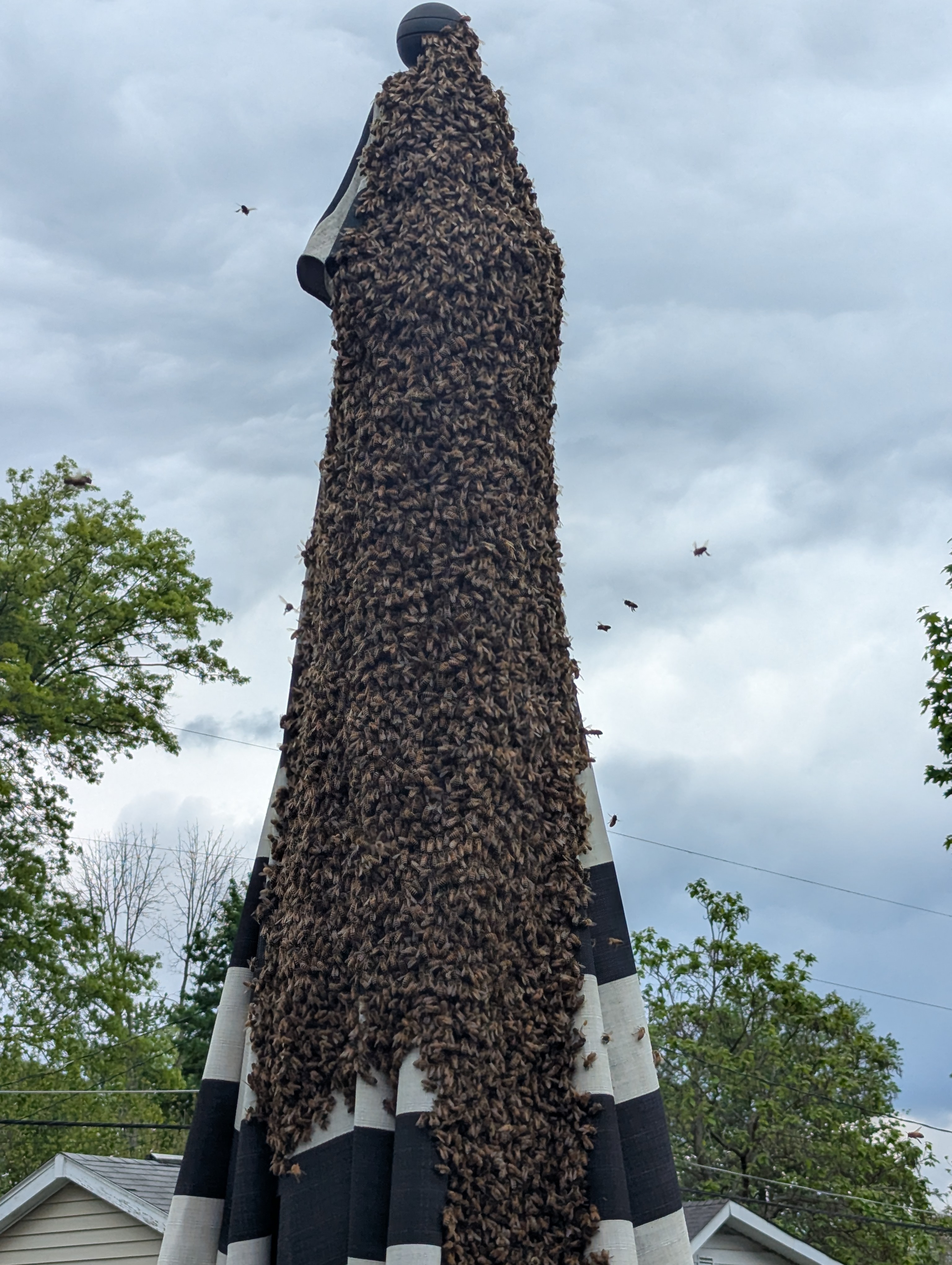
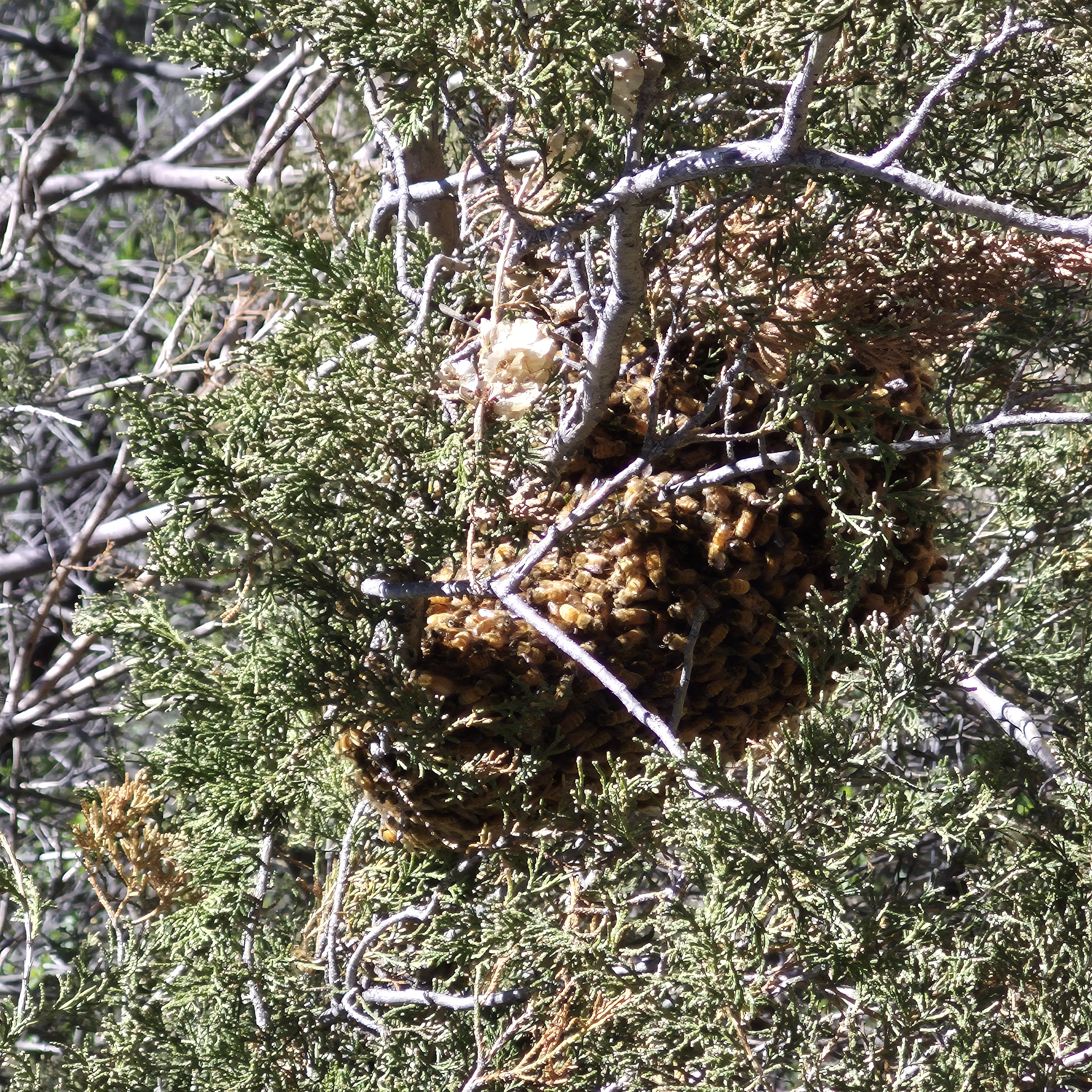
- A Temporary Rest Stop: This traveling group, known as a swarm, finds a temporary place to cluster—like a tree branch, a fence post, or the side of a building. They will rest here for a few hours to a few days.
- Scouts Search for a Home: While clustered, scout bees fly out in search of a suitable permanent location to build a new hive.
Bees in a swarm are surprisingly docile. Before leaving their original hive, they fill up on honey, making them full and less inclined to sting. They have no home, no baby bees (brood), and no honey stores to defend, so their focus is solely on finding a new place to live.
Swarm vs. Established Hive: A Critical Difference
Understanding the difference between a temporary swarm and an established hive is crucial, as it determines the type of professional help you need and whether the service is free.
A Honey Bee Swarm (Usually a Free Rescue)
This is what you see during peak swarm season. Beekeepers are eager to provide a home for these bees, as they represent a healthy, productive colony. The rescue is often straightforward.
- Appearance: A large, buzzing cluster of bees clinging to an exposed surface.
- Location: Tree limbs, fences, mailboxes, playground equipment.
- Behavior: The bees are generally calm and resting.
- Structure: There is no visible honeycomb or structure; it's just a ball of bees.
- Cost: Local beekeepers are typically happy to rescue swarms at no charge.
An Established Colony (A Paid Removal Service)
If a swarm's scouts find a desirable location—like an attic, a wall cavity, or a shed—they will move in and begin building their home. At this point, they are no longer a swarm.
- Appearance: You'll see bees flying in and out of a specific opening in a structure.
- Location: Walls, roofs, chimneys, irrigation boxes, hollow trees.
- Behavior: The bees will be defensive, as they are protecting their home, queen, and resources.
- Structure: The bees have built wax comb for storing honey and raising brood.
- Cost: Removing an established colony is a specialized job known as a "cutout." It often requires carpentry skills and structural repairs. Beekeepers will provide a quote for this service based on the complexity of the job.
How You Can Help Protect Honey Bees
When you see a swarm, you have a unique opportunity to contribute to the health of our local ecosystem. By reporting it, you connect a vulnerable colony with a beekeeper who can give it a safe, managed home. The Swarmed network is a vital tool that facilitates this connection. Last season, community reports helped local beekeepers rescue over 475 swarms across the state, showcasing the power of collective action.
Reporting a swarm through a service like Swarmed ensures:
- Humane Rehoming: The bees are safely relocated instead of being exterminated.
- Support for Local Beekeepers: You provide local apiaries with healthy, genetically diverse bees to strengthen their operations.
- Community Safety: A professional beekeeper handles the situation safely and efficiently.
To report a swarm and connect with a local beekeeper, visit the Swarmed reporting page at https://beeswarmed.org/report-bee-colony.
What to Do If You Find a Swarm
- Keep a Safe Distance: While swarms are docile, it's always best to give them space. Observe from afar and keep pets and children away.
- Do Not Disturb Them: Do not spray the bees with water, insecticide, or anything else. This will only agitate them and will not solve the problem.
- Take Note of the Details: Where is the swarm located? How large is it (e.g., the size of a football)? How high off the ground is it?
- Report it Immediately: Use your phone or computer to report the colony. The faster you report it, the more likely a beekeeper can rescue the bees before they move into an undesirable location.
By taking these simple steps, you become a crucial part of the solution for protecting honey bees.
Be a Hero for Honey Bees This Spring
This spring, when you see a swirling cluster of bees, you’ll know it’s not a threat but a sign of a thriving environment. It’s an opportunity to act as a steward for these vital pollinators who are so important to our desert agriculture and ecosystems. By reporting a swarm, you help them, you help local beekeepers, and you help your community.
If you see a swarm, don't wait. Report it to a local beekeeper who can give them a safe new home. Visit https://beeswarmed.org/report-bee-colony to help.