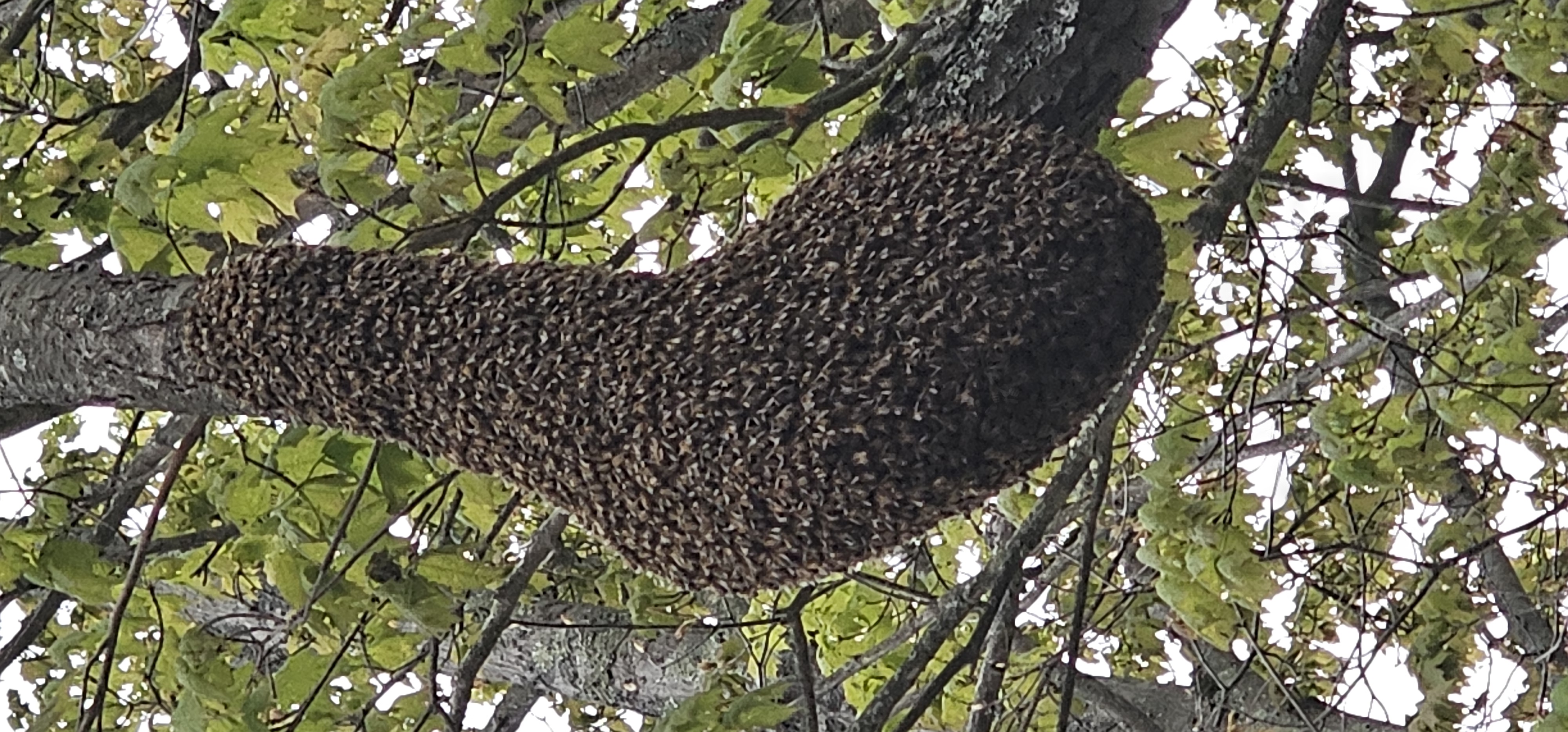
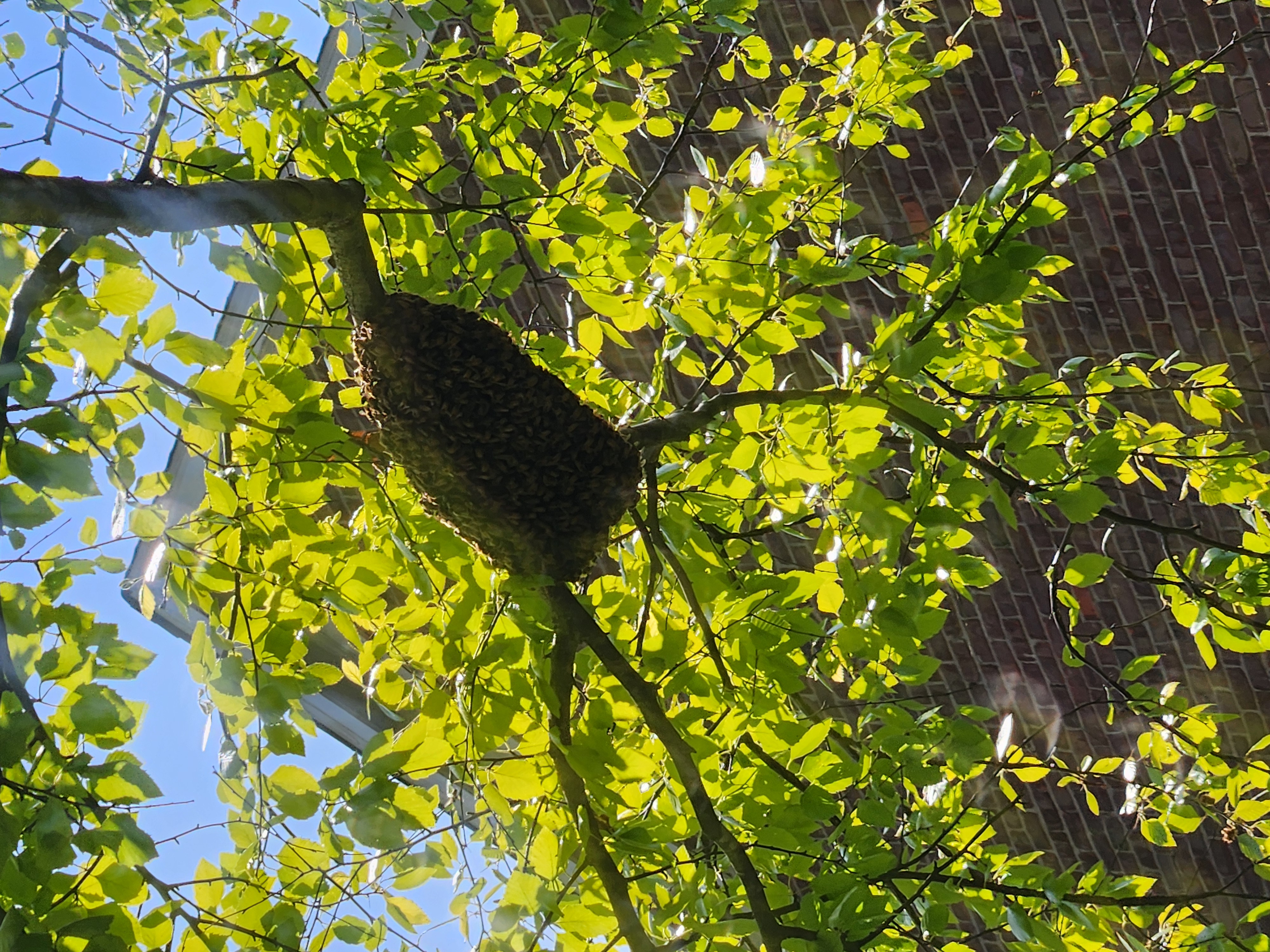
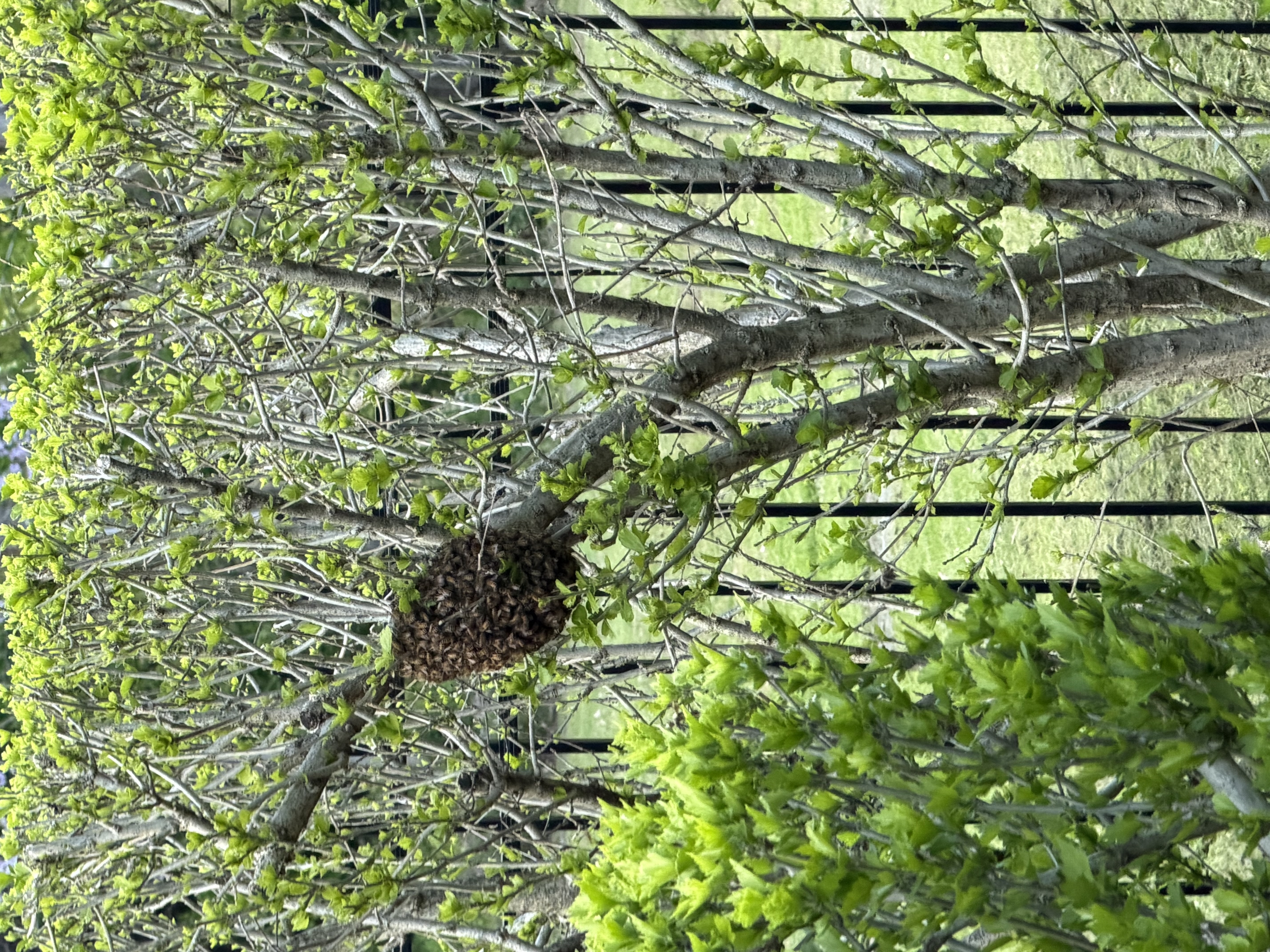
So, you’ve spotted a large cluster of honey bees hanging from a tree branch, fence post, or the side of a building and have done the right thing by reporting it. On behalf of local beekeepers and the bees themselves, thank you. Texas is a buzzing hub of honey bee activity, with over 578 swarms reported through the Swarmed network alone. Your action is the critical first step in ensuring their safety and connecting them with a knowledgeable beekeeper.
Whether you're in Houston, Dallas, or Austin, seeing a swirling mass of thousands of bees can be intimidating. But what you’ve witnessed is a natural and vital part of the honey bee life cycle. Now that you’ve made the report, this guide will walk you through what to expect next.
What to Expect Immediately After You Report
Once you submit a swarm report on the Swarmed platform, our system instantly goes to work. Here’s the process:
- Email Confirmation: You will receive an email confirming that your report has been received and is being dispatched. This email contains the details you provided and lets you know that local beekeepers have been notified.
- Beekeeper Alert: Simultaneously, an alert is sent out to registered beekeepers in your immediate vicinity. This alert includes the location, your description of the swarm, and your contact information so they can get in touch.
Time is of the essence. A swarm is a colony on the move, and it won't stay in one place for long—typically only 24 to 72 hours. Our network is designed to connect you with a beekeeper quickly to ensure a successful rescue.
The Beekeeper's Response
A local beekeeper who is available to help will claim the alert and will likely contact you directly via phone call or text message. They need to assess the situation before heading out. Be prepared to answer a few simple questions:
- Where exactly are the bees? Be as specific as possible.
- How high off the ground are they? This helps the beekeeper determine if they need a ladder or specialized equipment.
- How big is the cluster? A comparison like “the size of a football” or “a basketball” is very helpful.
- Have the bees started building any wax comb? This is a crucial detail that we will discuss next.
Your answers help the beekeeper understand what they are dealing with and confirm if it is indeed a swarm.
Swarm vs. Established Hive: A Critical Texas Distinction
Understanding the difference between a swarm and an established hive is the most important factor in setting expectations for what happens next, especially regarding cost. What you need is often determined by this distinction, whether it's simple swarm removal in Dallas or a complex cutout in a Houston suburb.
Honey Bee Swarm (Typically Free Removal)
A swarm is a transient cluster of bees with a queen. They have left their original hive to find a new home. In this state, they are remarkably docile. Because they are focused on protecting their queen and conserving energy for the journey, they have little interest in stinging. They haven't built a home yet, so there is no honey, brood, or comb to defend.
For beekeepers, a swarm is a valuable resource—a new colony for their apiary. Because collecting a swarm is relatively straightforward, most beekeepers are happy to do it free of charge. It's a win-win: the bees get a safe new home, and the beekeeper gets a new colony.
Established Hive (Paid Removal Service)
An established hive (or established colony) is different. This is what a swarm becomes after it finds a permanent home—inside a wall, a roof, a shed, or a hollow tree. Once they move in, they immediately begin building wax comb, raising young (brood), and storing honey. At this point, they are no longer a transient swarm; they are a defensive colony protecting their home.
Removing an established colony is a complex and labor-intensive process known as a “cutout.” It often requires carpentry skills and specialized equipment to carefully open the structure, remove all the comb and bees, and then perform repairs. This is specialized work that requires skill, time, and carries significant risk. For these reasons, a cutout is a paid service. A professional beekeeper will provide a quote based on the complexity, location, and time required for the removal.
The Texas Factor: Overly Defensive Bees and Removal Costs
Texas has a well-established population of highly defensive, or “Africanized,” honey bees. While indistinguishable from their more docile European counterparts without lab testing, their behavior is vastly different. They react to disturbances faster, in greater numbers, and with more intensity.
This reality adds a layer of risk and complexity for Texas beekeepers. Even a seemingly simple swarm collection can become hazardous if the bees are overly defensive. This is why, in some cases, a beekeeper might ask for a fee to cover fuel or time, even for a swarm. However, for a true cutout of an established colony, you should always expect to receive a fair quote for the service.
When a beekeeper provides a quote, they are accounting for their expertise, equipment, liability, and the significant labor involved in safely relocating a defensive colony from a structure. You are free to accept or decline this quote.
Why Reporting Swarms is a Community Service
By taking a few moments to report a swarm, you are performing a valuable service for your community and for the environment. Here’s why it matters:
- You Protect Honey Bees: Unreported swarms may be destroyed by someone who doesn't understand them. Your report gives them a chance at survival.
- You Support Local Beekeepers: You are providing local Texas beekeepers with healthy, local bees to strengthen their apiaries, which in turn helps pollinate local crops and gardens.
- You Keep Your Community Safe: Connecting a swarm with a professional beekeeper ensures the bees are handled safely and correctly, preventing potential issues.
By taking the time to report a bee swarm (opens in a new tab), you become a vital link in the chain of honey bee conservation. Your simple action ensures these crucial pollinators are protected rather than exterminated.
Your quick report during the peak of spring swarm season makes a huge difference for honey bee populations across Texas. Now that you know what to expect, you can be confident that you’ve initiated a process that helps bees, beekeepers, and your neighbors. If you see a swarm, don't hesitate. Help protect honey bees and support your local beekeepers by reporting it through the Swarmed network.
If you see a honey bee swarm, please report your bee swarm here (opens in a new tab).