
A Beekeeper's Guide to Swarm Season in California
California's Golden Opportunity: Harnessing the Spring Swarm For beekeepers across California, the arrival of spring signals more than just almond blossoms and wildflo...
Read More...May 18, 2026
Home > Blog > Reported a Bee Swarm in the Southwest? What Happens Next
May 12, 2026
First, thank you. By reporting a honey bee swarm, you’ve taken a crucial step to protect pollinators and support your local community. Especially during peak swarm season in late spring, residents of Phoenix, Tucson, and Mesa play a vital role in connecting honey bees with beekeepers who can give them a safe home. But after you click “submit,” you might be wondering what comes next.
This guide walks you through the process, from the initial alert to the arrival of a beekeeper, and clarifies why some bee removals in our region might come with a cost.
Once you submit your report through the Swarmed platform, our system gets to work immediately. Here’s a step-by-step look at what happens behind the scenes:
Beekeeping in the American Southwest presents unique challenges. Many of the honey bees here are descended from Africanized bees. While they are excellent pollinators well-suited to our hot, dry climate, they are also known for being more defensive than their European counterparts.
This heightened defensiveness means that local beekeepers must be exceptionally skilled and take extra precautions when handling them. They are not “killer bees,” but they are quick to defend their colony if they feel threatened. This inherent risk is a key factor that beekeepers must consider, and it leads to an important distinction in bee removal services.
One of the most common points of confusion is about cost. Is bee removal free? The answer depends entirely on what kind of bee situation you have. The terms “swarm” and “established hive” mean very different things to a beekeeper.
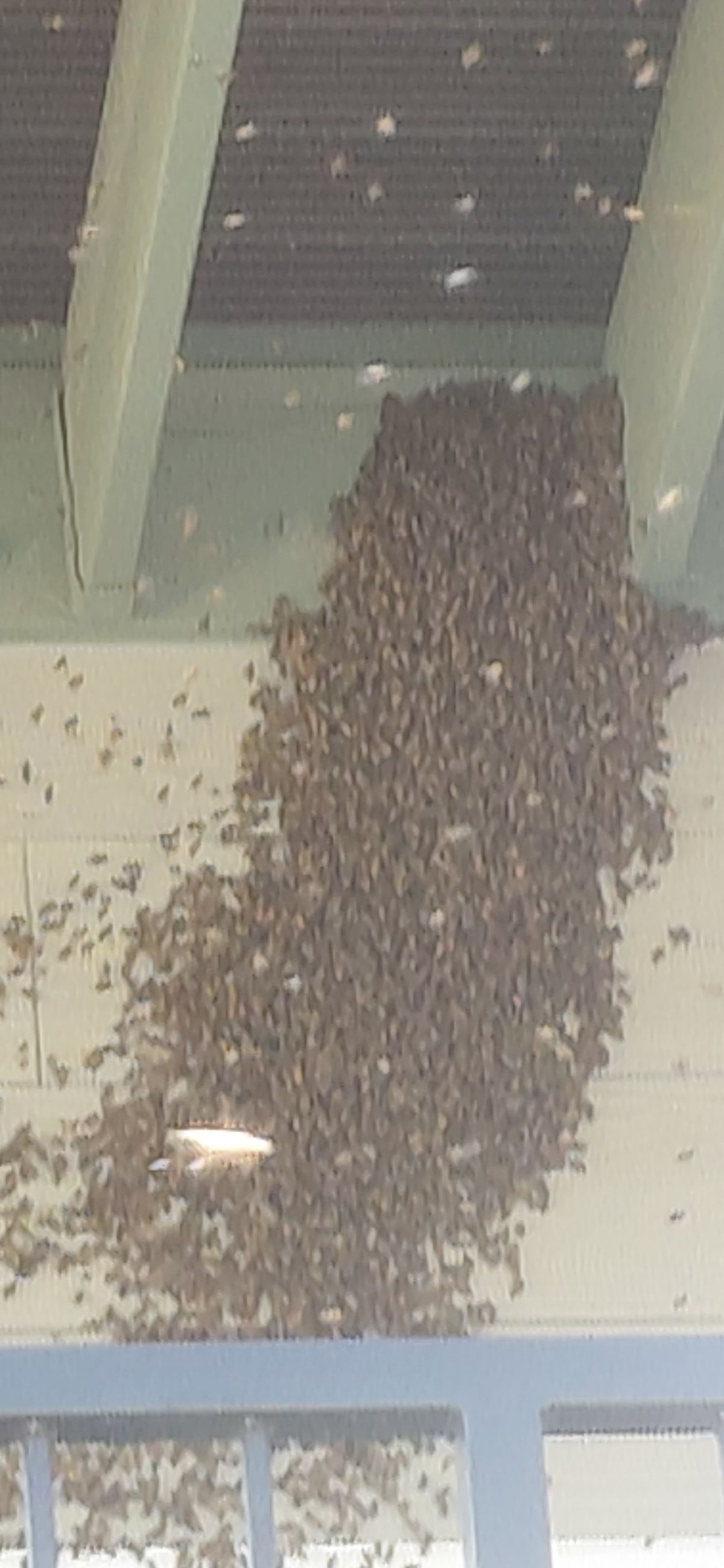
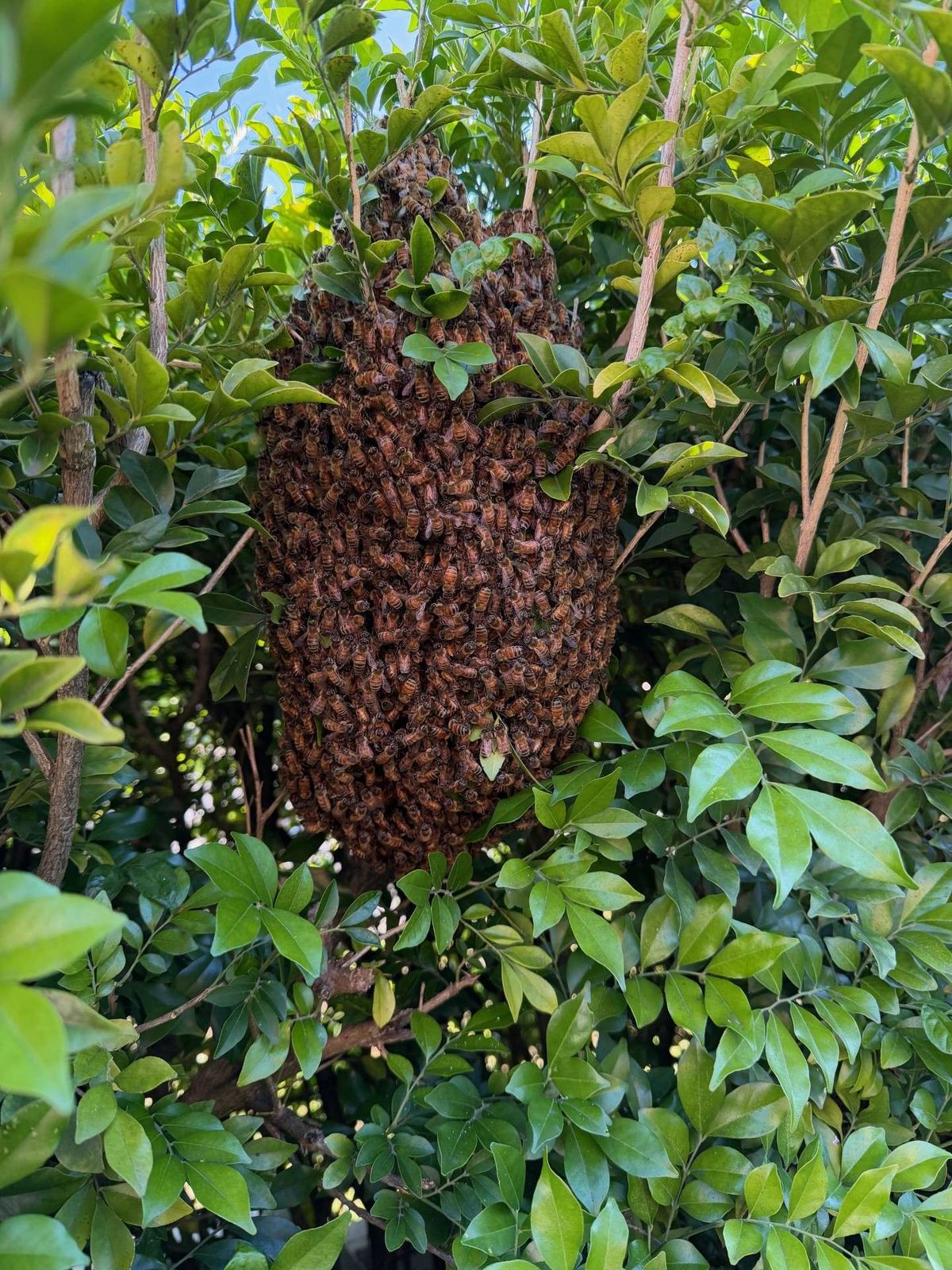
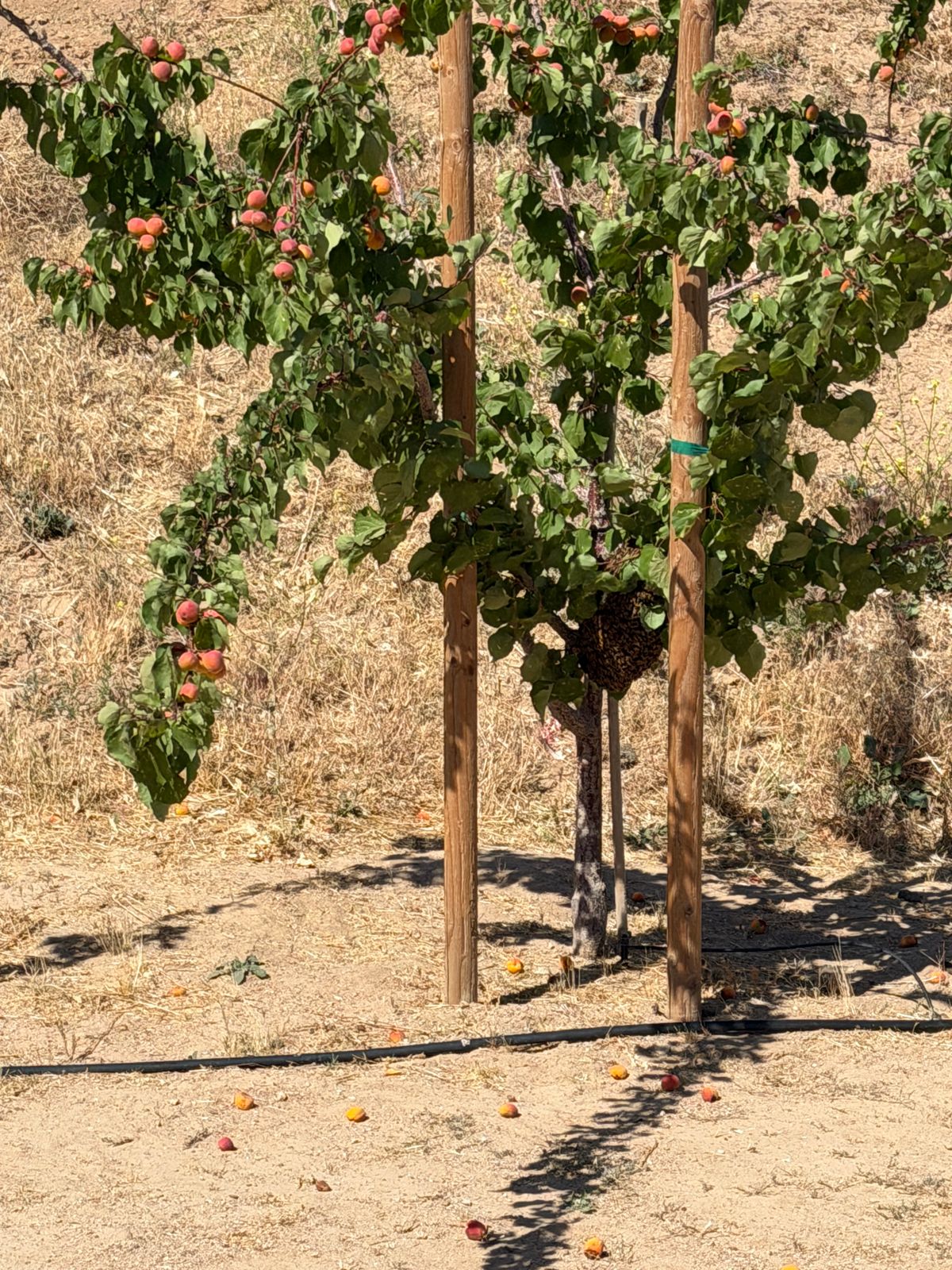
A swarm is a temporary, transient cluster of bees. It’s a ball of usually about 5,000 to 20,000 bees and a queen resting on a tree branch, a fence, or the side of a building. They are in the process of looking for a new home.
An established hive or colony is different. This is when bees have moved into a structure—like the wall of your house, a shed, a roof eave, or an irrigation box. They have started building wax comb, laying eggs, and storing honey. They are no longer just passing through; they have made a permanent home.
When you report a swarm, you’re not just solving a problem in your backyard—you’re contributing to a larger effort. Last year, community reports from across the region helped local beekeepers rescue over 480 swarms, giving those colonies a chance to thrive. Your observation provides crucial information that helps protect honey bees from extermination and supports the beekeepers who manage these essential pollinators.
Seeing a bee swarm is your chance to be a hero for honey bees and your community. Your report can save a colony, so if you see a swarm, please take a moment to report it to Swarmed (opens in a new tab).
California's Golden Opportunity: Harnessing the Spring Swarm For beekeepers across California, the arrival of spring signals more than just almond blossoms and wildflo...
Read More...May 18, 2026
A Beekeeper's Guide to Swarm Collection in Idaho Spring has arrived in the Gem State, and with it, the unmistakable hum of honey bee swarms. For beekeepers, this is a...
Read More...May 18, 2026