You’ve Done Your Part—What’s Next?
First, thank you for taking a crucial step to help honey bees in North Dakota. By reporting a swarm, you've initiated a process that connects a vulnerable honey bee colony with a local beekeeper who can provide it with a safe, managed home. Whether you're in Fargo, Bismarck, or Grand Forks, your action supports local agriculture, biodiversity, and the beekeeping community. This guide will walk you through exactly what to expect now that your report has been submitted.
Step 1: The Instant Notification
The moment you submitted your report through the Swarmed platform, our system sent an automated alert to registered beekeepers in your immediate area. This isn't a message that sits in an inbox; it’s a real-time notification sent directly to the phones of beekeepers who have signed up to rescue swarms in your part of North Dakota.
Your report, with the location and details you provided, is now in the hands of local experts who are equipped and eager to help. This rapid communication is key, as a swarm is a temporary phenomenon, and a quick response ensures the bees can be safely relocated before they move on or settle into an undesirable location.
Step 2: A Beekeeper Will Contact You
A local beekeeper who is available to help will “claim” the swarm alert and then contact you directly, typically by phone. Beekeepers are often passionate volunteers with regular jobs, so response times can vary. They will get in touch as soon as they are able.
When the beekeeper calls, they will likely ask a few clarifying questions to prepare for the rescue. This helps them understand the situation, bring the right equipment, and ensure everyone’s safety. Be ready to confirm:
- The exact location: Is the swarm on a high tree branch, a low-hanging bush, a fence post, or the side of a building?
- The size and shape: Does it look like a football-sized cluster of bees?
- How long it has been there: This helps determine the urgency.
- A critical detail: Are the bees clustered on the *outside* of something, or are they flying in and out of a hole in a structure? This is the most important question they will ask.
Step 3: Understanding the Difference: Swarm vs. Established Colony
The beekeeper’s questions help them determine if they are dealing with a simple swarm rescue or a more complex removal of an established colony. This distinction is critical because it affects the process, the tools required, and the cost.
Honey Bee Swarm (Typically a Free Rescue)
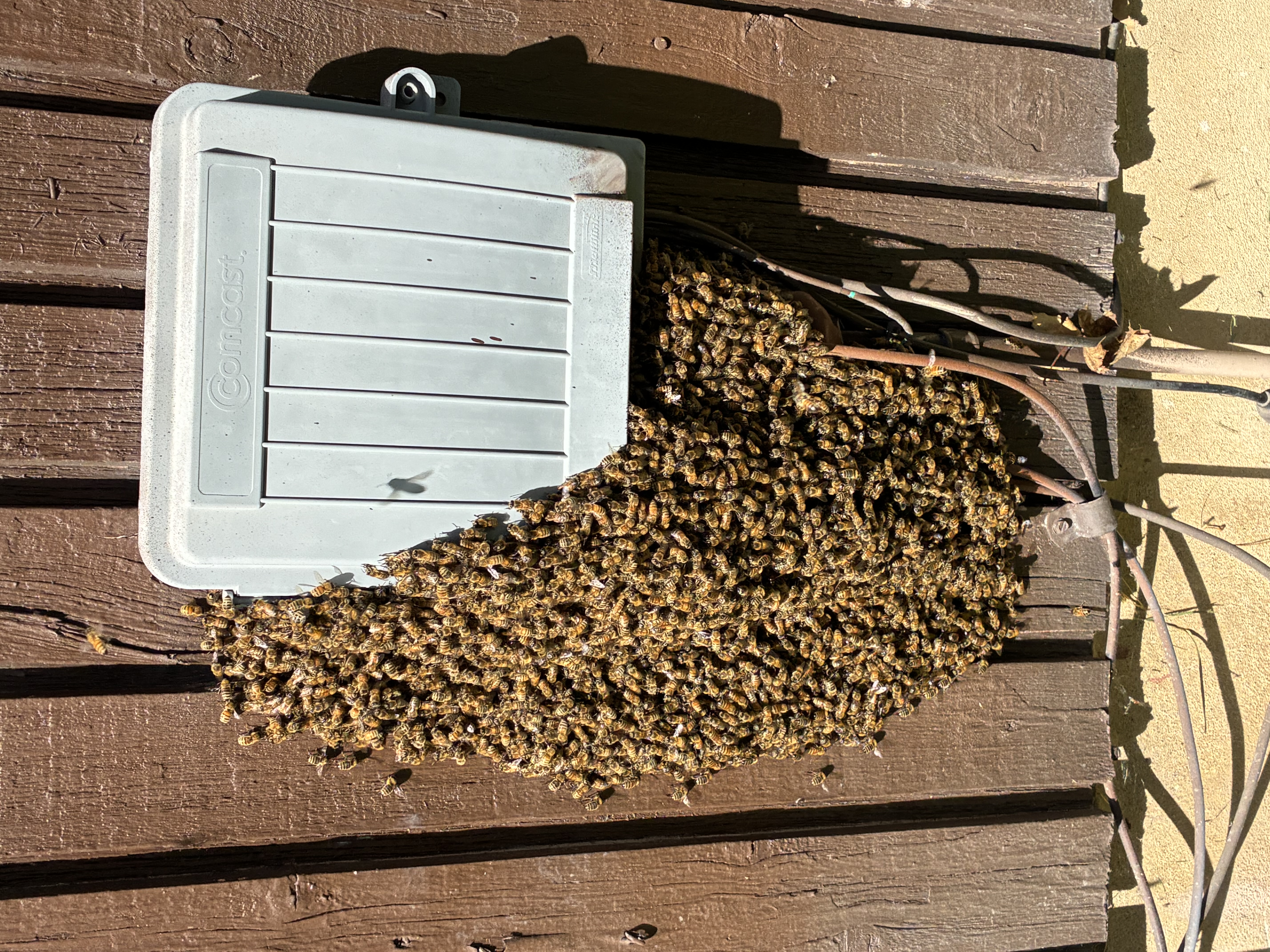
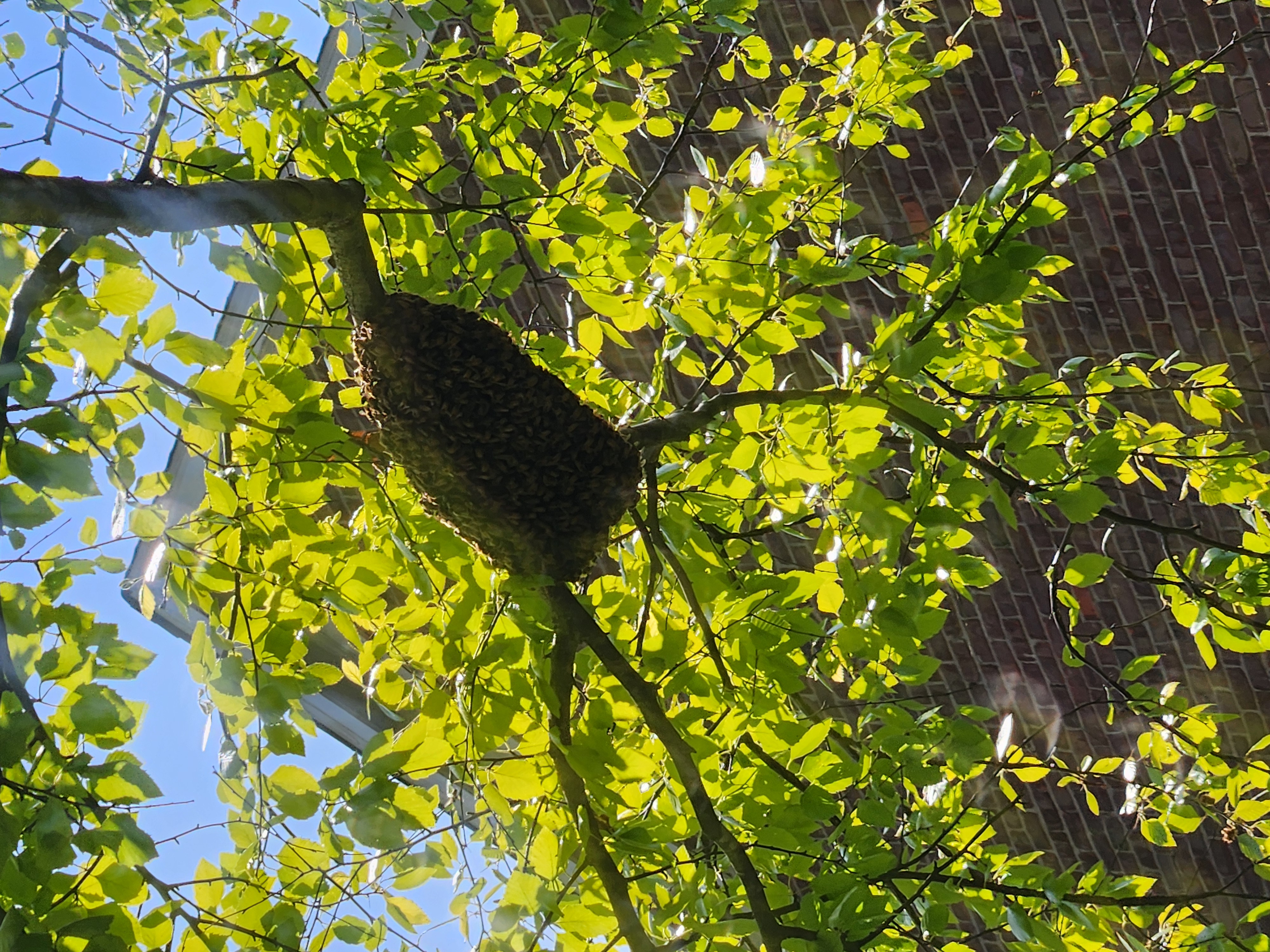
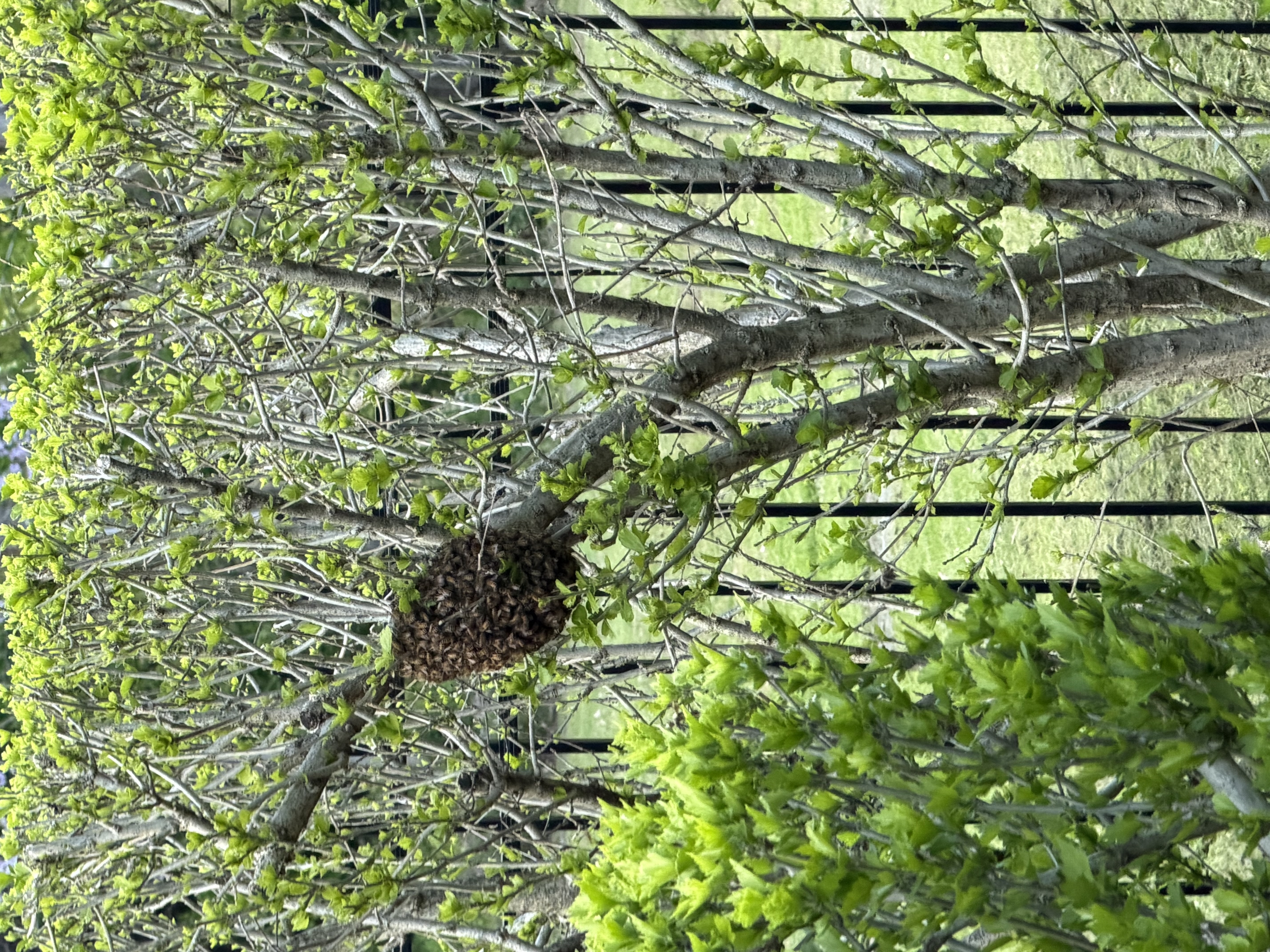
A true honey bee swarm is a natural part of the bee life cycle. It is a large group of about 10,000 to 30,000 bees that has split from its original hive with a queen to start a new colony. While waiting for scout bees to find a permanent home, they cluster together for protection.
- Appearance: A hanging or balled-up cluster of bees.
- Location: Often found on tree limbs, fences, mailboxes, or playground equipment.
- Temperament: Generally docile. The bees have filled up on honey for their journey and have no home, brood, or food stores to defend.
- Duration: Temporary, usually lasting only 24 to 72 hours.
- Rescue: A beekeeper can often gently brush or shake the bees into a special box. Because beekeepers want these bees to start new hives in their apiaries, this service is almost always offered for free.
Established Colony (A Paid Removal Service, or “Cutout”)
If the scout bees from a swarm find a suitable cavity, they will move in and begin building a home. Once they have started building wax comb, raising young (brood), and storing honey, they are considered an established colony.
- Appearance: You will see a steady stream of bees flying in and out of a single point, like a crack in a wall, a vent, or a hole in a tree.
- Location: Inside structures like walls, chimneys, attics, sheds, or hollow trees.
- Temperament: Defensive. These bees have a home to protect and will be more likely to sting if they feel threatened.
- Duration: Permanent, until removed.
- Rescue: This is not a simple rescue; it’s a structural removal known as a “cutout.” It requires specialized skills and tools, often including carpentry to open the structure, carefully remove the comb, and then transport the bees. This is labor-intensive work, and beekeepers will provide a quote for this service. The cost can range from $200 to over $800, depending on the complexity, height, and repairs needed. You can always accept or reject the quote.
Step 4: The On-Site Rescue
While you wait for the beekeeper to arrive, the best course of action is to give the bees space. Keep children and pets away from the area, and advise neighbors to do the same. Most importantly, do not spray the bees with water or insecticide. The swarm is a temporary, natural event, and a professional is on the way.
The beekeeper will arrive with a bee suit, a bee vacuum or a specialized hive box, and other tools. They will safely and calmly contain the bees, often attracting the entire cluster by ensuring they have the queen. Your initial report makes this possible. The impact of community reporting is significant; in some active states, beekeepers on the Swarmed network rescue over 100 swarms each spring, saving millions of vital pollinators.
By reporting the swarm, you have become a key player in honey bee conservation in North Dakota. You've helped preserve a local bee colony and connected a beekeeper with bees that will strengthen their apiary, which in turn helps pollinate local crops and gardens.
Your simple action has a powerful, positive ripple effect. Should you see another swarm, or if a friend in Fargo or a neighbor in Bismarck spots one, you know exactly what to do. Reporting is the right call every time.
Help protect North Dakota's honey bees and support your local beekeeping community. To report a swarm, visit Swarmed (opens in a new tab).