
A Beekeeper's Guide to Swarm Season in California
California's Golden Opportunity: Harnessing the Spring Swarm For beekeepers across California, the arrival of spring signals more than just almond blossoms and wildflo...
Read More...May 18, 2026
Home > Blog > Reported a Bee Swarm in Michigan? Here’s What Happens Next
May 12, 2026
First, thank you. By taking a moment to report a honey bee swarm in Michigan, you’ve taken a crucial step in protecting these vital pollinators and supporting your local community. Whether you're in Detroit, Grand Rapids, or Ann Arbor, your report has initiated a process that connects a vulnerable bee colony with a knowledgeable local beekeeper. This guide outlines exactly what you can expect to happen next.
Your single action helps ensure these bees find a safe, managed home instead of an unsuitable location where they might not survive or could become a nuisance. You've helped bees, beekeepers, and your neighbors.
Immediately after you submit your report through the Swarmed platform, our system gets to work. You will receive an email confirming that we’ve received your information. This message serves two purposes:
This email is the starting pistol for the rescue process. Behind the scenes, your report—including the location and any photos you uploaded—is instantly dispatched to registered beekeepers in your specific area of Michigan.
Swarmed maintains a dedicated network of beekeepers across the state. When your report comes in, beekeepers within a certain radius of your location receive a notification. For these beekeepers, a swarm is a welcome sight. It represents a healthy, natural start for a new hive in their apiary, and they are typically eager to help.
Because honey bee swarms are temporary, time is of the essence. A swarm will usually only remain in one spot for 24 to 72 hours while scout bees search for a permanent home. For this reason, beekeepers on the Swarmed network tend to respond quickly. Response time can vary based on the time of day, beekeeper availability, and your location, but the system is designed for a rapid connection.
The next thing you should expect is a phone call or text message from a local beekeeper. They will introduce themselves and ask a few key questions to assess the situation before they head to your location.
Be prepared to answer:
The answer to that last question helps the beekeeper determine if they are dealing with a simple swarm or a more complex situation requiring a different approach and skillset.
Understanding the difference between a swarm and an established colony is essential for managing expectations. Your answers to the beekeeper's questions will help them clarify which one you have.
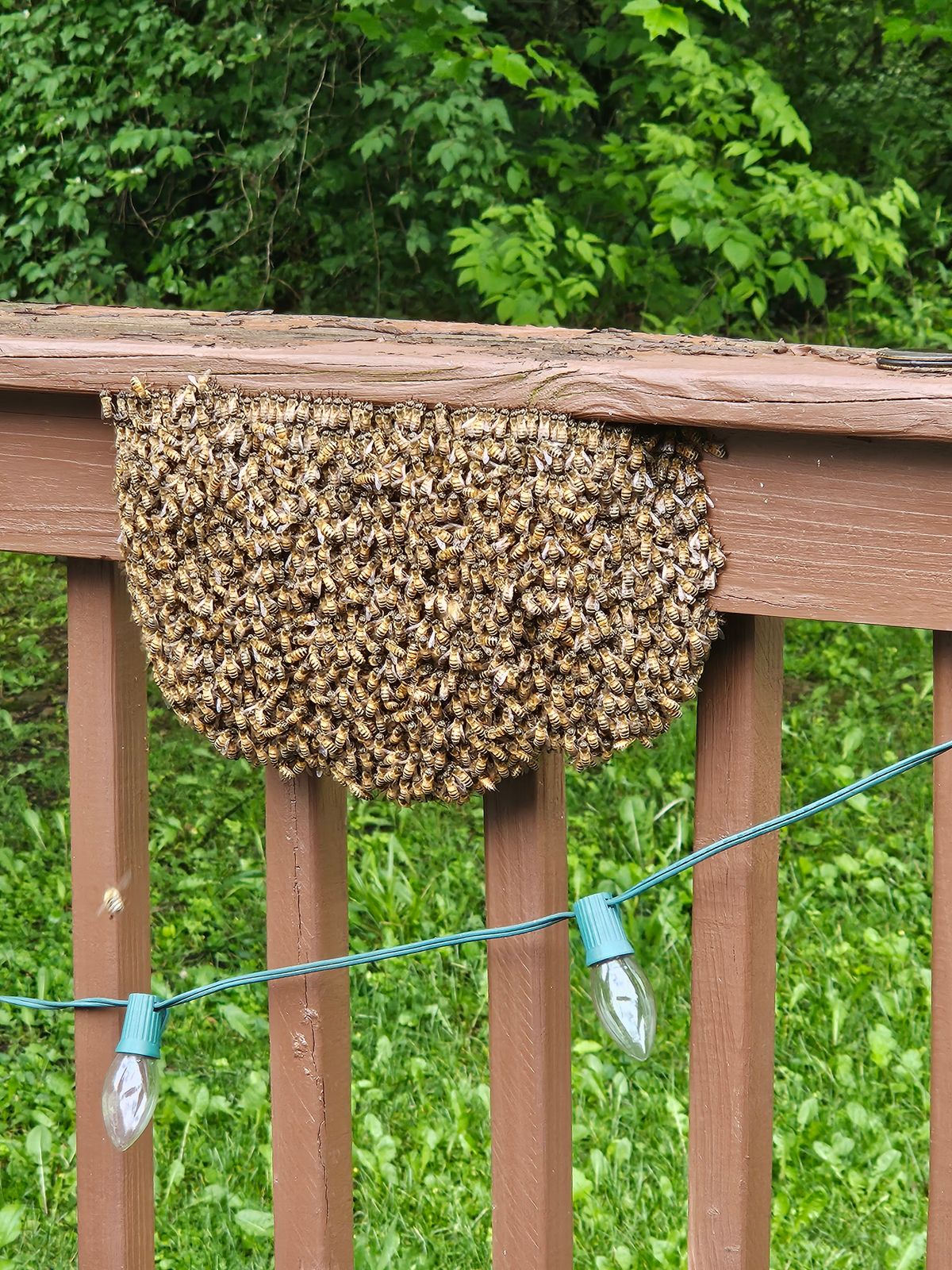
A swarm is a transient cluster of bees hanging from a structure like a tree branch, a fence, or playground equipment. The bees are exposed and visible.
An established hive or established colony is different. This is when bees have already found their permanent home and have moved inside a structure—such as the wall of a house, a chimney, a shed, or a hollow tree. They have started building wax comb, laying eggs, and storing honey.
Reporting through Swarmed is always free to use, and our primary mission is to connect you with beekeepers for simple, free swarm rescues. If the situation is more complex, our network connects you with experts who can handle it properly.
Once the situation is clarified, the beekeeper will arrange a time to come to your property.
For a swarm, the process is usually quick and calm. The beekeeper will arrive with their equipment, safely collect the bees, and thank you for making the call. In one state, community reporting helped local beekeepers rescue over 100 swarms in a single season, a testament to the power of simple actions like yours.
For an established hive cutout, the beekeeper will arrive to perform the work as quoted. It will take longer and be more involved, but it is the only way to safely and completely remove a colony that has moved into a structure.
By reporting the bees, you have done the right thing. You’ve given a honey bee colony a second chance and provided a valuable resource to a local Michigan beekeeper who will give them a safe and productive home.
Your report makes a real difference. If you see another swarm this spring, or if a neighbor in Detroit, Grand Rapids, or Ann Arbor mentions seeing one, you know exactly what to do. Encourage them to help protect Michigan's honey bees by reporting the colony. Thank you for being a friend to pollinators.
To report a honey bee colony or to learn more, please visit the Swarmed report page (opens in a new tab).
California's Golden Opportunity: Harnessing the Spring Swarm For beekeepers across California, the arrival of spring signals more than just almond blossoms and wildflo...
Read More...May 18, 2026

A Beekeeper's Guide to Swarm Collection in Idaho Spring has arrived in the Gem State, and with it, the unmistakable hum of honey bee swarms. For beekeepers, this is a...
Read More...May 18, 2026