You've Seen a Swarm in Delaware. You've Reported It. Now What?
Across Delaware, from the neighborhoods of Wilmington to the fields surrounding Dover and the bustling community in Newark, the arrival of spring brings a remarkable natural event: the honey bee swarm. Seeing a large, buzzing cluster of bees on a tree branch or fence post can be startling, but it's a positive sign of a healthy bee population. When you take the step to report it, you’re playing a vital role in protecting these essential pollinators.
This guide explains exactly what you can expect after you submit a swarm report through the Swarmed network. Understanding the process helps you know what's coming and highlights the important distinction between a temporary swarm and an established hive.
The Instant Alert: Connecting You to a Local Beekeeper
The moment you complete a swarm report, the Swarmed system springs into action. An automated notification is immediately sent to a network of local beekeepers in your area. In Delaware, there are over two dozen registered beekeepers who have signed up specifically to rescue honey bee swarms. These alerts are geo-targeted, ensuring that the message reaches the beekeepers closest to you for the fastest possible response.
This notification isn't just a simple ping. It contains all the critical information the beekeeper needs:
- The precise location of the swarm.
- Your contact information so they can call or text you for more details or to let you know they're on the way.
- Any photos or notes you provided, which are incredibly helpful for assessing the swarm's size, accessibility, and behavior.
This efficient system bridges the gap between a concerned citizen and a prepared expert, transforming a potential problem into a conservation opportunity.
Expect a Quick Response
Honey bee swarms are on a tight schedule. They are a colony in transit, temporarily resting while scout bees search for a suitable permanent home. This stopover typically lasts anywhere from a few hours to a couple of days. Once the scouts find a new location, the entire swarm will depart.
Because of this urgency, Delaware beekeepers on the Swarmed network tend to respond very quickly—often within minutes or the first hour of receiving an alert. They know that a swift response is crucial for a successful rescue. With swarm activity on a rising trend in the state, your prompt report is more important than ever. Beekeepers are eager to provide these bees with a safe, managed apiary before they decide to move into a less-than-ideal spot, like the wall of a house or a shed.
The Key Difference: Swarm vs. Established Hive
When the beekeeper contacts you, one of their first goals will be to confirm what kind of bee situation you have. This is the most critical factor in determining the next steps and whether the service will be free.
Understanding a Honey Bee Swarm (A Typically Free Rescue)
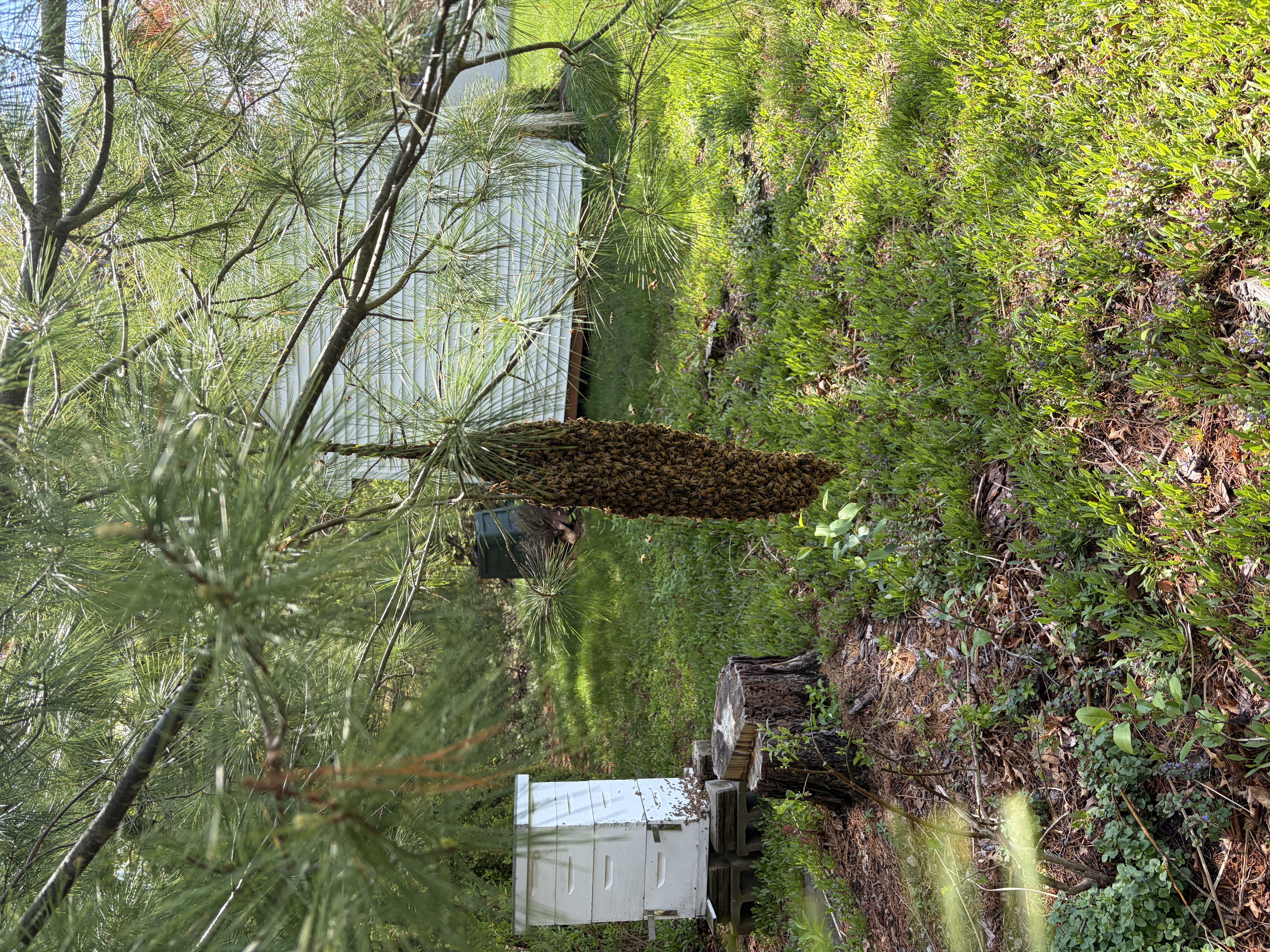
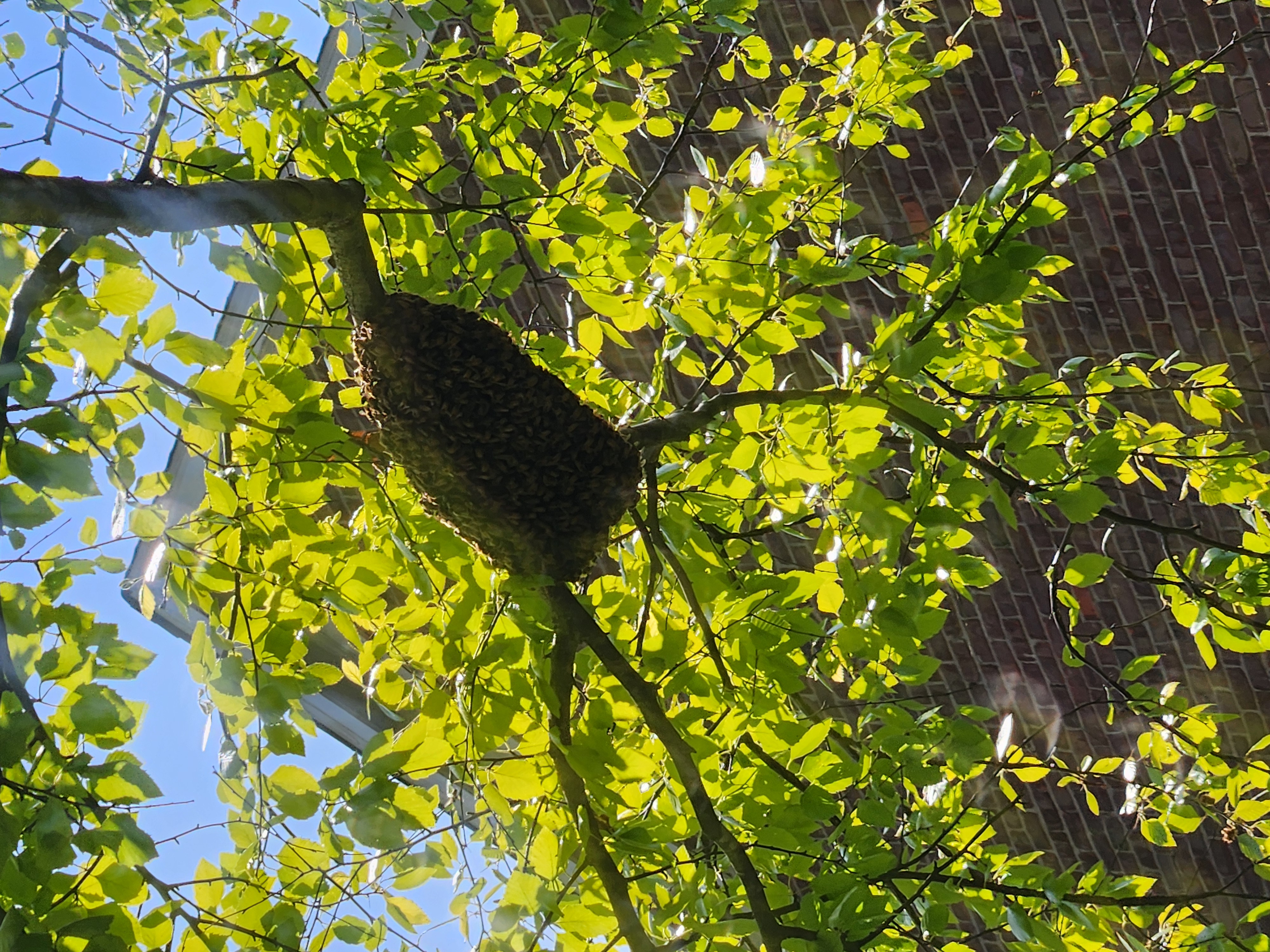
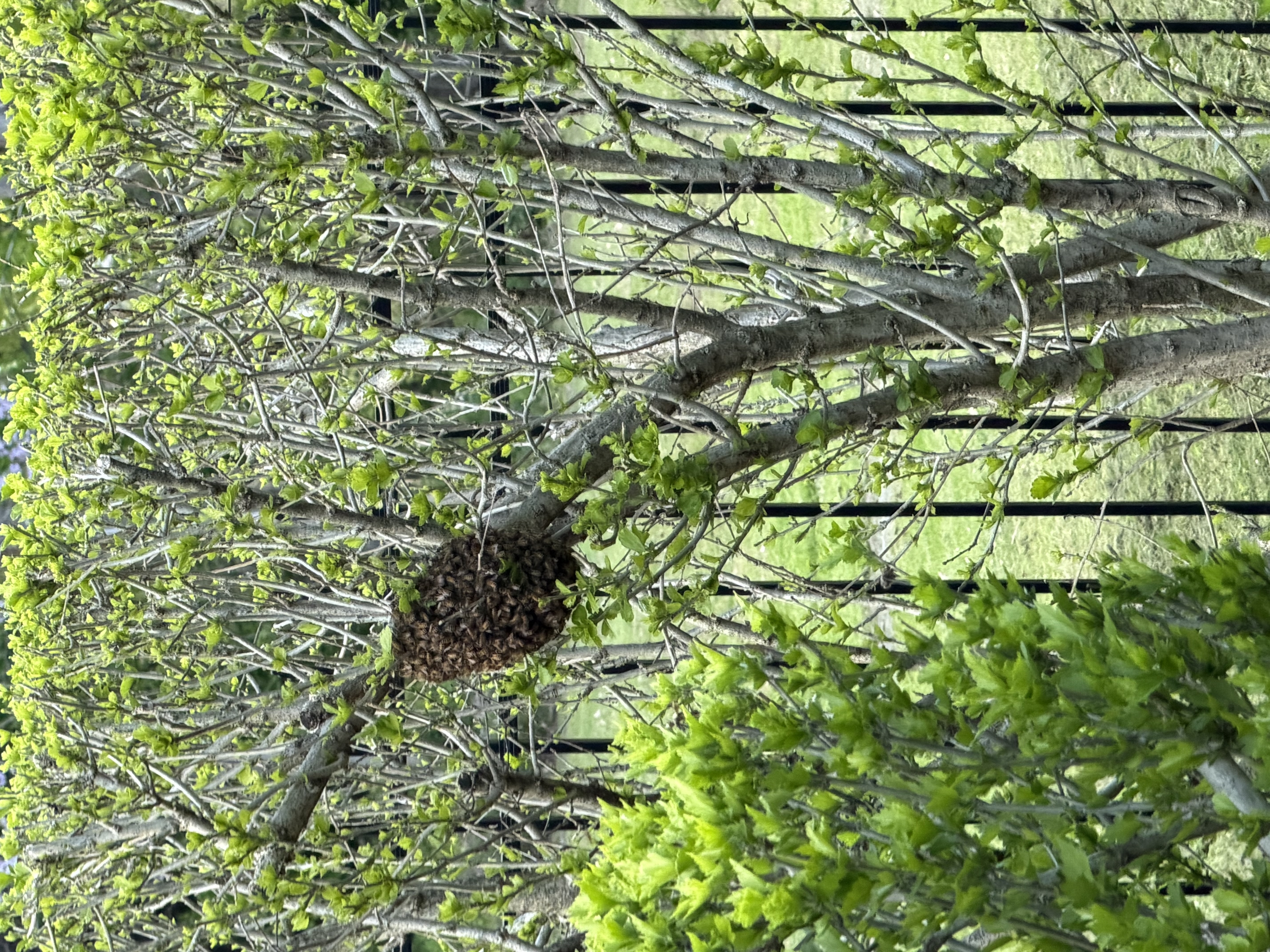
A true honey bee swarm is a temporary cluster of bees hanging from an object. You might see it on a tree limb, a mailbox, a fence, or playground equipment. Here’s what defines it:
- Appearance: A dense, ball-shaped or teardrop-shaped clump of bees, exposed to the elements.
- Behavior: The bees are surprisingly docile. Before leaving their old hive, they filled up on honey. Without a home, brood, or honey stores to defend, they have little reason to be aggressive. Their primary focus is protecting the queen in the center of the cluster and conserving energy for their journey.
- The Rescue: Rescuing a swarm is usually a straightforward process for a beekeeper. They can often gently brush or shake the cluster into a special box called a "nuc box." Because swarms are valuable to beekeepers (they represent a new, healthy colony for their apiary) and the rescue is low-intensity, swarm collection is normally free.
Identifying an Established Hive (A Paid Removal Service)
An established hive, or colony, is different. This occurs when a swarm has already found and moved into a permanent home. Here’s how to identify it:
- Appearance: You won't see a large, exposed cluster. Instead, you'll see a steady stream of bees flying in and out of a specific opening—a crack in a wall, a roof vent, a hollow tree, or an opening in a shed floor.
- Behavior: These bees have built a home. Inside the structure, they have constructed wax comb, are raising their young (brood), and have begun storing honey. With a home and resources to protect, they will be defensive and more likely to sting if they feel threatened.
- The Removal (Cutout): Removing an established hive is a complex, labor-intensive job known as a "cutout." It is a paid service. The beekeeper must become a surgeon for your structure, often requiring carpentry skills and specialized tools to carefully open the wall or roof. They must remove all the bees, all the comb, and all the honey before sealing the entrance and making repairs. This prevents pests from being attracted to leftover honey and discourages new swarms from moving in.
As the Swarmed network advises, if bees have established a hive in your wall or structure with built comb, removal requires specialized skills and carpentry work. Expect the beekeeper to provide a fair quote based on complexity and repairs needed. You can accept or reject this quote.
Why Your Report Matters for Delaware's Bees
By reporting a swarm, you are doing more than just addressing a concern on your property. You are actively participating in honey bee conservation. With over 42 swarms already reported and rescued through the network in Delaware, the community impact is clear.
Your single action:
- Protects Honey Bees: It gives a vulnerable colony a much higher chance of survival by moving them from a precarious temporary location to a managed apiary.
- Supports Local Beekeepers: Delaware beekeepers are passionate stewards of these vital insects. Swarms are a sustainable way for them to grow their apiaries and continue their important work of pollination.
- Strengthens Our Ecosystem: Honey bees are responsible for pollinating countless plants, including many of the fruits and vegetables that grow in Delaware's farms and gardens.
If you see a honey bee swarm in Wilmington, Dover, Newark, or anywhere in Delaware, your next step is simple. Help protect our vital pollinators and support your local beekeeping community by reporting it. Report your swarm today at https://beeswarmed.org/report-bee-colony (opens in a new tab).