North Carolina's Buzzing Spring Phenomenon
As dogwoods and azaleas bloom across North Carolina, another sign of spring takes to the air: the honey bee swarm. From the bustling urban centers of Charlotte and Raleigh to the vibrant communities of Durham, Greensboro, and Asheville, this is the time of year when honey bee colonies naturally reproduce. Seeing a large cluster of thousands of bees can be alarming, but it's a beautiful, natural process that residents can help protect. Understanding what a swarm is and how to respond is key to supporting these essential pollinators and your local beekeeping community.
This guide will explain the difference between a temporary swarm and an established hive, detail when swarm season peaks across the state, and show you how to file a North Carolina bee swarm report to connect with beekeepers who can help.
What is a Honey Bee Swarm?
A honey bee swarm is the colony's natural method of reproduction. It's a sign of a healthy, thriving bee population. In the spring, when a colony becomes overcrowded, the original queen bee will leave the hive with about half of the worker bees—anywhere from 10,000 to 30,000 individuals. The bees that remain behind will raise a new queen to continue the original colony.
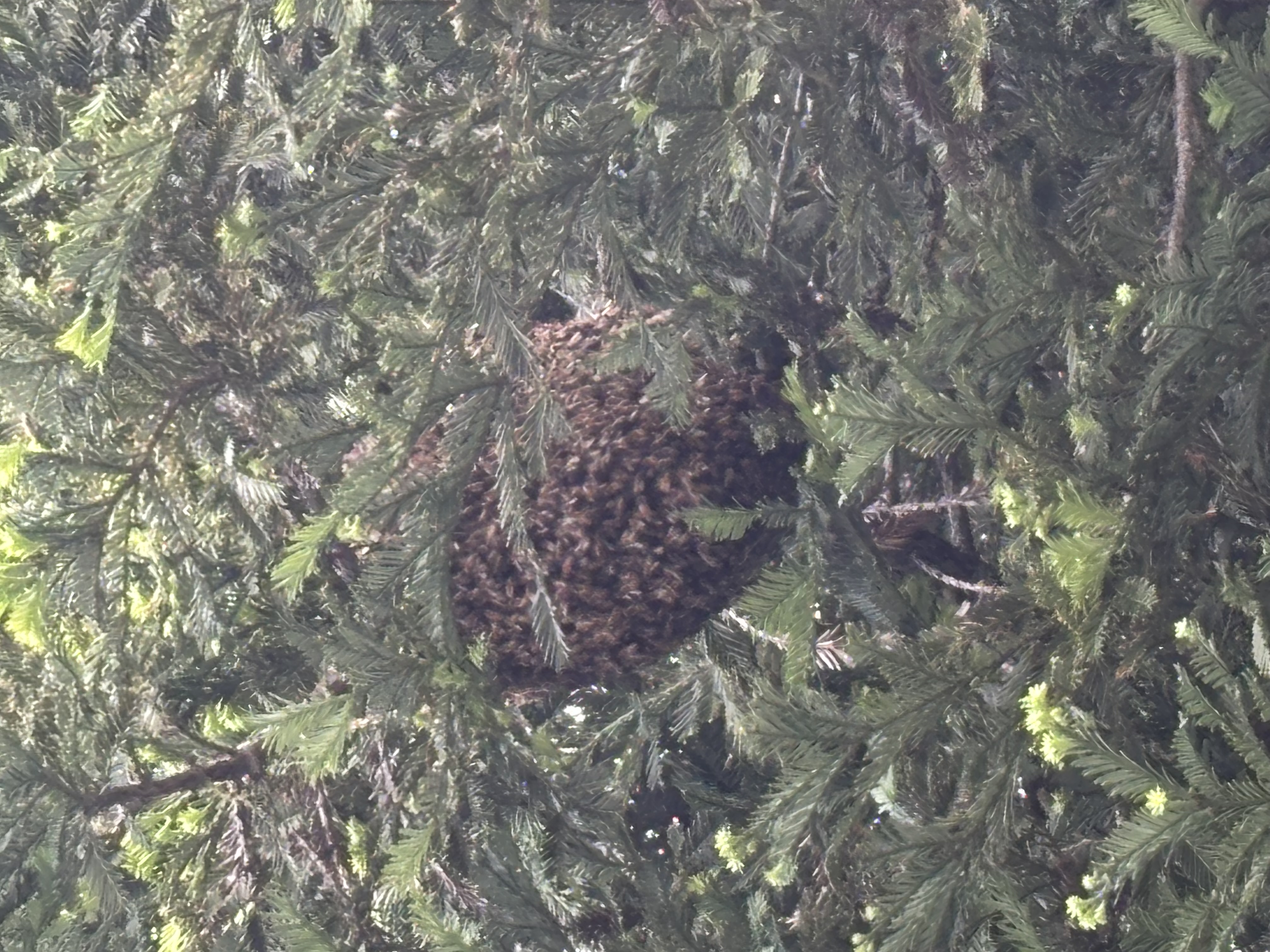
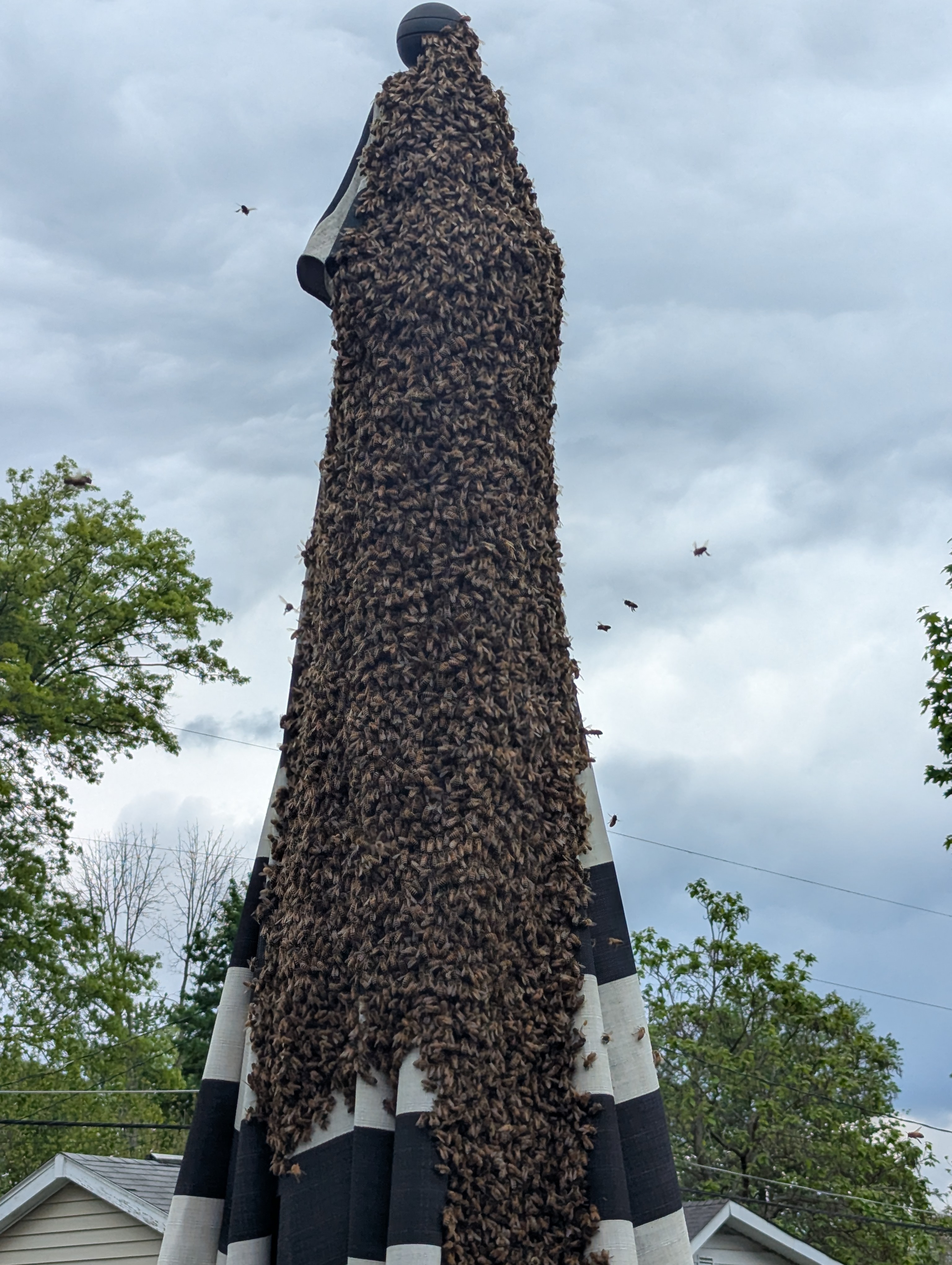
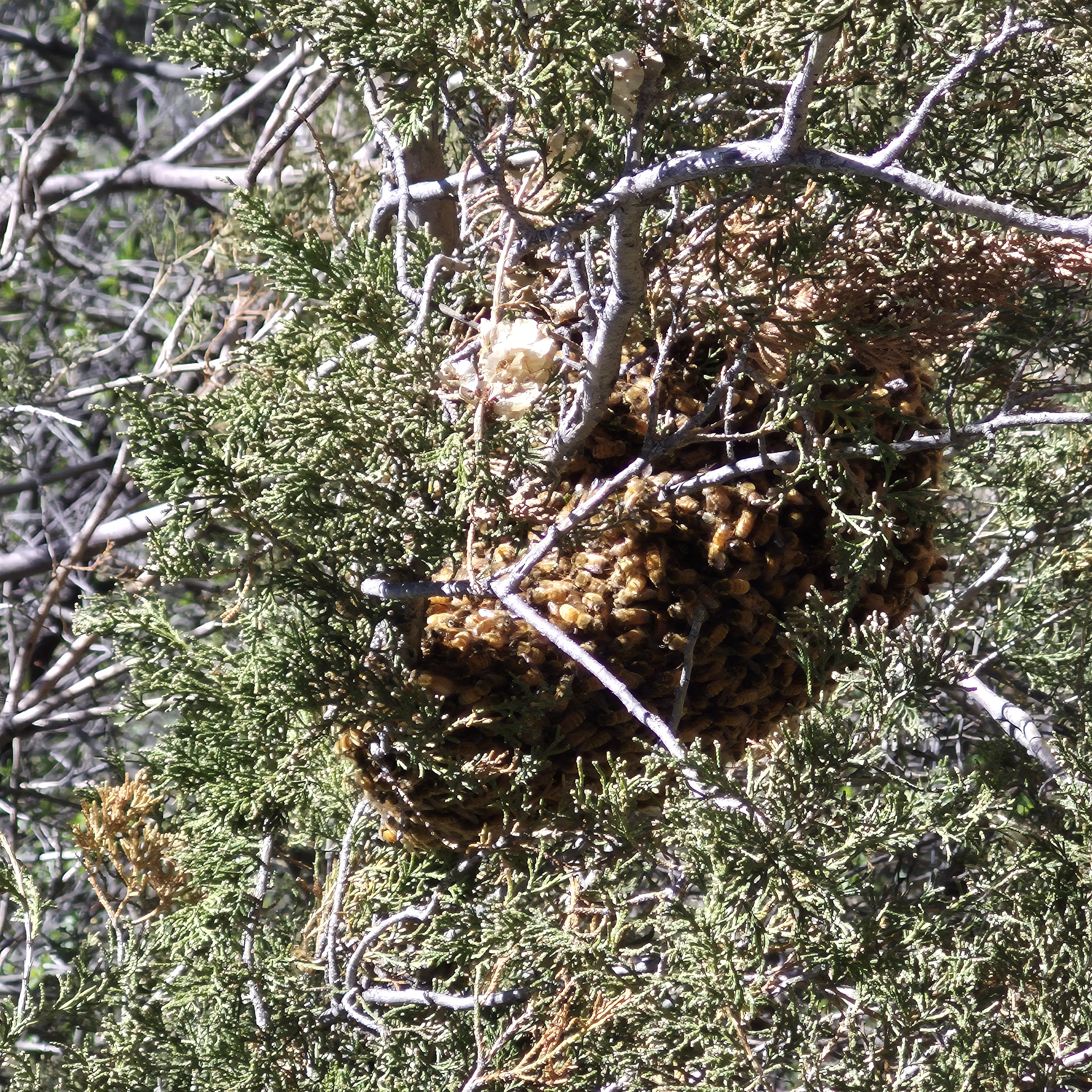
The departing swarm clusters temporarily on a nearby structure, like a tree branch, fence post, or mailbox, while scout bees search for a suitable new home. A few key characteristics of a swarm are:
- Temporary: The cluster is a resting point and typically only stays for 24 to 72 hours.
- Docile: The bees are not defending a home, brood, or honey stores. Before leaving, they gorged themselves on honey, making them full, calm, and focused on finding a new permanent residence.
- Exposed: Swarms are visible, hanging in a ball-like or beard-shaped cluster in the open.
Because of their docile nature and their need for a new home, swarms are a valuable resource for beekeepers looking to establish new apiaries or strengthen existing ones.
Swarm vs. Established Hive: A Critical Difference
It's crucial for property owners to understand the difference between a swarm and an established hive, as the response and removal process are very different.
- Swarm Collection (Often Free): A swarm is a transient cluster of bees in the open. Local beekeepers are usually eager to collect these bees and provide them with a new home. This service is typically offered at no cost because the beekeeper gains a new, healthy colony.
- Established Hive Removal (A Paid Service): An established hive, or colony, is one where bees have already moved into a permanent structure. This could be inside the walls of a house, a roof soffit, a shed, or a hollow tree. They have built wax comb for storing honey and raising young bees (brood). Because they are defending their home, these bees are more defensive. Removing an established hive is a complex process called a "cutout," which requires specialized skills, tools, and often carpentry to access the colony. This is labor-intensive work, and beekeepers will provide a quote for the service based on the complexity, location, and any necessary repairs.
Knowing this distinction helps set clear expectations. If you see a cluster of bees on a branch, you've likely found a swarm. If you see bees flying in and out of a small hole in your home's wall, you have an established colony.
When and Where to Expect Swarms in North Carolina
Across North Carolina, honey bee swarm season begins in earnest during the spring and can continue into early summer. The peak activity generally corresponds with the primary nectar flow, when flowers are abundant and colonies are rapidly expanding. Residents in major metropolitan areas like Charlotte, Raleigh, and Durham often report the most sightings due to population density and ample foraging opportunities in suburban gardens.
Further west, communities in and around Greensboro and Asheville also experience a robust swarm season as the weather warms. Essentially, anywhere honey bees are kept or exist in the wild, swarming is a possibility during the warmer months. These swarms represent a vital opportunity to preserve local honey bee genetics and support the state's agriculture, which depends heavily on pollination.
How You Can Help: The North Carolina Bee Swarm Report
When the public reports a swarm, it creates a crucial connection between the community and local beekeepers who are equipped to help. Swarmed is a platform designed to facilitate this connection, ensuring that bees are safely rescued instead of being needlessly exterminated. The impact of a connected community can be significant. In other states with rising swarm reports, a small network of dedicated beekeepers has successfully rescued over 100 swarms in a single season, saving millions of bees.
By reporting a swarm, you are:
- Protecting Honey Bees: You are giving a vulnerable colony a chance to survive and thrive under the care of a skilled beekeeper.
- Supporting Local Beekeepers: You provide beekeepers with healthy, local bees to build their apiaries, which in turn supports local food systems through pollination.
- Contributing to Your Community: You help ensure public safety by connecting the situation with someone who knows how to handle it properly and humanely.
The Simple Steps to Reporting a Swarm
If you encounter a honey bee swarm, there's no need to panic. The bees are simply resting. Follow these simple steps:
- Observe from a Safe Distance: Keep children and pets away, but feel free to admire the natural wonder from afar.
- Note Key Details: Take note of the swarm's exact location, its approximate size (e.g., the size of a football or a basketball), and how high off the ground it is.
- File a Report: The most effective action you can take is to submit a North Carolina bee swarm report. This will instantly notify registered beekeepers in your immediate area.
This simple act of reporting is the bridge between a swarm in need of a home and a beekeeper ready to provide one. It's a powerful example of community collaboration for the benefit of our environment.
Your quick action can make all the difference for a colony of honey bees. By taking a moment to file a report, you play a vital role in protecting these essential pollinators and supporting local agriculture throughout the Tar Heel State. If you see a swarm, help your local beekeepers provide a new home for them.
Report the honey bee colony here: https://beeswarmed.org/report-bee-colony