As the landscape of New York awakens in the spring, from the bustling streets of New York City to the shores of Buffalo and Rochester, a unique natural phenomenon takes place: honey bee swarming. This annual event is a sign of a healthy, growing honey bee population, and understanding it is key to coexisting with and protecting these vital pollinators. This guide serves as a New York bee swarm calendar, helping you know what to expect and how you can become a part of the solution.
Understanding the New York Bee Swarm Calendar
Honey bee swarms don't follow a strict calendar date, but rather environmental cues. Across New York, the primary swarm season typically begins as temperatures consistently warm up and flowering trees like maples, willows, and dandelions provide abundant nectar.
In areas like Albany and Syracuse, the peak period often aligns with the full bloom of these early nectar sources, usually in late spring. The exact timing can vary year to year based on the weather and can differ between regions. For example, beekeepers on Long Island might see activity slightly earlier than those in the Adirondacks. The important takeaway is that once you see flowers blooming and feel warmer days, the swarm season is likely underway.
This period of intense activity generally lasts for four to six weeks. During this time, healthy, established honey bee colonies reproduce at a colony level. The old queen leaves with roughly half of the worker bees to find a new home, leaving the original hive to raise a new queen.
What is a Honey Bee Swarm?
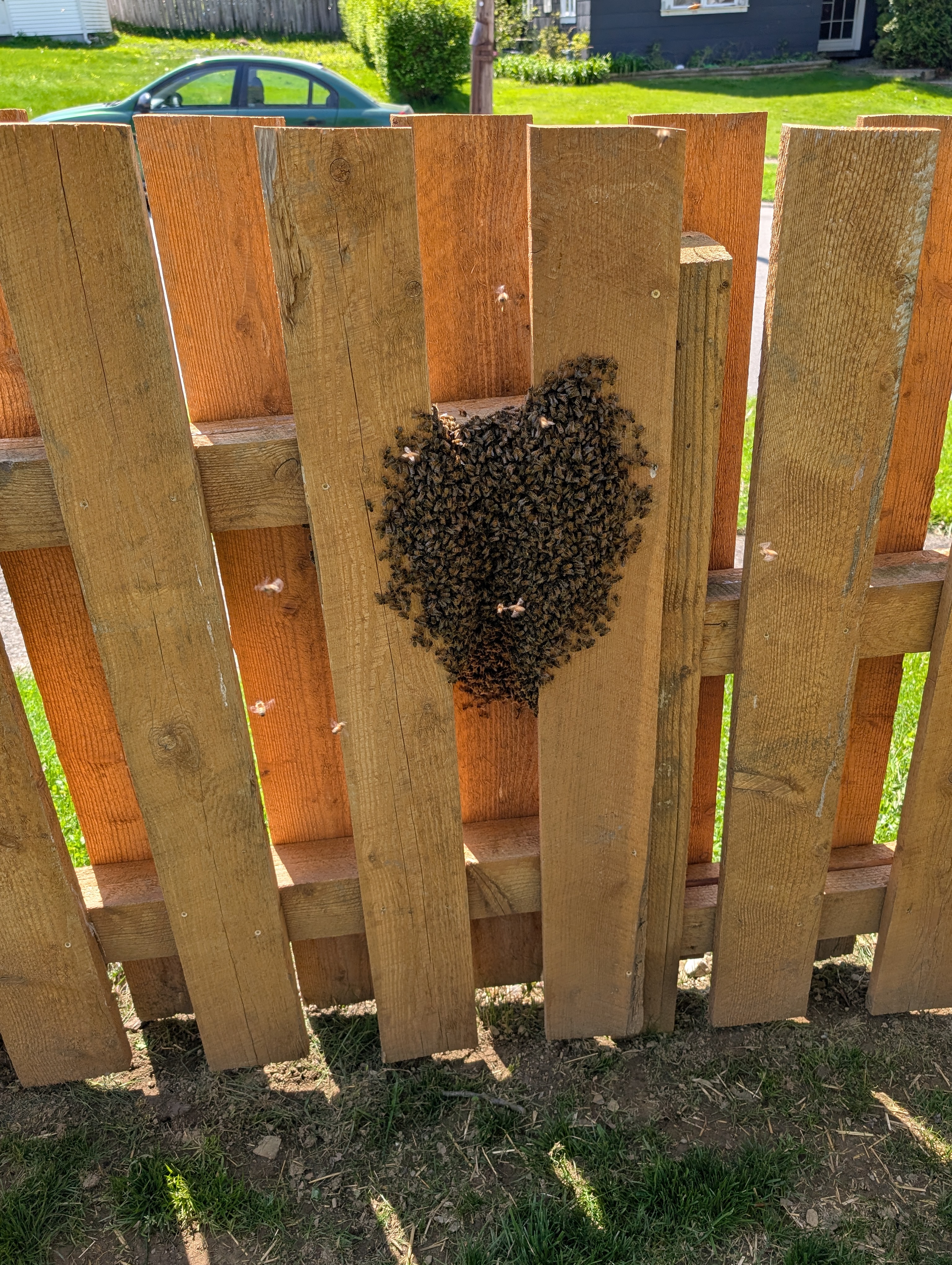
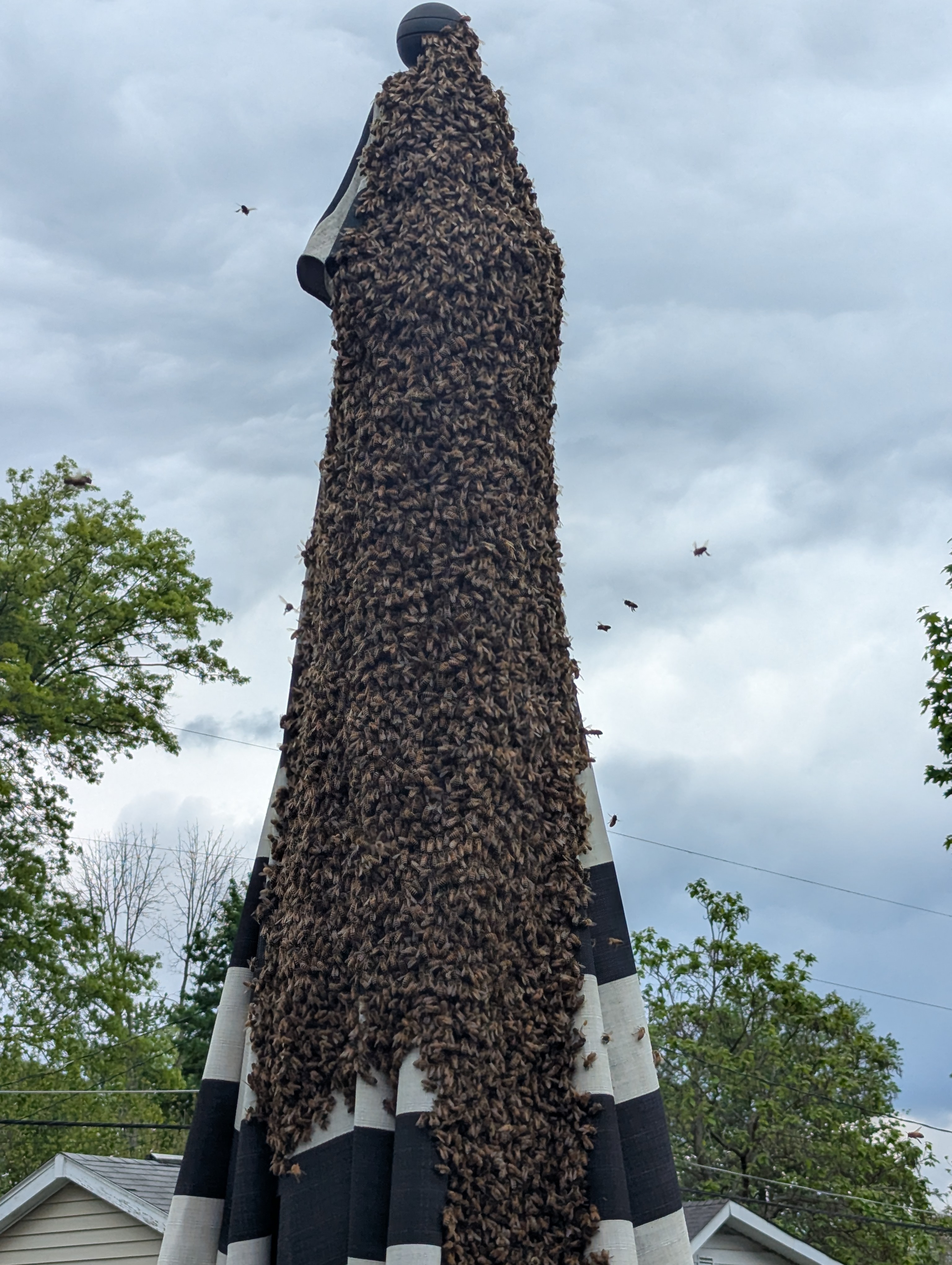
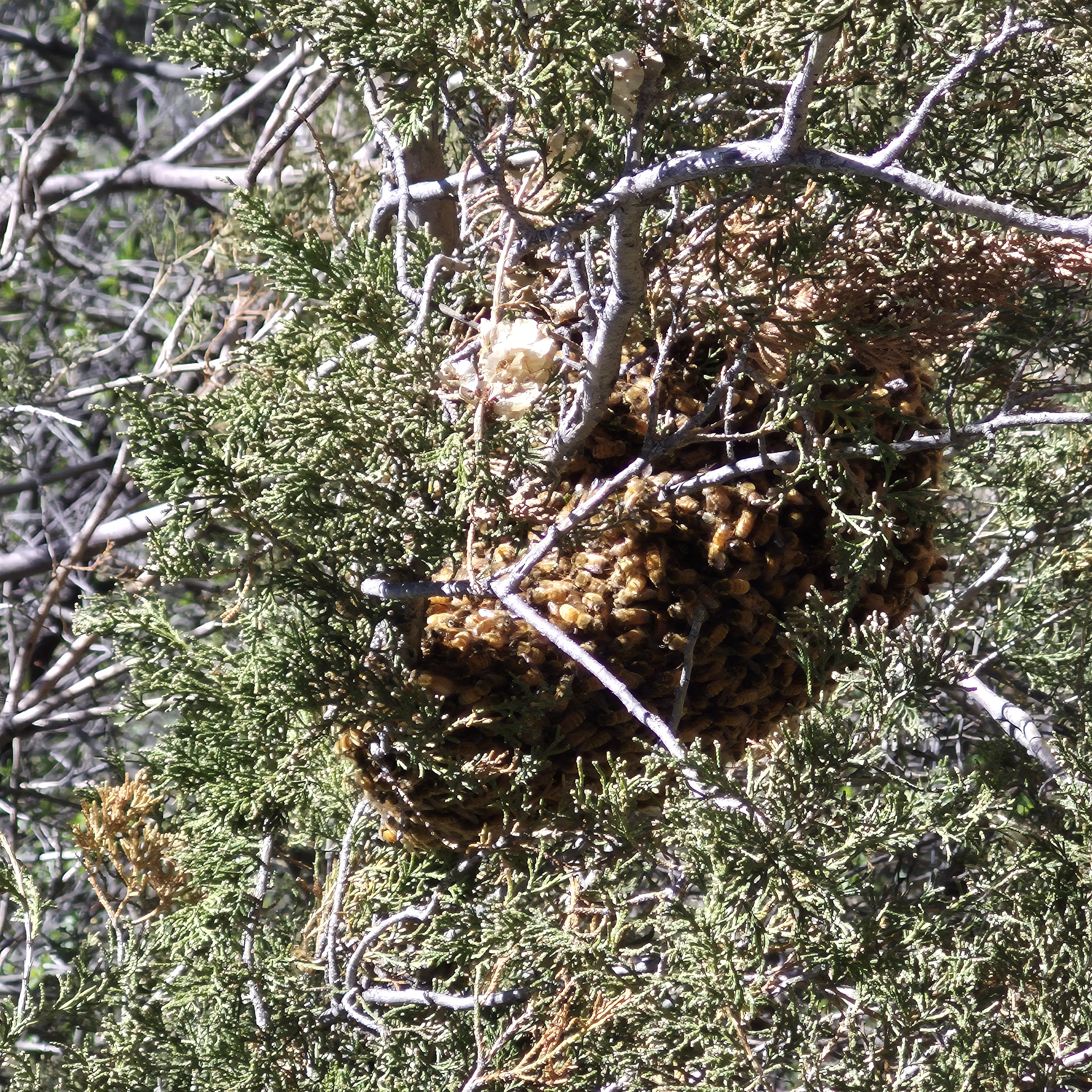
A swarm is a temporary, transient cluster of honey bees. It can look intimidating—a swirling cloud of thousands of bees that eventually settles into a dense ball on a tree branch, fence post, or side of a building. This cluster can contain anywhere from 10,000 to 30,000 worker bees surrounding their queen.
It is crucial to understand that these bees are not aggressive. Before leaving their original hive, they fill up on honey, making them docile and focused solely on one mission: finding a new permanent home. They have no brood, honeycomb, or food stores to protect. Scout bees fly from the cluster in search of a suitable cavity, and once a location is chosen, the entire swarm will move on, typically within 24 to 72 hours.
Swarm vs. Established Colony: A Critical Distinction
Recognizing the difference between a swarm and an established colony is essential, as it determines the appropriate response and potential cost.
- A Swarm: This is the exposed, temporary cluster of bees described above. They have not yet built a home. Because beekeepers value these bees for starting new hives, swarm collection is normally free. A local beekeeper can often quickly and safely gather the bees into a box and give them a new home in their apiary.
- An Established Colony (or Hive): If a swarm finds a suitable cavity—such as inside a wall, chimney, or shed—and begins building wax comb, it is no longer a swarm. It has become an established colony. These bees will be defensive of their new home, which now contains brood (young bees) and honey. Removing an established colony is a complex process called a "cutout." It often requires carpentry skills and structural repairs. For this reason, an established colony removal is a paid service. A beekeeper will need to provide a quote based on the complexity, time, and repairs required.
How You Can Help: Reporting a Swarm in New York
When you see a honey bee swarm, you have a unique opportunity to help protect honey bees and support local agriculture. Instead of calling an exterminator, you can connect the bees with a local beekeeper who can give them a safe home.
The Swarmed network is a community-focused platform designed for this purpose. It connects people who find swarms with nearby beekeepers ready to rescue them. Reporting a swarm is easy and makes a huge difference. You can alert local beekeepers by visiting https://beeswarmed.org/report-bee-colony (opens in a new tab).
By reporting a swarm, you are not just saving bees; you are providing a local beekeeper with a healthy, new colony that can go on to pollinate local gardens and farms.
The Impact of Community Reporting
Community involvement is the backbone of honey bee conservation efforts. Every reported swarm represents a colony saved from being exterminated or perishing without a proper home. The collective action of residents across a state can have a massive impact. For example, while New York's season gets underway, communities in states like Nevada have already reported over 100 swarms through the Swarmed network, demonstrating the power of proactive community involvement.
These rescued bees are vital for New York's agricultural landscape, which depends on pollinators for crops ranging from apples and cherries to pumpkins and berries. Supporting local beekeepers through swarm reporting directly contributes to the health of our food system.
What to Do (and Not Do) When You See a Swarm
If you encounter a honey bee swarm, follow these simple steps.
Do:
- Keep a calm and safe distance. While docile, it's best to give them space.
- Take a photo from a safe distance, if possible. This helps beekeepers confirm it's a honey bee swarm.
- Note the exact location, including how high off the ground it is.
- Report the swarm immediately on Swarmed to alert beekeepers in your area.
Don't:
- Do not spray the swarm with water, pesticides, or any other substance.
- Do not throw objects at the swarm or try to knock it down.
- Do not assume the bees are aggressive. Panicking is unnecessary.
This spring, as you enjoy the warmer weather across the Empire State, keep an eye out for honey bee swarms. By understanding the New York bee swarm calendar and knowing how to respond, you can play a crucial role in protecting these essential insects.
If you see a cluster of honey bees in Rochester, Albany, or anywhere across the state, you know what to do. By taking a moment to report it, you become a crucial part of the solution, helping to protect our essential pollinators and supporting your local beekeeping community. Report any honey bee swarm you find through the Swarmed network at https://beeswarmed.org/report-bee-colony (opens in a new tab).