A Sure Sign of Spring in the Bay State: The Honey Bee Swarm
Across Massachusetts, from the Berkshires to Boston, the arrival of warmer spring weather brings a unique natural phenomenon: the honey bee swarm. As flowers bloom in Worcester and trees leaf out in Springfield, honey bee colonies are also reaching a peak of activity. For residents, spotting a large cluster of thousands of bees on a tree branch or fence post can be startling. However, this event, known as swarming, is a positive sign of a healthy honey bee population and a normal part of their life cycle.
This guide provides essential information for Massachusetts residents about what to do when they encounter a swarm, clarifies the difference between a temporary swarm and an established colony, and explains how to get fast, free assistance from local beekeepers.
What is a Honey Bee Swarm?
A honey bee swarm is a method of reproduction for a honey bee colony. When a colony becomes too large for its current home, the original queen bee will leave with about half of the worker bees to find a new location. The bees left behind will raise a new queen to continue the original hive.
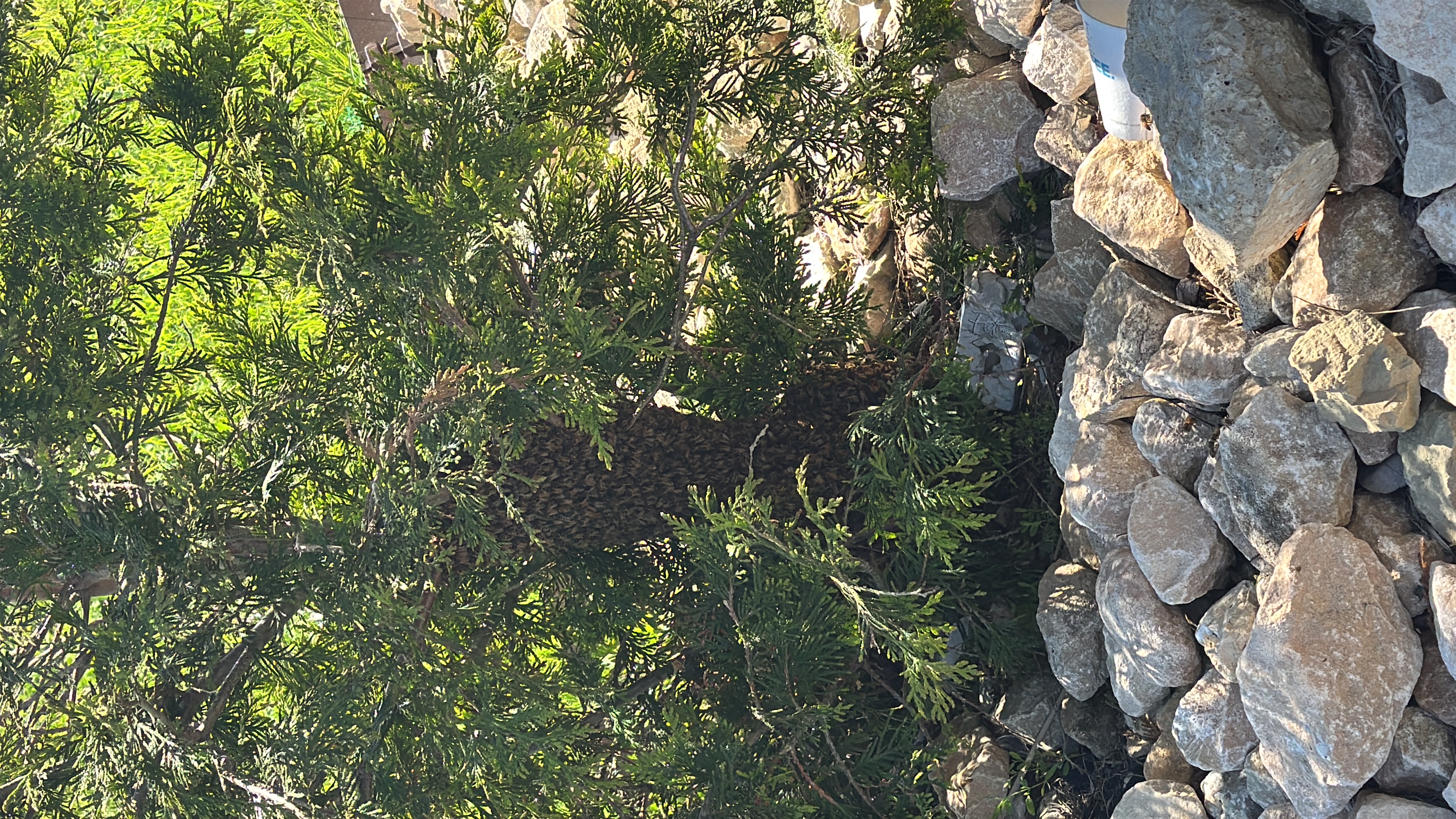
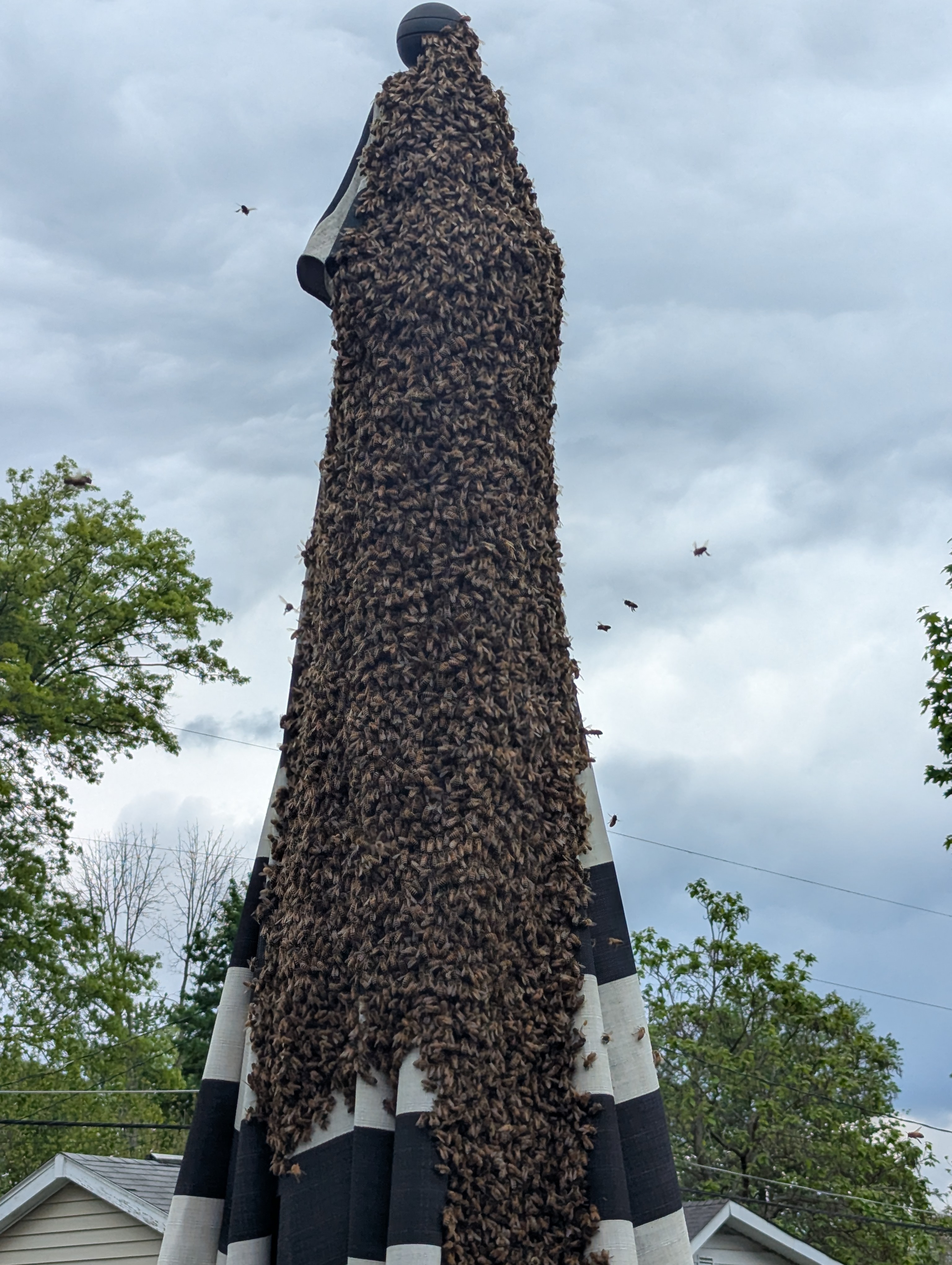
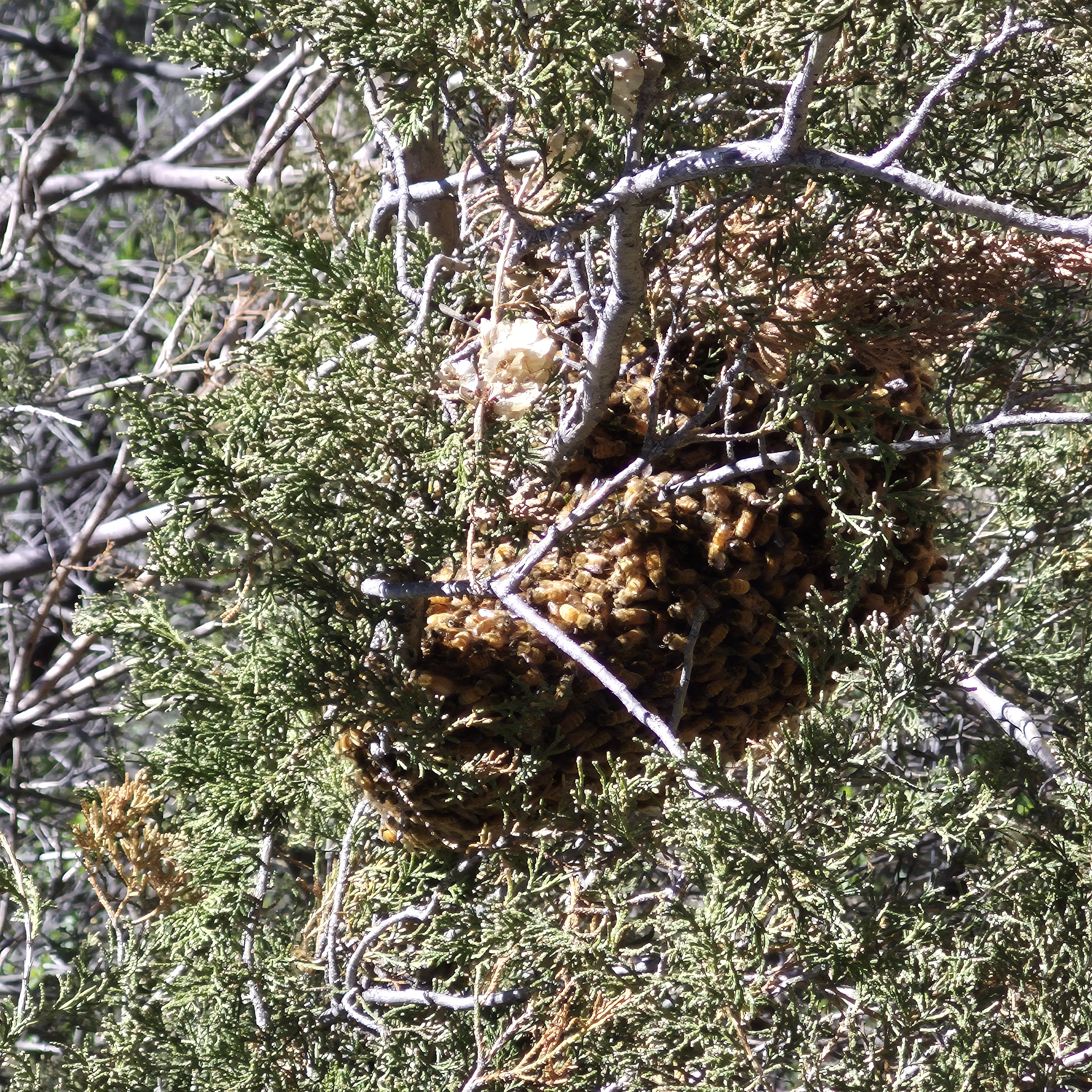
The bees that leave form a large, dense cluster around their queen, often on a tree limb, a bush, or the side of a building. This cluster is a temporary resting point while scout bees search for a suitable new permanent home. A swarm can remain in place for a few hours to a few days.
A key characteristic of a swarm is the bees' docile temperament. Before leaving their original hive, the bees gorge themselves on honey to have enough energy for the journey. With full stomachs and no brood or honey stores to defend, they are not aggressive and are focused solely on finding their new home. They present very little danger to people or pets if left undisturbed.
The Critical Difference: Swarm vs. Established Colony
Understanding the distinction between a swarm and an established colony is crucial, as it determines the type of assistance required and whether there is a cost involved.
- A Swarm: This is a *transient cluster* of bees hanging in the open. They have not yet built any wax comb. Because beekeepers value these bees for starting new hives in their own apiaries, they are almost always happy to come and rescue the swarm at no charge. The process is straightforward, often involving gently shaking the cluster into a box.
- An Established Colony: This is a group of bees that has already moved into a structure and begun building a home. You will see bees flying in and out of a specific opening—a crack in a wall, a vent in a roof, or a hollow in a tree. Inside, they have built wax comb, are raising young (brood), and storing honey. Bees in an established colony are defensive of their home. Removal of an established colony is a complex process called a "cutout." It requires specialized skills, often involving carpentry to open the structure, carefully remove the comb and bees, and then repair the area. This is a labor-intensive service that requires a professional beekeeper, and there is a cost associated with it. A beekeeper will provide a quote based on the complexity of the job, which you can accept or decline.
For anyone seeking Massachusetts bee swarm help, identifying whether you have a swarm or an established colony is the first step.
How You Can Help Honey Bees and Your Community
If you see a cluster of bees that fits the description of a swarm, you are in a unique position to help protect these vital pollinators. Here’s what to do:
- Observe from a Distance: While swarms are docile, it's best to give them space. Do not attempt to disturb them or spray them with water or pesticides.
- Take a Photo: A picture can help a beekeeper quickly confirm that it is a honey bee swarm and prepare for the rescue.
- Report the Swarm Immediately: The most effective action you can take is to report the location of the swarm. Swarmed provides a free, streamlined service to connect you with local beekeepers who are ready to help. By reporting the colony, you are not only ensuring the bees are safely relocated but also helping a local beekeeper strengthen their apiary.
Report a honey bee swarm or colony here. (opens in a new tab)
The Swarmed Network in Action
When you submit a report on the Swarmed platform, an alert is instantly sent to registered beekeepers in your vicinity. A nearby beekeeper can then claim the alert and contact you to arrange the safe rescue of the bees. This community-based system ensures a rapid response, increasing the chances of the swarm being successfully housed before it moves into an undesirable location, like the wall of a neighboring home.
The impact of this network is significant. For example, our network data from Nevada shows that local beekeepers successfully responded to over 100 swarm alerts, providing vital new colonies for their apiaries and ensuring the bees were safely managed. By connecting the public with beekeepers, we create a positive outcome for everyone involved.
By helping rescue a swarm, you are directly supporting the health of the Massachusetts ecosystem. Honey bees are essential for pollinating many of the state's agricultural crops, from cranberries to apples, as well as the wild plants in our local environments.
Your Role in Protecting Massachusetts Bees
This spring, as honey bees become more active across the Commonwealth, you can be a vital part of their preservation story. Sighting a swarm is not a cause for alarm; it is an opportunity to act as a steward for these incredible insects. By understanding what a swarm is and knowing how to get help, you contribute to a bee-friendly community.
If you see a swarm, remember that help is just a few clicks away. Report it to give the bees a safe new home and support the local beekeepers who work tirelessly to care for them. Your simple action has a lasting positive impact.
**Do you see a swarm? Don't wait. Report the bee colony to our network of local Massachusetts beekeepers for safe and prompt rescue. Visit https://beeswarmed.org/report-bee-colony (opens in a new tab) to help save the bees.**