Spring's Arrival and the Buzz of Honey Bees in Kansas
As the Kansas landscape awakens with the vibrant colors of spring, another natural phenomenon takes place. From the bustling urban centers of Kansas City and Wichita to the quieter neighborhoods of Topeka and Overland Park, honey bees begin their annual process of swarming. Seeing a large, buzzing mass of thousands of bees can be alarming, but this event is a positive sign of a healthy honey bee population and a crucial part of their life cycle.
Understanding what a honey bee swarm is, why it happens, and what to do is key to protecting these vital pollinators and supporting local Kansas beekeepers. This guide will walk you through everything you need to know about the spring swarm season and how you can help by filing a Kansas bee swarm report.
Understanding the Difference: Swarm vs. Established Hive
Before knowing how to respond, it's essential to identify what you are seeing. The distinction between a swarm and an established hive is the most important factor in determining the next steps and whether the removal will be free or require a paid service.
What is a Honey Bee Swarm?
A honey bee swarm is a natural part of a colony's reproductive cycle. When a hive becomes overcrowded, the old queen and about half of the worker bees leave to find a new home. This group is called a swarm.
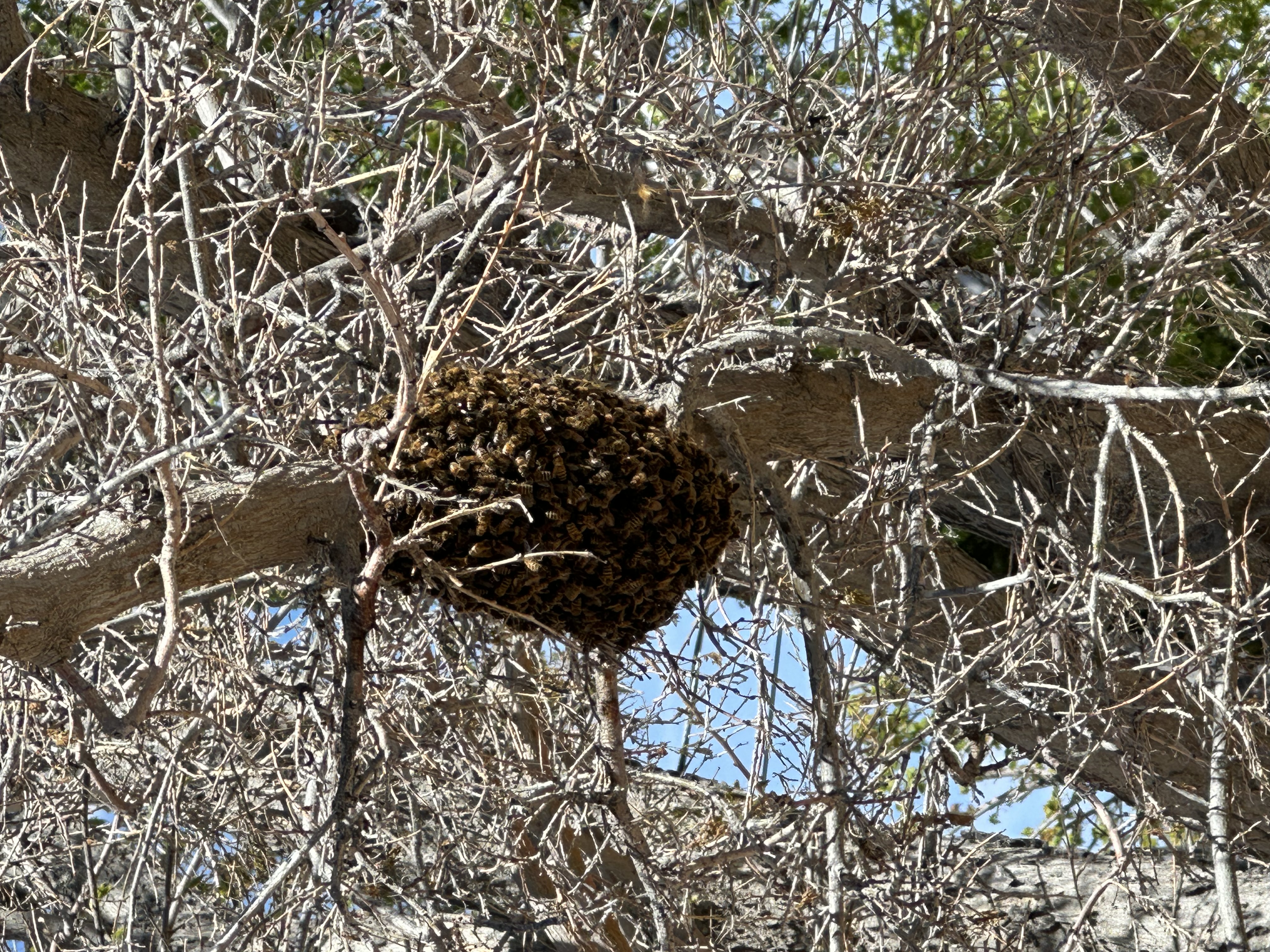
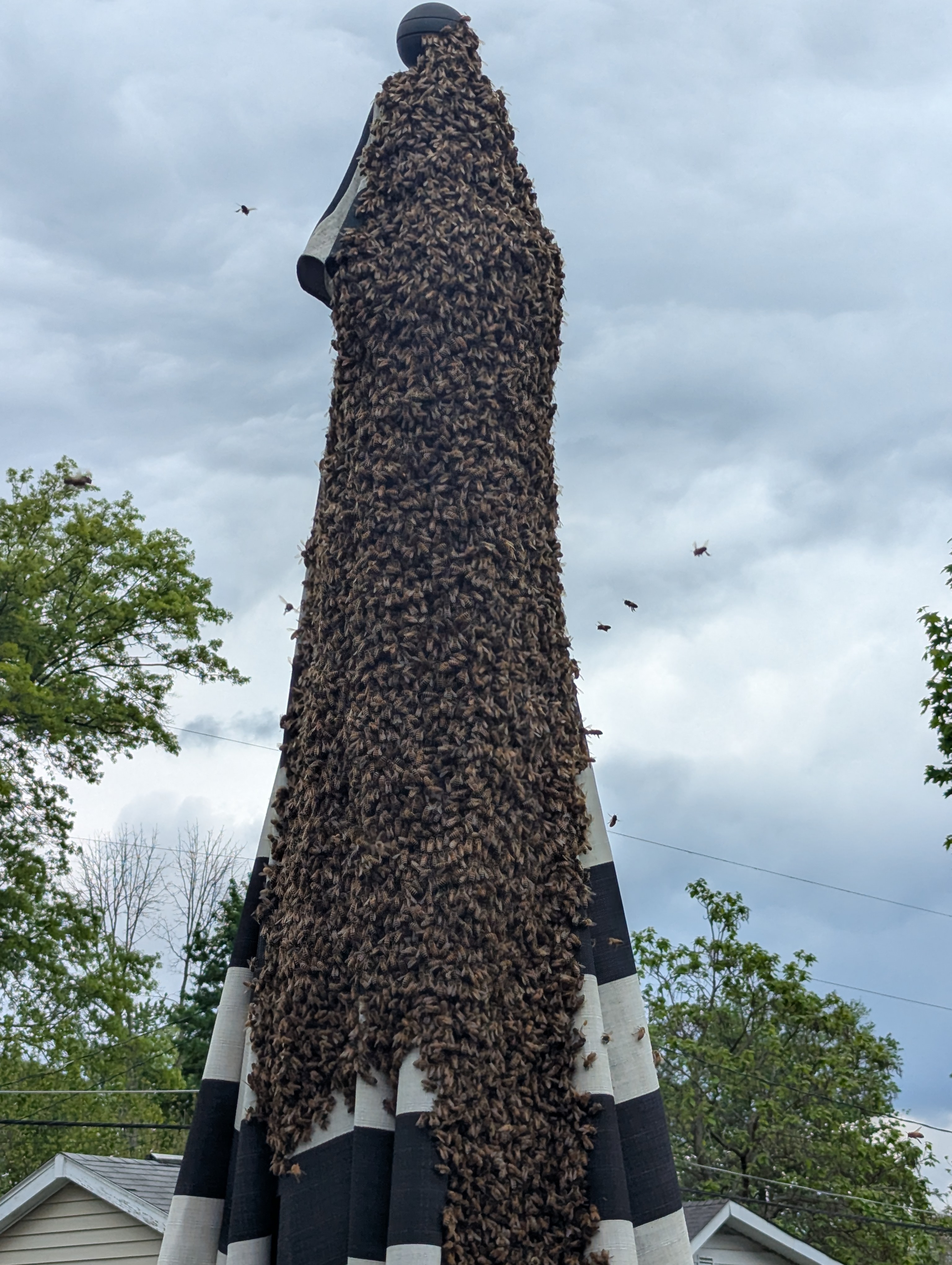
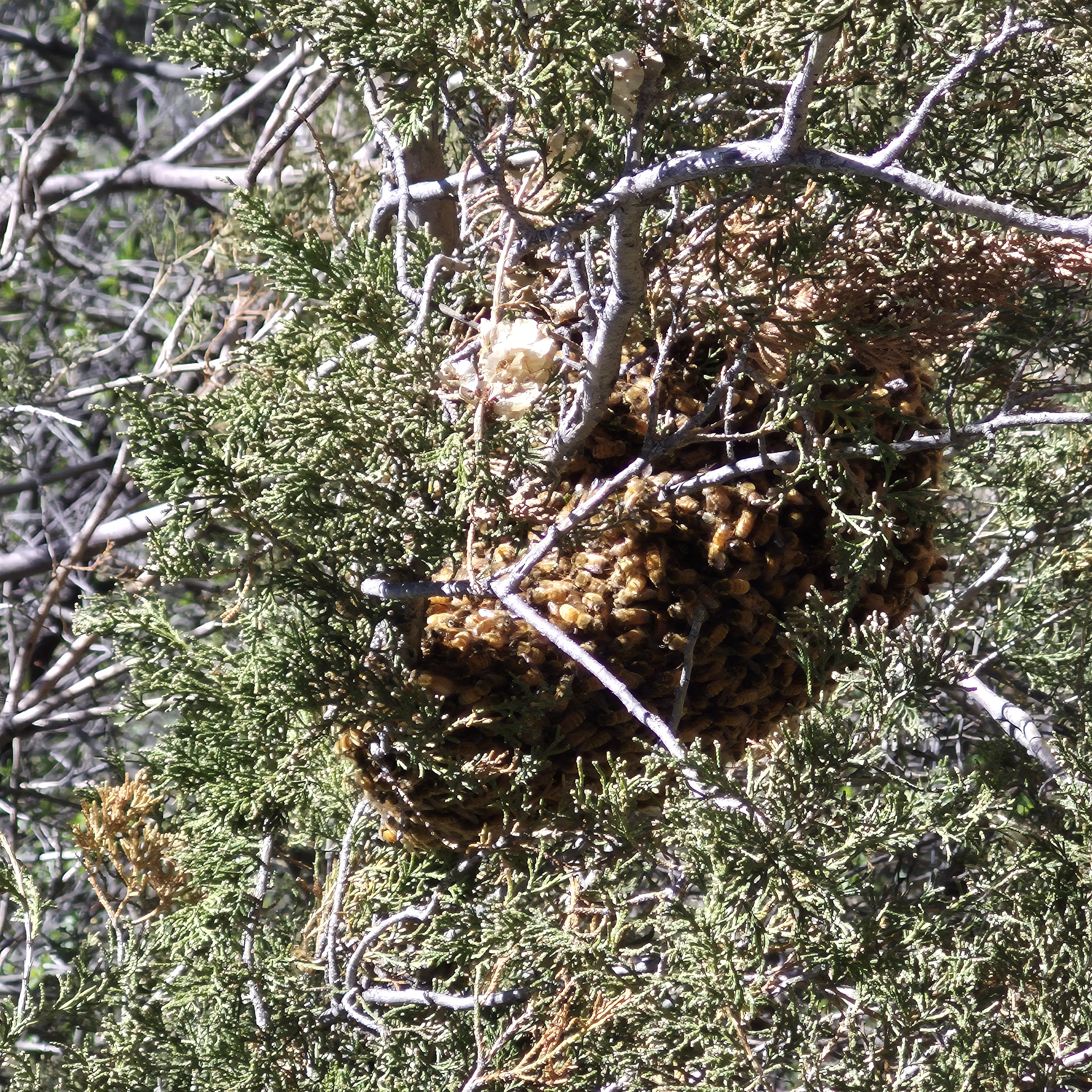
- Appearance: A swarm appears as a large, dense cluster of bees, often hanging from a tree branch, a fence post, or the side of a building. They are in a temporary, transitional state.
- Behavior: Bees in a swarm are surprisingly docile. Before leaving their original hive, they fill their stomachs with honey for the journey. With no home, honey, or baby bees (brood) to defend, their primary focus is on finding a new permanent residence. They are not aggressive unless directly provoked.
- Duration: A swarm will typically only remain in one location for 24 to 72 hours while scout bees search for a suitable new home.
- Removal: Because these bees are valuable to beekeepers looking to start new colonies, swarm collection is almost always a free service. Local beekeepers are happy to come and give these bees a safe, managed home.
What is an Established Hive?
An established hive, also known as an established colony, is different. This occurs after a swarm has found what it considers a permanent home—such as inside a wall, an attic, a shed, or a hollow tree.
- Appearance: You may not see the bees themselves, but rather a steady stream of them flying in and out of a specific opening in a structure. They will have started building wax comb inside.
- Behavior: Once bees have established a home and are raising brood, they become defensive. They will protect their home and resources from perceived threats.
- Duration: This is a permanent residence for the colony.
- Removal: Removing an established colony is a complex and labor-intensive process called a "cutout." It often requires specialized equipment and construction skills to open the structure, carefully remove the bees and comb, and then repair the damage. Because of this complexity, a cutout is a paid service. A beekeeper will need to provide a quote based on the difficulty, time, and repairs involved.
Kansas Swarm Season: When and Where to Expect Activity
Honey bee swarm season in Kansas is directly tied to the arrival of spring. As temperatures consistently warm and nectar-rich flowers begin to bloom, colonies rapidly expand their populations. This growth triggers the swarming instinct.
Activity typically begins in the middle of spring and peaks as the season progresses into its later weeks. You are most likely to spot swarms on warm, sunny afternoons. While swarms can happen anywhere, they are frequently seen in urban and suburban areas like Overland Park, where a mix of flowering plants, trees, and structures provides an ideal environment for bees.
How to Safely and Effectively Report a Bee Swarm
If you encounter a swarm, the most important rule is not to panic. The bees are not interested in you. Do not spray them with water or pesticides, as this can provoke them and harm a valuable part of our ecosystem.
The best action you can take is to provide a safe and helpful report. This is where community action plays a vital role. By reporting a swarm, you connect a vulnerable colony with a local expert who can provide a proper home.
Swarmed offers a simple, effective, and free-to-use platform for this purpose. When you see a swarm, you can file a Kansas bee swarm report on our website. This alert is immediately sent to a network of registered beekeepers in your area. A nearby beekeeper can then claim the alert and arrange for a safe collection.
To help a honey bee colony in need, report the swarm here: https://beeswarmed.org/report-bee-colony (opens in a new tab)
The Power of Community and Local Beekeepers
Every swarm report is a small act of conservation that has a significant impact. Honey bees are essential for pollinating many of the crops that grow in Kansas and across the country. By helping rescue a swarm, you are contributing to food security and biodiversity.
Your report also directly supports local Kansas beekeepers. For a beekeeper, a healthy swarm is a wonderful way to start a new apiary or strengthen an existing one without having to purchase bees. The Swarmed network is built on this mutually beneficial relationship. Our network facilitates thousands of rescues nationally each season. For example, in some states, our connected beekeepers have successfully rescued over 100 swarms in a single season, demonstrating the powerful results of community reporting.
By connecting the public with beekeepers, we ensure that bees that might otherwise be exterminated or perish are given a chance to thrive in a managed hive where they can continue their important work of pollination.
Your Role in Protecting Kansas Honey Bees
This spring, as you enjoy the beautiful weather across Kansas, keep an eye out for honey bee swarms. Remember that a swarm is a sign of nature's resilience, not a threat. By understanding the difference between a temporary swarm and an established hive, you can respond appropriately and safely.
Your participation is crucial. Reporting a swarm is a simple, no-cost action that protects honey bees, supports your local beekeeping community, and contributes to the health of our shared environment. If you see a cluster of bees, take a moment to help them find a safe home.
Please help protect our vital pollinators. Report any swarm you find through the Swarmed network at https://beeswarmed.org/report-bee-colony (opens in a new tab).