Understanding Iowa's Spring Swarm Season
Across Iowa, from the urban landscapes of Des Moines to the fields surrounding Cedar Rapids, the arrival of spring signals a remarkable natural event: honey bee swarm season. As temperatures rise and the first flowers bloom, healthy honey bee colonies begin to expand. This period of growth often leads to swarming, a fascinating and vital process for the survival and propagation of honey bees. For residents in cities like Iowa City, encountering a large cluster of thousands of bees can be alarming, but understanding the Iowa bee swarm calendar and the nature of swarms reveals it as an opportunity to help, not a cause for fear.
Swarming is the honey bee’s method of reproduction at the colony level. When a colony becomes overcrowded, the old queen and about half of the worker bees leave their original hive to establish a new one. This ensures the continuation of their species. The bees that remain behind will raise a new queen to continue the original colony. The swarm that leaves is in a temporary, transitional state, seeking a suitable new, permanent home.
Identifying a Honey Bee Swarm
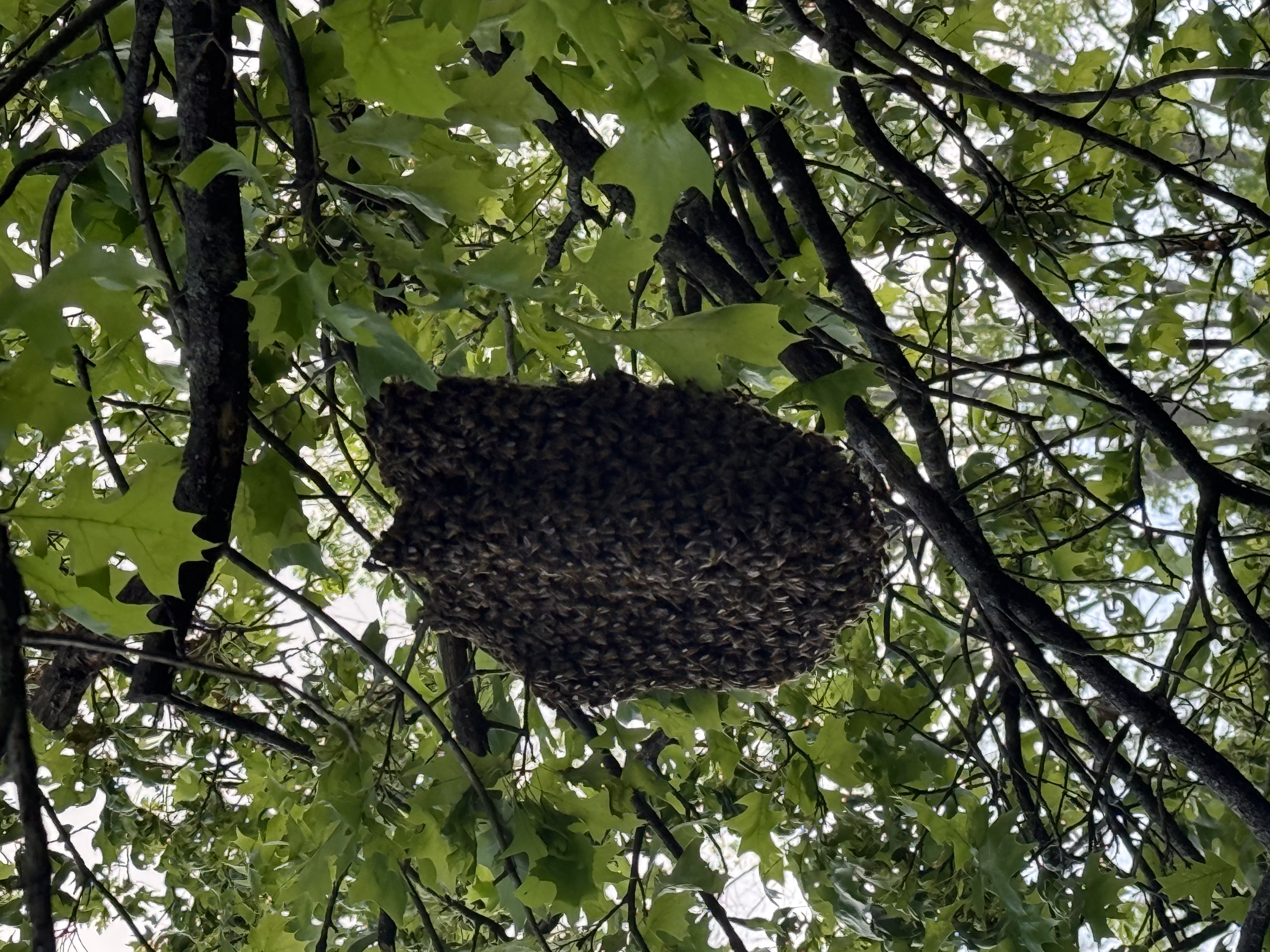
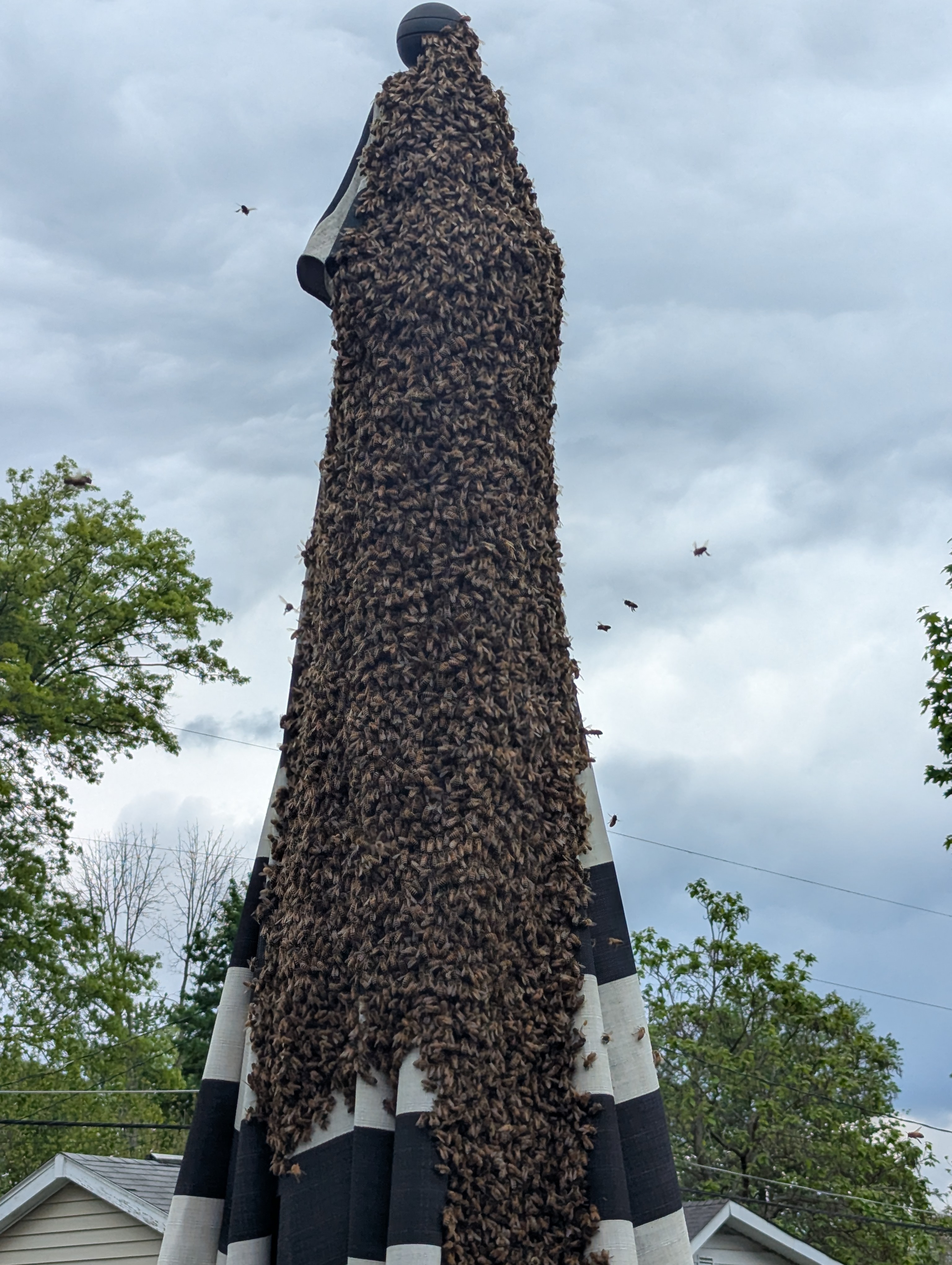
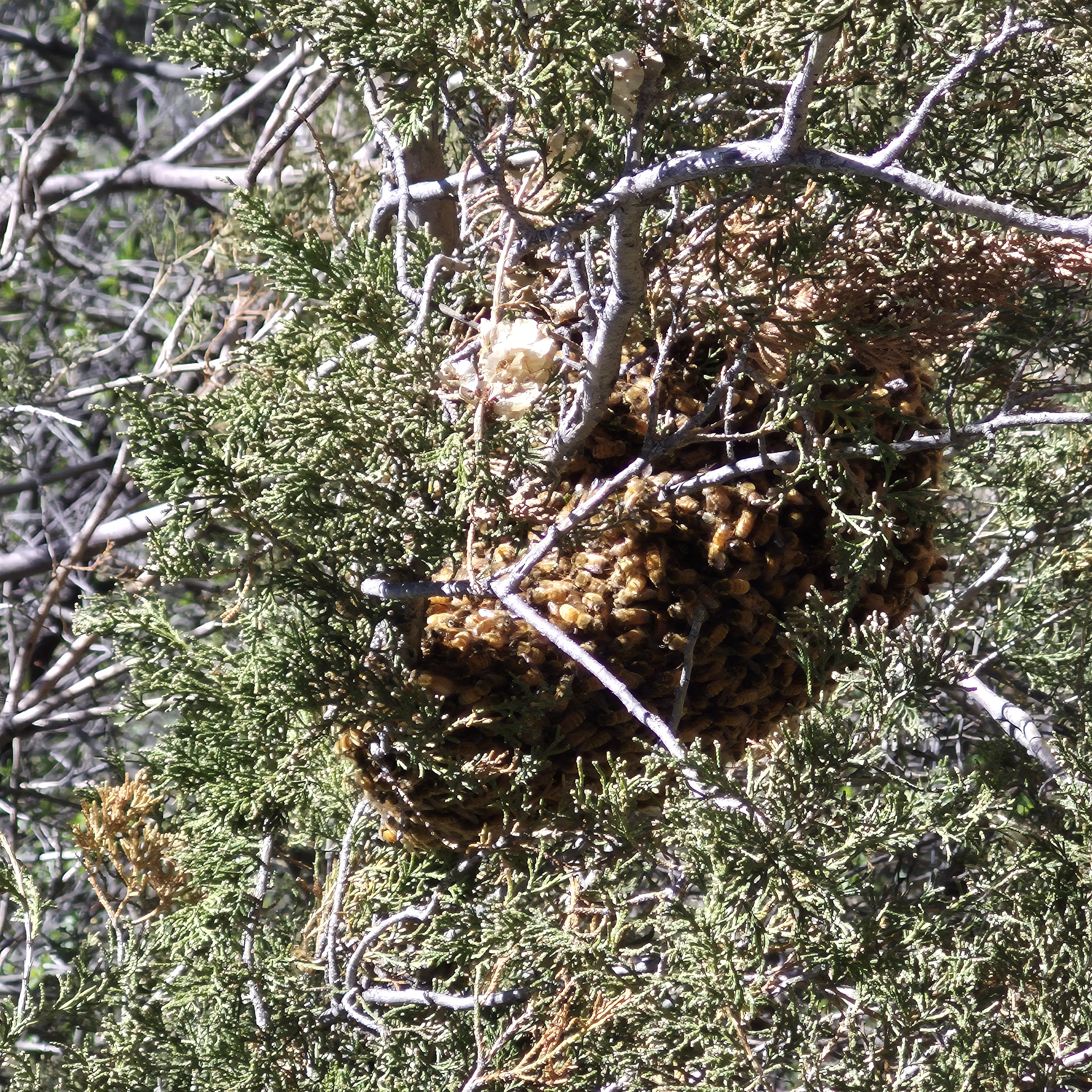
Correctly identifying a honey bee swarm is the first step in ensuring a positive outcome for both the bees and the community. A swarm is a large, dense cluster of bees, often hanging from a tree branch, fence post, or the side of a building. It can range in size from a grapefruit to a basketball and contains thousands of individual bees.
One of the most important facts about a swarm is the temperament of the bees. Bees in a swarm are typically very docile. Before leaving their original hive, they fill their stomachs with honey, providing them with the energy needed for the journey and to start building a new home. With no brood (young bees) or honey stores to protect, their defensive instincts are significantly reduced. They are focused solely on protecting their queen and finding a new cavity to call home.
This temporary cluster is a resting point. Scout bees fly out from the swarm in search of a permanent location, such as a hollow tree or a protected structural cavity. The swarm will usually remain in its temporary location for 24 to 72 hours before moving on. This provides a critical window for a safe and successful rescue.
Swarm Rescue vs. Established Colony Removal
It is crucial for homeowners to understand the difference between a transient swarm and an established colony, as the response and process for removal are entirely different.
- Swarm: A temporary cluster of bees hanging in the open. They have not yet built wax comb. Rescuing a swarm is a relatively straightforward process for a beekeeper and is almost always performed as a free service. Beekeepers value these swarms as they can be used to start new, healthy hives in their apiaries.
- Established Colony: Bees that have moved into a structure and have begun building comb. This could be inside a wall, a chimney, a roof soffit, or an attic. Once comb is built and the colony is raising brood, the bees become defensive of their home. Removal of an established colony is not a simple rescue; it is a specialized service known as a “cutout.” This is labor-intensive work that may require carpentry skills to open the structure, carefully remove the comb and bees, and then perform repairs. A cutout is a paid service, and a professional beekeeper will provide a quote based on the complexity, location, and time required for the removal.
Swarmed helps connect Iowans with beekeepers for the safe rescue of swarms. If you have an established colony, a beekeeper from the network may still be able to help but will discuss the scope of the work and any associated costs with you directly.
The Iowa Bee Swarm Calendar
While there isn't a fixed, predictable schedule, the Iowa bee swarm calendar is directly tied to environmental cues. Swarming in Iowa typically begins in late spring, as consistent daytime temperatures rise and major nectar sources like dandelions, fruit trees, and black locust trees come into bloom. This influx of resources fuels rapid colony expansion, which is the primary trigger for swarming.
Instead of looking at specific dates, residents should be observant when these natural signs appear. A sudden increase in bee activity around your property can be an indicator that local colonies are strong and that swarming is imminent. The peak of this activity often coincides with the strongest nectar flows of the season. By understanding these natural rhythms, you can be better prepared to act when you see a swarm.
The Community's Role in Protecting Honey Bees
When a swarm appears, it represents a vulnerable moment in the bees' life cycle. Without a proper home, they are exposed to the elements and may not survive. This is where community action becomes essential. Rather than calling an exterminator or trying to deal with the bees yourself, a simple report can lead to their salvation.
Local beekeepers are eager to provide these swarms with a safe, managed hive where they can thrive, pollinate local crops, and produce honey. By reporting a swarm, you are not just solving a problem; you are actively contributing to the health of Iowa's ecosystem and supporting the local beekeeping community. The power of a connected network is significant. In states with established networks like Nevada, our platform has facilitated the rescue of 100 swarms, connecting them with just five local beekeepers. This demonstrates how community reporting can lead to a massive positive impact on bee populations.
When you find a swarm, the best course of action is to report it through a dedicated service like Swarmed. Our platform instantly alerts a network of registered, local beekeepers in your area. This rapid notification system increases the chances of a beekeeper arriving to rescue the bees before they move into an undesirable location, like the wall of a home. To make a report, simply visit `https://beeswarmed.org/report-bee-colony`.
What to Do When You Find a Swarm
If you discover a honey bee swarm on your property, remember these simple steps:
- Stay Calm and Keep a Safe Distance: Do not panic. The bees are not aggressive. Simply give them space and observe from a distance.
- Do Not Disturb the Bees: Do not spray the swarm with water, pesticides, or any other substance. Do not throw objects at it or try to knock it down.
- Protect Others: Keep pets and children away from the immediate area to ensure the swarm remains undisturbed.
- Report the Swarm Immediately: The most helpful action you can take is to report it. Use your phone to visit the Swarmed report page. Providing an accurate location and a photo can greatly help the responding beekeeper.
Your quick and responsible action makes all the difference. Reporting is free, easy, and directly supports honey bee populations.
Your report can be the difference between a swarm perishing and it becoming a thriving, pollinating colony in a local beekeeper's apiary. Help protect Iowa's honey bees and support your local beekeeping community by reporting any swarm you see. Visit `https://beeswarmed.org/report-bee-colony` to make a report and become part of the solution.