You've Reported a Honey Bee Swarm—Thank You!
First, thank you for taking the time to report a honey bee swarm in New Mexico. Whether you're in Albuquerque, Santa Fe, Las Cruces, or anywhere in the Land of Enchantment, your action is the critical first step in protecting honey bees and supporting your local community. By reporting the swarm through Swarmed, you have connected a vulnerable bee colony with local beekeepers who can give it a safe, managed home. This guide outlines what you can expect to happen next.
The Swarmed Alert System in Action
Immediately after you submitted your report, our system went to work. You should have received an email confirming that your report was successfully received and is now active. Simultaneously, alerts were sent to registered beekeepers in your specific area. These are local, hobbyist, and professional beekeepers who have volunteered to rescue honey bee swarms.
This network is a community-driven effort. It bridges the gap between residents who discover bees and the experts who have the skills and equipment to safely handle them. Your report has activated this network, bringing valuable community resources right to your doorstep.
The Beekeeper's Response: What to Expect
Soon, you should receive a call or text from a local beekeeper. They will introduce themselves and ask a few clarifying questions to assess the situation. These questions are important for determining the right approach and equipment.
Typical questions include:
- Location: Where exactly are the bees? Are they on a tree branch, a fence post, or the side of a building?
- Height: How high off the ground are they? This helps the beekeeper know if a ladder or special equipment is needed.
- Size and Shape: Can you describe the cluster? Is it the size of a football or a basketball?
- Duration: How long have the bees been there? A few hours, or a few days?
This information helps the beekeeper confirm they are dealing with a honey bee swarm and not another type of insect, and to prepare for a safe and efficient rescue. Response times can vary depending on the time of day, the beekeeper's availability, and your location, but the beekeepers on our network are eager to help.
Swarm vs. Established Hive: A Critical Distinction
One of the most important things a beekeeper will try to determine is whether you have a swarm or an established hive. This distinction is crucial because it affects the complexity, safety, and cost of the removal.
The Honey Bee Swarm
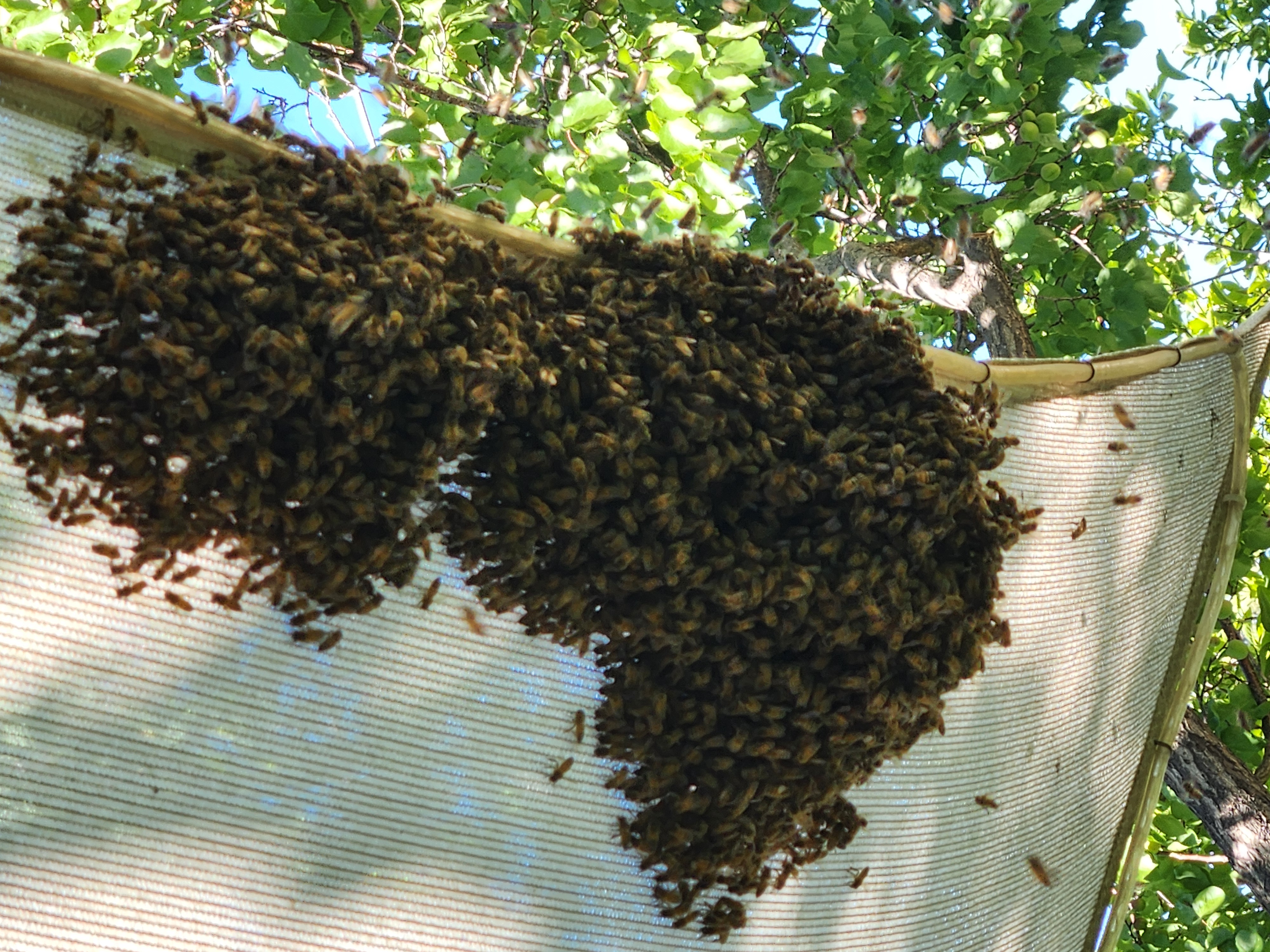
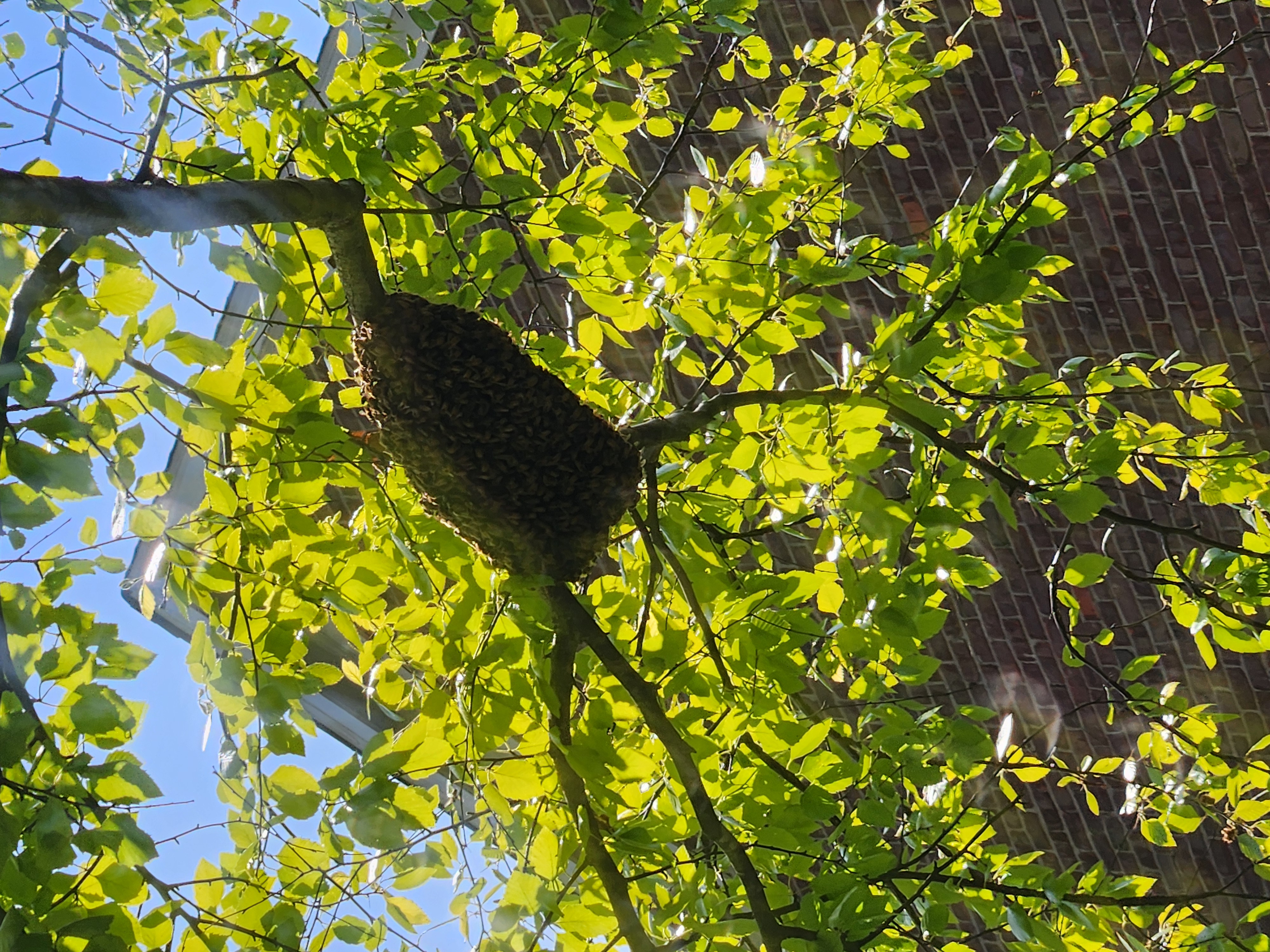
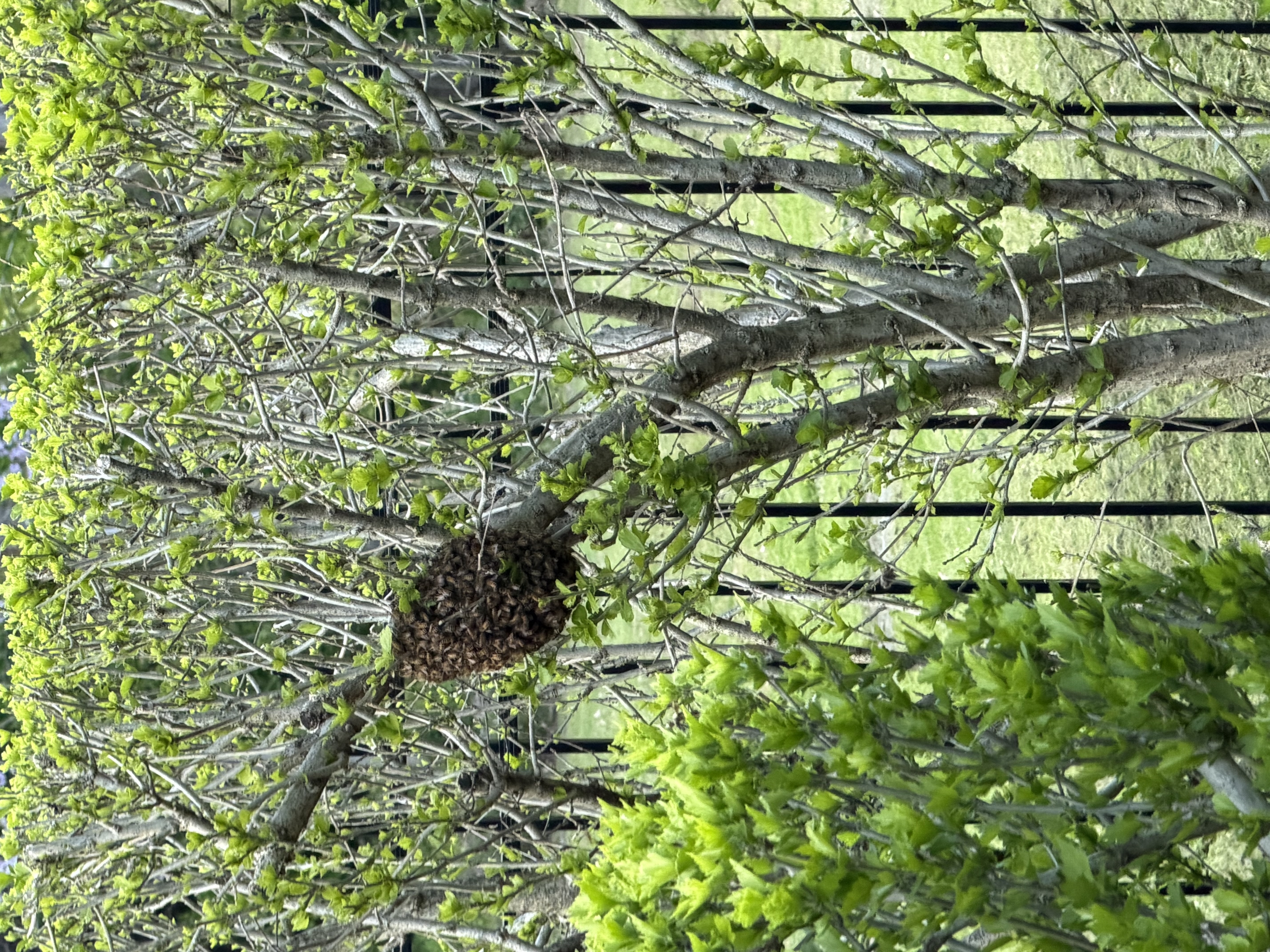
- What it is: A swarm is a large cluster of bees—often thousands—with a queen, hanging from a structure like a tree branch, eave, or mailbox. This is a temporary resting spot.
- Behavior: The bees are in the process of moving. They have left their old home and are searching for a new one. Because they have engorged themselves on honey for the journey and have no baby bees (brood) or comb to defend, they are typically very docile.
- Removal: A beekeeper can usually brush or shake the bees gently into a special box. This process is relatively quick and straightforward.
- Cost:Swarm rescue is normally free. Beekeepers are happy to give these bees a new home in their apiaries.
The Established Hive or Colony
- What it is: An established hive is a colony that has already moved into a permanent structure. This could be inside a wall, an attic, a shed, or a hollow tree. They have started building wax comb for storing honey and raising brood.
- Behavior: These bees are no longer transient. They are defending their home, their food stores, and their young. As a result, they are much more defensive and protective.
- Removal: Removing an established colony is a complex job known as a "cutout." It often requires specialized tools, carpentry skills to open up the structure, and significant time to carefully remove the bees and all their comb.
- Cost:A cutout is a paid service. The beekeeper is performing skilled labor that can take hours and may require structural repairs.
Why a Beekeeper Might Provide a Quote for Removal
If the beekeeper determines the bees have built an established hive in a structure, they will discuss the removal process and provide a quote for their services. It's important to understand why this service comes with a cost.
As the Swarmed network advises: Swarm collection is normally free - beekeepers want these bees. However, if bees have established a hive in your wall or structure with built comb, removal requires specialized skills and carpentry work. Expect the beekeeper to provide a fair quote based on complexity and repairs needed. You can accept or reject.
This is a professional service, much like hiring a plumber or an electrician. The quote will factor in the difficulty of access, the time required, and any materials needed for repair. You are under no obligation to accept the quote. Reporting the bees through Swarmed is always free to use, and our goal is to connect you with the right expertise for your specific situation.
Your Report Makes a Difference in New Mexico
In New Mexico's unique ecosystems, from the Rio Grande Valley to the high desert plains, pollinators like honey bees are essential. Your single report does more than just solve a potential problem on your property—it actively contributes to the health of the local environment.
Every rescued swarm helps preserve local bee genetics, which are best adapted to our climate. It also supports local New Mexico beekeepers by providing them with healthy, productive colonies for pollination and honey production. In some active regions, our beekeeper networks can rescue over 102 swarms in a single spring season, a testament to the power of community involvement.
By choosing rescue over extermination, you become a vital part of the solution for protecting these indispensable creatures. Thank you again for your quick thinking and community spirit. If you know others who encounter a swarm, please encourage them to take the same positive step.
To help protect honey bees and support beekeepers in your community, the best action is always to report a colony. If you need to report another swarm or an established hive, you can do so here: Report a bee swarm or colony (opens in a new tab).