You've Done Your Part—Here’s What to Expect Next
Across Georgia, from the bustling streets of Atlanta to the historic squares of Savannah and the quiet neighborhoods of Augusta, springtime brings a remarkable natural event: the honey bee swarm. If you've just used Swarmed to report one of these clusters, you’ve taken a crucial step in protecting these essential pollinators and supporting your local beekeeping community. This guide will walk you through the process, clarifying what happens now, who will respond, and the important difference between a free swarm rescue and a paid colony removal.
The Immediate Response: Notifications and Alerts
Shortly after you submit your report, the Swarmed system gets to work. You should receive an email confirmation almost immediately, acknowledging that your report has been received and is being processed. This isn't just a simple auto-reply; it's the start of a rapid communication process.
Your report, with the location and any photos you provided, is instantly dispatched to a network of registered beekeepers in your specific area of Georgia. These are local hobbyists and professionals who have volunteered to rescue honey bee swarms. The system intelligently identifies the beekeepers closest to the swarm's location to ensure the quickest possible response. This automated alert saves precious time and connects your report directly with the people equipped to help.
A Beekeeper Has Claimed Your Swarm
Once a Georgia beekeeper accepts the request, you will receive a second notification. This email is important because it typically contains the name and contact information of the beekeeper who is on their way. They may call or text you for more details, such as the swarm's exact height, the surface it's on, or any accessibility issues.
While you wait, the best course of action is to observe from a safe distance. Keep pets and curious children away from the area. It is vital that you do not spray the bees with water or any kind of pesticide. A swarm is generally docile and is simply resting while scout bees search for a new, permanent home. By taking a moment to Report swarms to help bees and your community (opens in a new tab), you provide these pollinators with a chance to be safely housed in a managed apiary where they can thrive.
Swarm Rescue vs. Established Hive Removal: A Critical Distinction
Understanding the difference between a swarm and an established hive is key to managing your expectations regarding service and cost. What you reported will determine the type of response a beekeeper can provide.
What is a Honey Bee Swarm? (Typically Free Rescue)
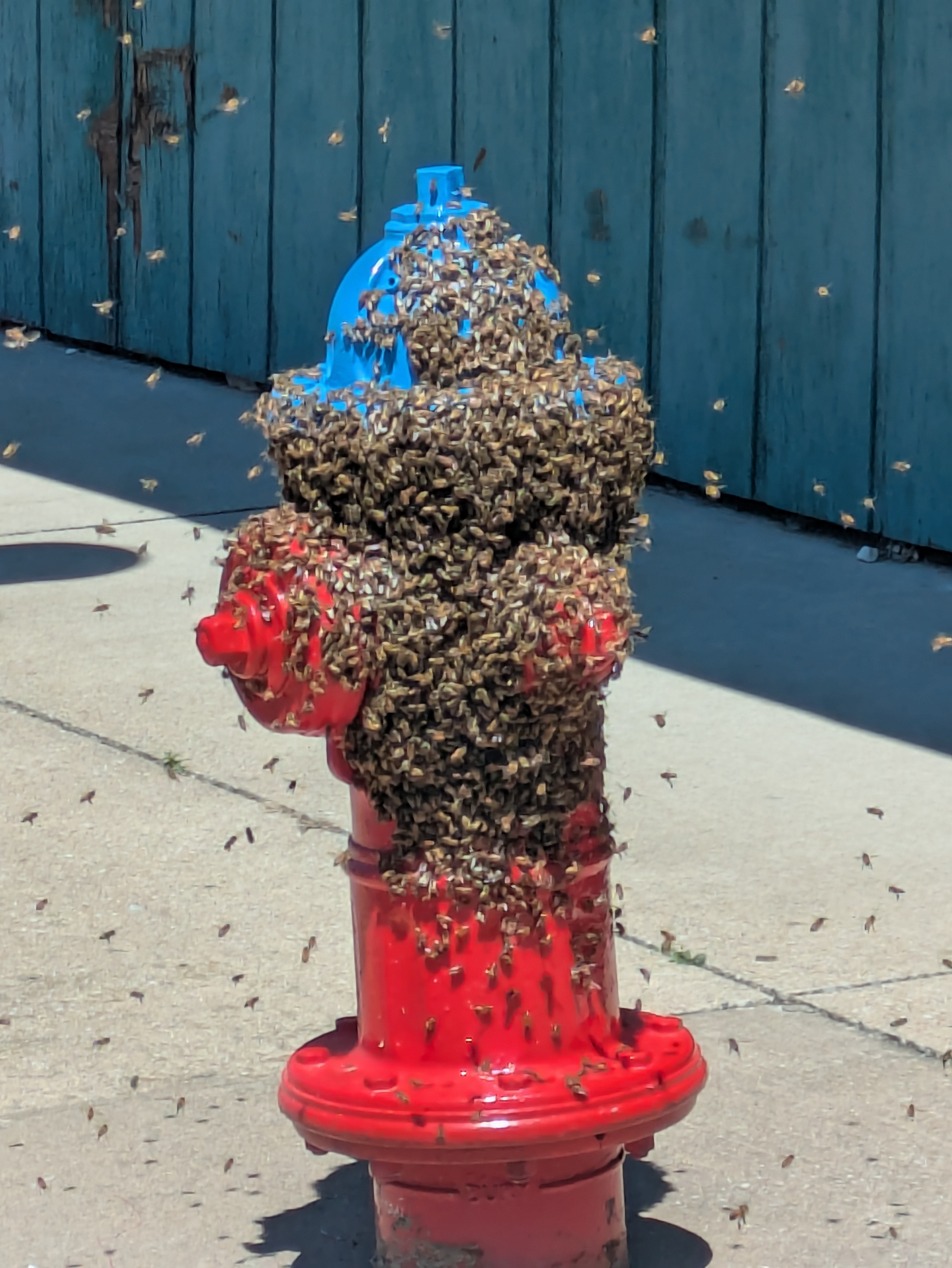
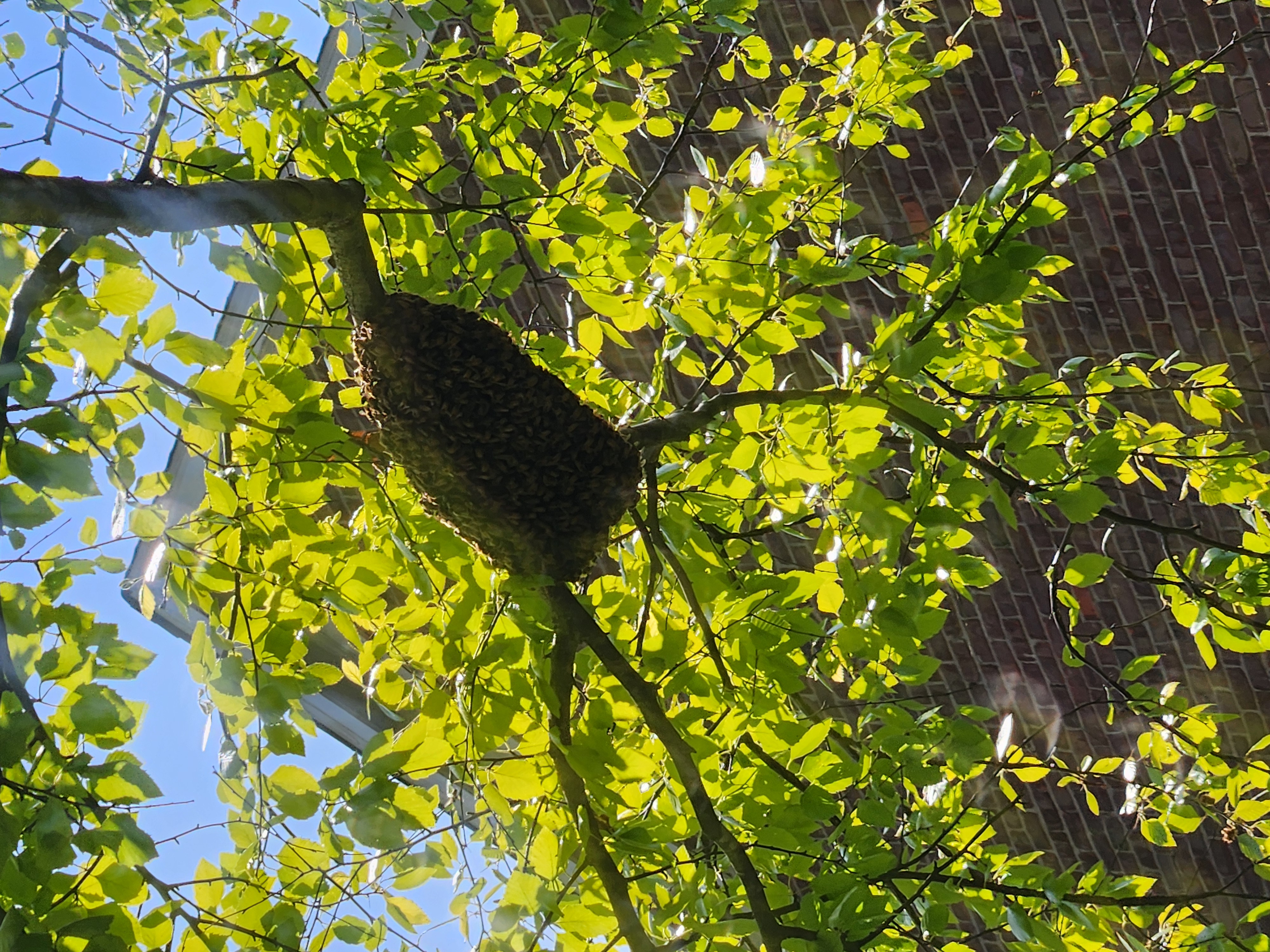
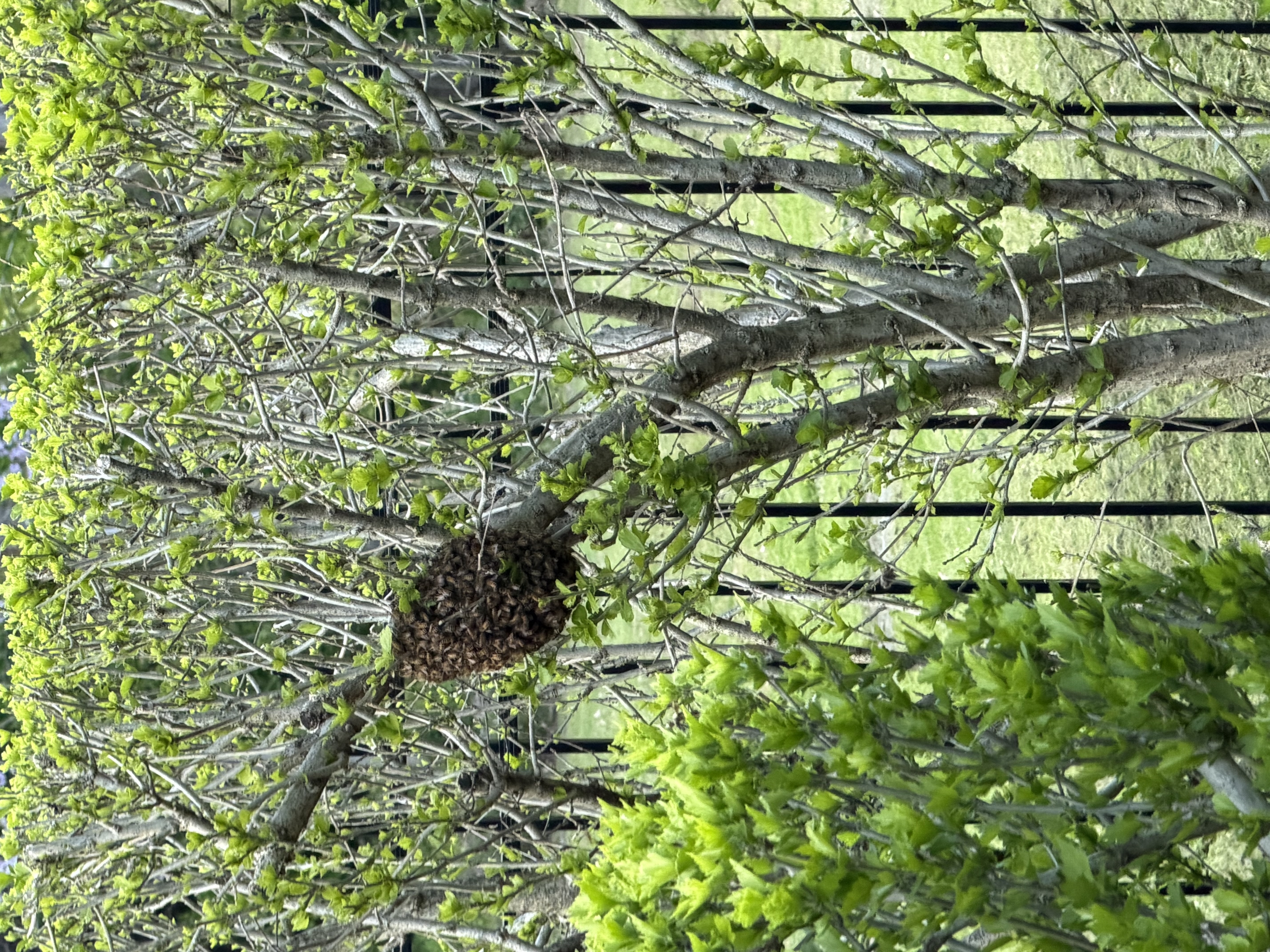
A swarm is a large, cohesive cluster of bees—often shaped like a football or a teardrop—hanging from a tree branch, fence post, or the side of a building. This cluster is a colony in transit. The queen bee is at the center, surrounded by thousands of her workers. They have recently left their old home and are looking for a new one.
Key characteristics of a swarm:
- Temporary: Swarms usually only remain in one spot for 24 to 72 hours.
- Exposed Comb: You will not see any visible wax comb structure. The bees themselves form the cluster.
- Docile Behavior: Before swarming, the bees gorge on honey. This makes them full, calm, and less inclined to sting, as they have no home, brood, or food stores to defend.
Because they are a valuable source of healthy, local bees and are relatively easy to collect, beekeepers are almost always happy to rescue swarms at no charge.
What is an Established Hive? (Requires a Paid Cutout Service)
If the bees have moved into a structure—such as the wall of your house, a shed, a chimney, or a hollow tree—they are no longer a swarm. They have established a permanent home. Inside this structure, they have begun building wax comb to raise their young (brood) and store honey.
Key characteristics of an established hive:
- Permanent Residence: The bees are entering and exiting a specific opening and are not clustered on the exterior.
- Defensive Behavior: These bees have a home to protect. They will be more defensive of their territory, especially if they feel vibrations or threats near their entrance.
- Requires Structural Work: Removing an established colony is a complex job known as a "cutout." It involves specialized skills and tools, often requiring carpentry to open the structure, carefully remove all the comb, and then repair the access point.
This is labor-intensive work that can take several hours. For this reason, cutouts are a paid service. The beekeeper will assess the situation and provide you with a quote based on the complexity, time, and materials required. You are free to accept or decline this quote.
Factors That Can Influence Service and Cost
Even with a simple swarm, certain factors can complicate a rescue. If the bees are unusually high up, in a difficult-to-access location, or are exhibiting abnormally defensive behavior, the beekeeper may need to adjust their approach. While swarm collection is the norm for being free, a beekeeper may ask for a service fee if the situation presents unusual risk or difficulty.
A beekeeper’s quote for a cutout will be based on:
- Location: A colony in a wall is different from one in a chimney or under a concrete slab.
- Height and Accessibility: Working on a ladder or lift increases the risk and time involved.
- Extent of the Hive: The longer a colony has been established, the larger it will be, with more comb and honey to remove.
Your Report is Part of a Larger Effort
Your single action of reporting a swarm contributes to a significant conservation movement. Honey bees are vital for Georgia's agriculture, pollinating crops that are central to the state's economy. Every rescued swarm is a colony that gets a second chance to thrive under the care of a beekeeper. This collective action has a massive impact. While a single report might seem small, it contributes to a powerful network. In some states, our network has tracked over 100 swarm reports in a single season, leading to the rescue of millions of bees that might have otherwise been exterminated or failed to survive.
By reporting a swarm, you are not just solving a problem in your backyard; you are actively participating in the preservation of honey bees and strengthening the local beekeeping community in Georgia.
Thank you for taking action. Your vigilance helps ensure that Georgia's honey bee populations remain healthy and continue their essential work. If you see another swarm or know someone who has, please encourage them to report the bee colony through Swarmed (opens in a new tab) and become part of this community-driven solution.