
A Beekeeper's Guide to Swarm Season in California
California's Golden Opportunity: Harnessing the Spring Swarm For beekeepers across California, the arrival of spring signals more than just almond blossoms and wildflo...
Read More...May 18, 2026
Home > Blog > 5 Signs a Bee Swarm is Nearby (And What to Do Next)
January 17, 2026

Encountering a bee swarm can be a nerve-wracking experience for most people. Though swarms are a natural part of a bee colony’s lifecycle, they often take the public by surprise. If you know the signs of an impending swarm, you can act quickly to stay safe while helping protect the bees.
In this post, we’ll walk you through the top five signs that a bee swarm might be nearby and what you should do next. By being informed, you can keep your cool and ensure that these important pollinators are safely relocated by a beekeeper, not an exterminator.
One of the first indicators of an approaching bee swarm is a noticeable uptick in bee activity around your home or garden. You might spot more bees flying around, especially near trees, fences, or eaves. These scouting bees are searching for a suitable place for the swarm to temporarily settle.
What to Do: If you see increased bee activity, take note of the location and distance yourself from the area. Avoid disturbing the bees, as they are focused on finding a home and generally aren’t aggressive. It’s a good idea to keep pets and children away as well.
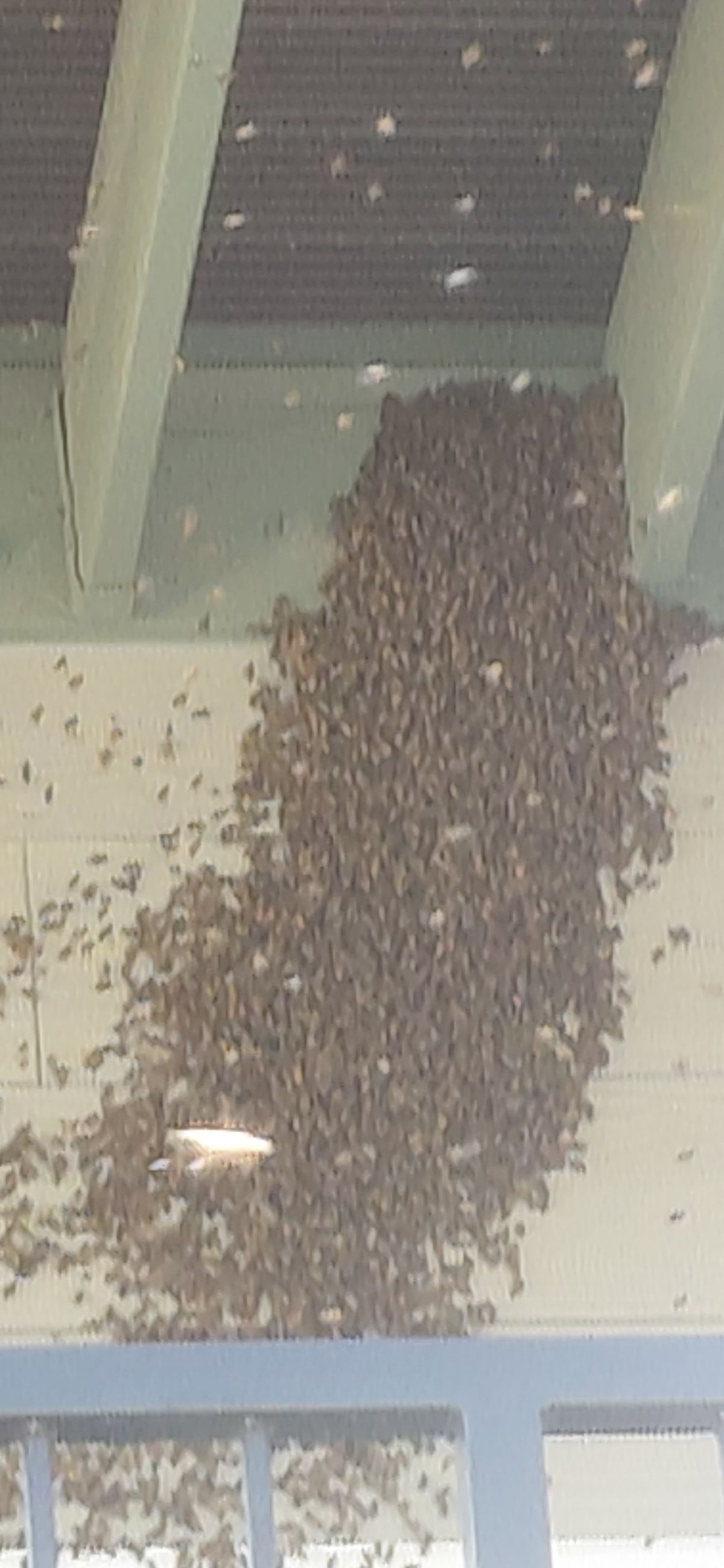
A telltale sign that a bee swarm is nearby is a large cluster of bees resting on a tree branch, fence, or building. This mass of bees can look alarming, but swarming bees are typically docile since they are not defending a hive. They’re just resting while scout bees search for a permanent home.
What to Do: Do not attempt to remove or disturb the cluster. Contact a local beekeeper or bee removal service immediately. Swarmed can help connect you with a beekeeper in your area who can safely relocate the swarm. Visit beeswarmed.org/report_swarm (opens in a new tab) to connect with a local beekeeper.
Bees in large numbers create a distinct buzzing or humming noise, especially during a swarm. If you notice that the usual buzzing in your yard has suddenly intensified, it could be a sign that bees are gathering or swarming nearby.
What to Do: If you hear loud buzzing and can’t locate the source, it’s best to remain cautious. Stay indoors or at a safe distance and observe where the sound is coming from. If you spot a cluster, avoid getting too close and reach out to a beekeeper. Visit beeswarmed.org/report_swarm (opens in a new tab) to connect with a local beekeeper.
Swarming bees often travel in a chaotic or spiral-like flight pattern, moving as a dense cloud. This usually happens when the bees are relocating to a new temporary resting spot. You may see a moving swarm if they’re transitioning from their original hive or a resting spot.
What to Do: If you see a swirling cloud of bees, don’t panic. Move away calmly and quickly to avoid attracting their attention. Wait until the swarm settles before contacting a professional beekeeper for assistance. Visit beeswarmed.org/report_swarm (opens in a new tab) to connect with a local beekeeper who can come relocate the bees.
Sometimes you might observe bees gathering near a hive entrance or hanging out in large groups on the exterior of a hive. This can be a signal that the colony is preparing to swarm. When the old queen leaves with a portion of the worker bees, they will seek a new place to establish a colony.
What to Do: If you’re a beekeeper and you notice this behavior, it’s a good idea to monitor your hives closely. You may want to take preventive steps, such as providing more space in the hive, to avoid swarming altogether. If you’re not a beekeeper and see this on your property, use Swarmed (opens in a new tab) to quickly connect with a local beekeeper.
Now that you know the top signs of a bee swarm, it’s important to act promptly—but not hastily. The bees in a swarm are in a vulnerable state and should be handled with care by a professional. Here are your next steps:
- Keep a Safe Distance: Bees in swarms are less aggressive than those defending a hive, but it’s always best to maintain distance for your safety. - Don’t Spray or Harm the Bees: Swarming bees are vital pollinators and are critical to the environment. Spraying them with pesticides can kill large numbers of bees and harm the ecosystem. - Contact a Local Beekeeper or Bee Removal Service: Reach out to a local beekeeper through services like Swarmed. Beekeepers will safely relocate the swarm to a new home without harming the bees.
Swarmed offers a convenient way to report swarms and connect with beekeepers in your area. Whether you're a homeowner needing assistance or a beekeeper looking to capture a swarm, Swarmed can bridge the gap between the public and bee experts.
Spotting a bee swarm can be startling, but understanding the signs of a nearby swarm and knowing what to do can help prevent unnecessary harm to both people and bees. If you notice any of the above signs, stay calm, keep your distance, and let a professional beekeeper handle the situation.
If you’ve seen a swarm or think one is nearby, Swarmed (opens in a new tab) can help you connect with a beekeeper quickly and easily, ensuring the bees are relocated safely and efficiently. Whether you're reporting a swarm or capturing one, Swarmed is here to support both the public and beekeepers in keeping our pollinators safe.
Q: Are bee swarms dangerous? A: Bee swarms are generally not dangerous. The bees are focused on finding a new home and are less likely to be aggressive since they are not protecting a hive. However, it’s best to avoid close contact and let a beekeeper handle the situation.
Q: What should I do if I see a bee swarm? A: Keep your distance and contact a local beekeeper or a bee removal service, such as through Swarmed, to relocate the bees safely.
Q: How long do bee swarms stay in one place? A: Bee swarms usually rest temporarily, often for a few hours to a few days, before moving on to a new permanent location. However, they may need assistance in finding a suitable home.
California's Golden Opportunity: Harnessing the Spring Swarm For beekeepers across California, the arrival of spring signals more than just almond blossoms and wildflo...
Read More...May 18, 2026

A Beekeeper's Guide to Swarm Collection in Idaho Spring has arrived in the Gem State, and with it, the unmistakable hum of honey bee swarms. For beekeepers, this is a...
Read More...May 18, 2026