Honeybee Democracy: What Swarms Can Teach Us
A Lesson in Democracy from the Natural World Each spring, as the world awakens, honey bee colonies also stir with the instinct for expansion. This drive culminates in...
Read More...May 14, 2026
Home > Blog > Understanding the Lifecycle of a Honey Bee Colony
May 14, 2026
A honey bee colony is a complex, thriving society, operating with a singular focus on survival and reproduction. Understanding its lifecycle reveals not only the intricate world inside the hive but also the natural processes that you might observe in your own backyard, especially during the warmer months of spring. This knowledge empowers communities to act as allies to these essential pollinators.
Every honey bee colony is comprised of three distinct types of bees, each with a specific role that contributes to the health and success of the whole. This division of labor is what makes the colony a true superorganism.
The queen is the heart and soul of the colony. There is typically only one, and her primary function is to lay eggs—up to 2,000 per day during peak season. She is the mother of nearly every bee in the hive. A queen can live for several years, her pheromones guiding the colony's cohesion and behavior. Her health dictates the strength and future of her colony.
Worker bees are sterile females and make up the vast majority of the colony's population. Their lives are a progression of tasks that change as they age. A young worker starts with in-hive duties like cleaning cells, nursing larvae, and building wax comb. As she gets older, she may become a guard, defending the entrance, before finally graduating to the most dangerous job: foraging for nectar, pollen, and water outside the hive. A worker bee's lifespan is short, often just four to six weeks during the busy foraging season.
The drone is the male honey bee. Drones are larger than workers and have one purpose: to mate with a virgin queen from another colony. They do no work within the hive and cannot sting. They are produced in the spring and summer, and once they fulfill their reproductive duty, they die. Those who don't mate are expelled from the hive before the colder months to conserve resources.
Every honey bee, regardless of caste, undergoes a complete metamorphosis through four distinct stages:
As spring progresses, a healthy colony expands rapidly. The queen lays more eggs, and the population booms. When the hive becomes overcrowded, the colony's natural reproductive instinct kicks in: it prepares to swarm.
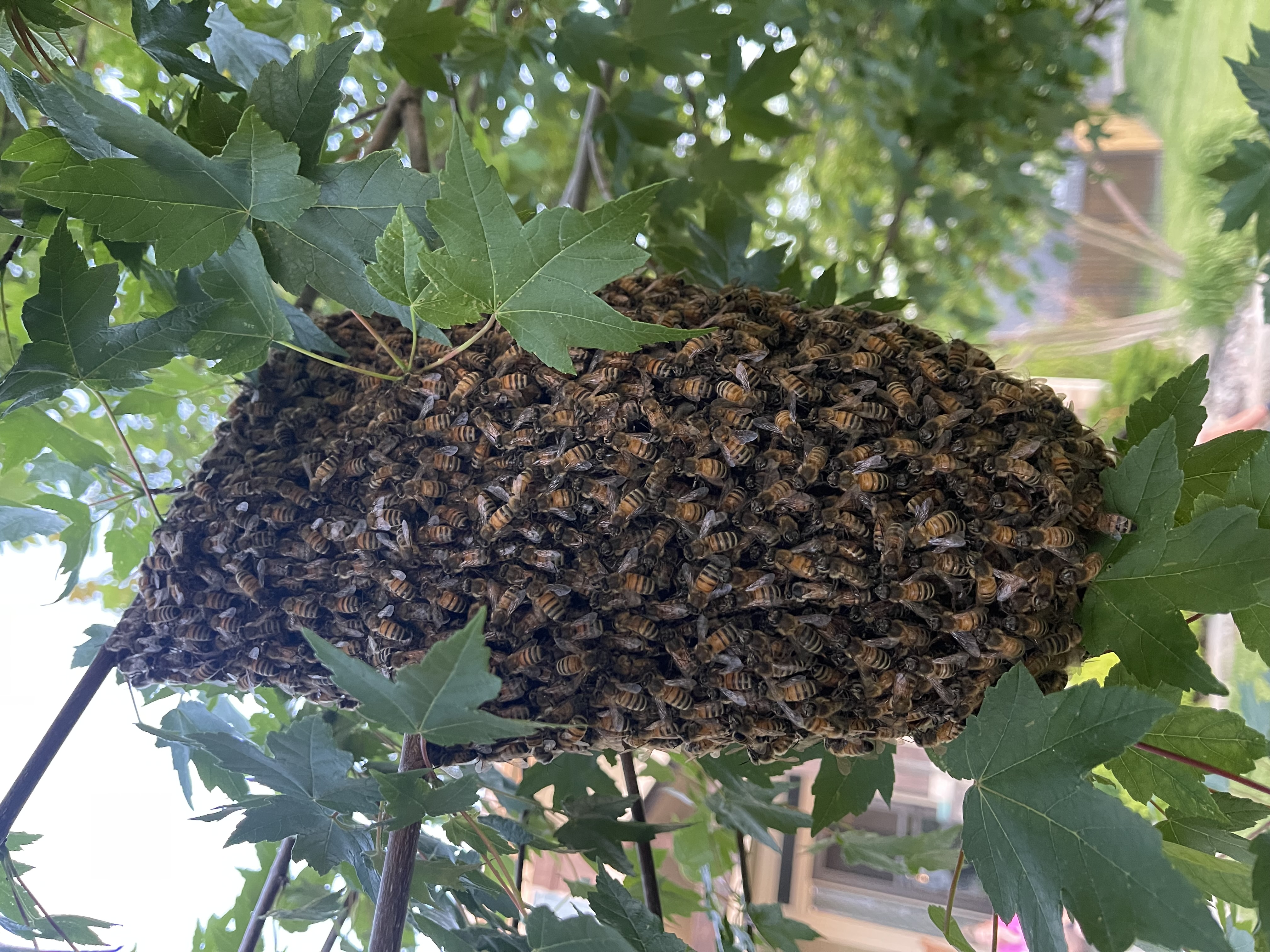
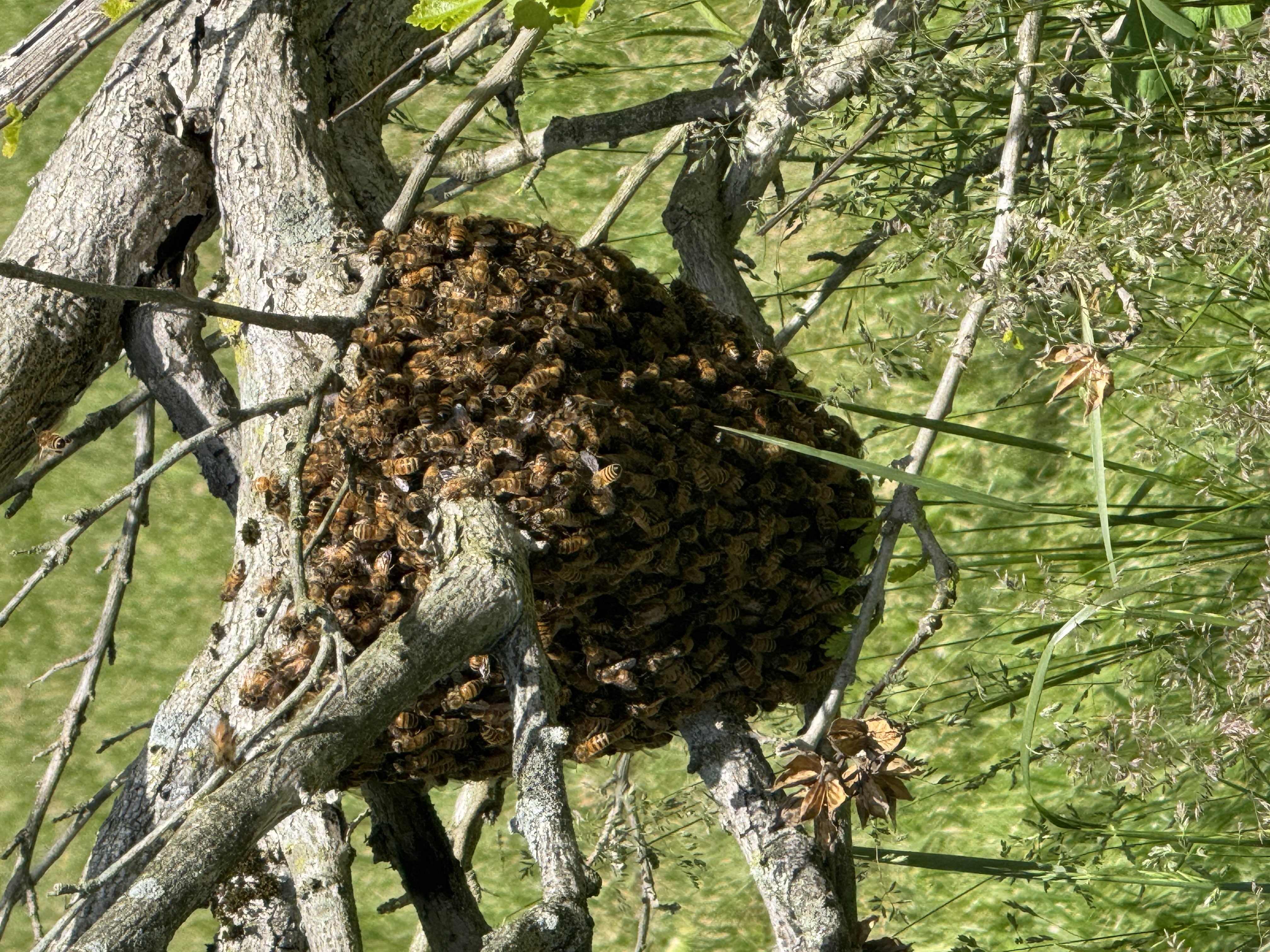
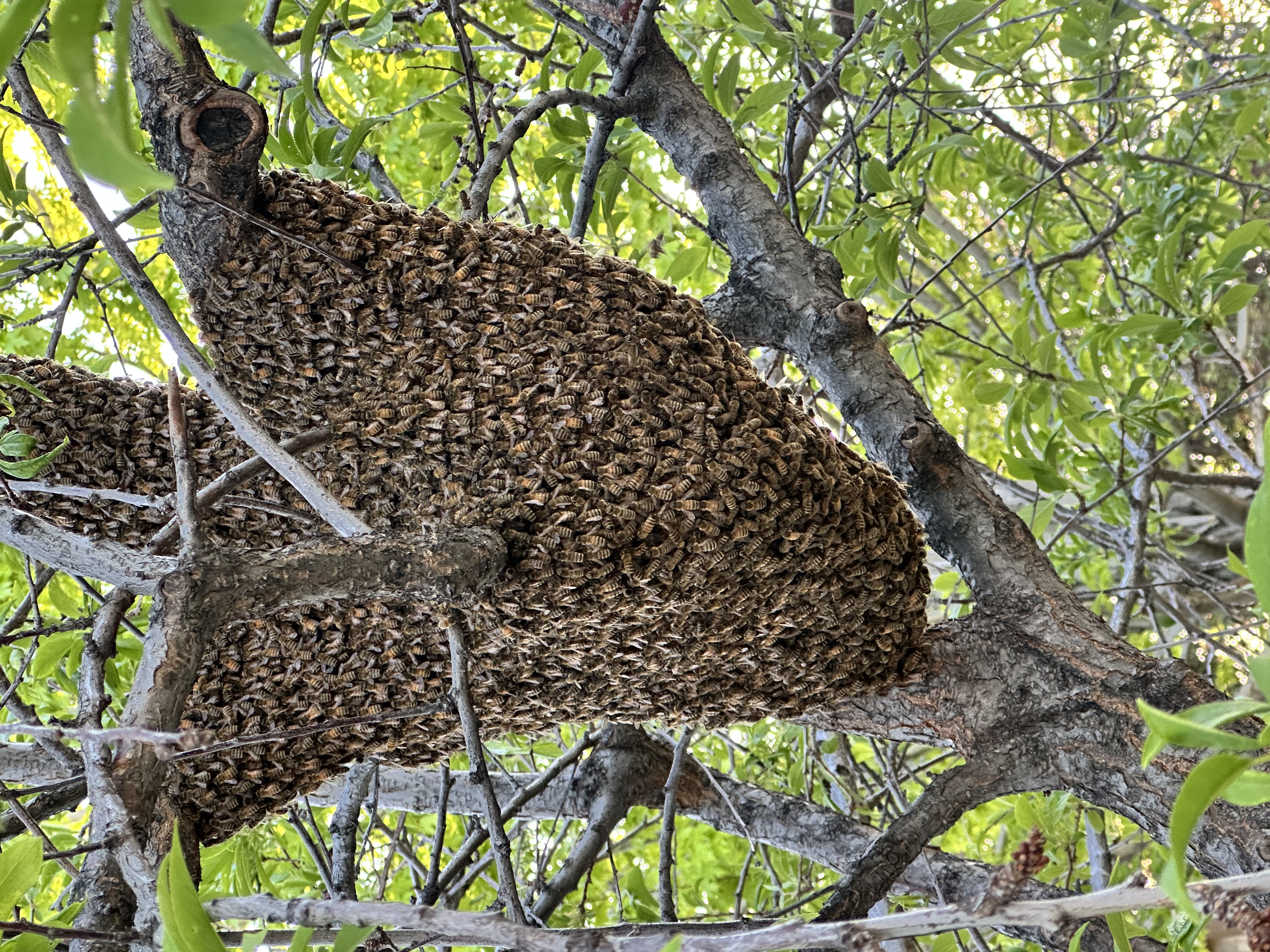
Swarming is not an act of aggression but a sign of a thriving colony. The bees raise a new queen, and just before she emerges, the old queen leaves the hive with about half of the worker bees. This group, known as a swarm, clusters temporarily on a nearby structure—like a tree branch, fence post, or mailbox—while scout bees search for a permanent new home.
Bees in a swarm are surprisingly docile. Before leaving their original hive, they fill their stomachs with honey, making them full, content, and less inclined to sting. Their only focus is finding a new home, not defending territory. This is a critical moment where public awareness can make a huge difference. Community reporting enables local beekeepers to rescue these vulnerable colonies. Thanks to such reports, beekeepers in some areas, like Nevada, have been able to rescue over 100 swarms in a single season, giving those bees a safe, managed home.
Seeing a large cluster of bees can be startling, but it's important to know the difference between a temporary swarm and an established colony.
If you see a temporary cluster of bees, you have a unique opportunity to help. By reporting it, you are not only protecting the bees but also supporting your local beekeepers and ensuring public safety. The best course of action is to keep a safe distance and report the swarm to help bees and your community by visiting https://beeswarmed.org/report-bee-colony (opens in a new tab).
By understanding the lifecycle of honey bees, we can better appreciate their behavior and our role in their survival. Swarming is a beautiful, natural part of that cycle. When you see a swarm, you are witnessing the birth of a new colony. Your next step can ensure it has a future. Please help protect these vital pollinators by reporting any swarm you see. A local beekeeper is ready to provide them with a safe new home, often at no cost to you.
A Lesson in Democracy from the Natural World Each spring, as the world awakens, honey bee colonies also stir with the instinct for expansion. This drive culminates in...
Read More...May 14, 2026
Seeing a Swarm is Seeing Nature in Action During the warm days of late spring, you might look out your window and see something astonishing: a large, buzzing cluster o...
Read More...May 14, 2026
