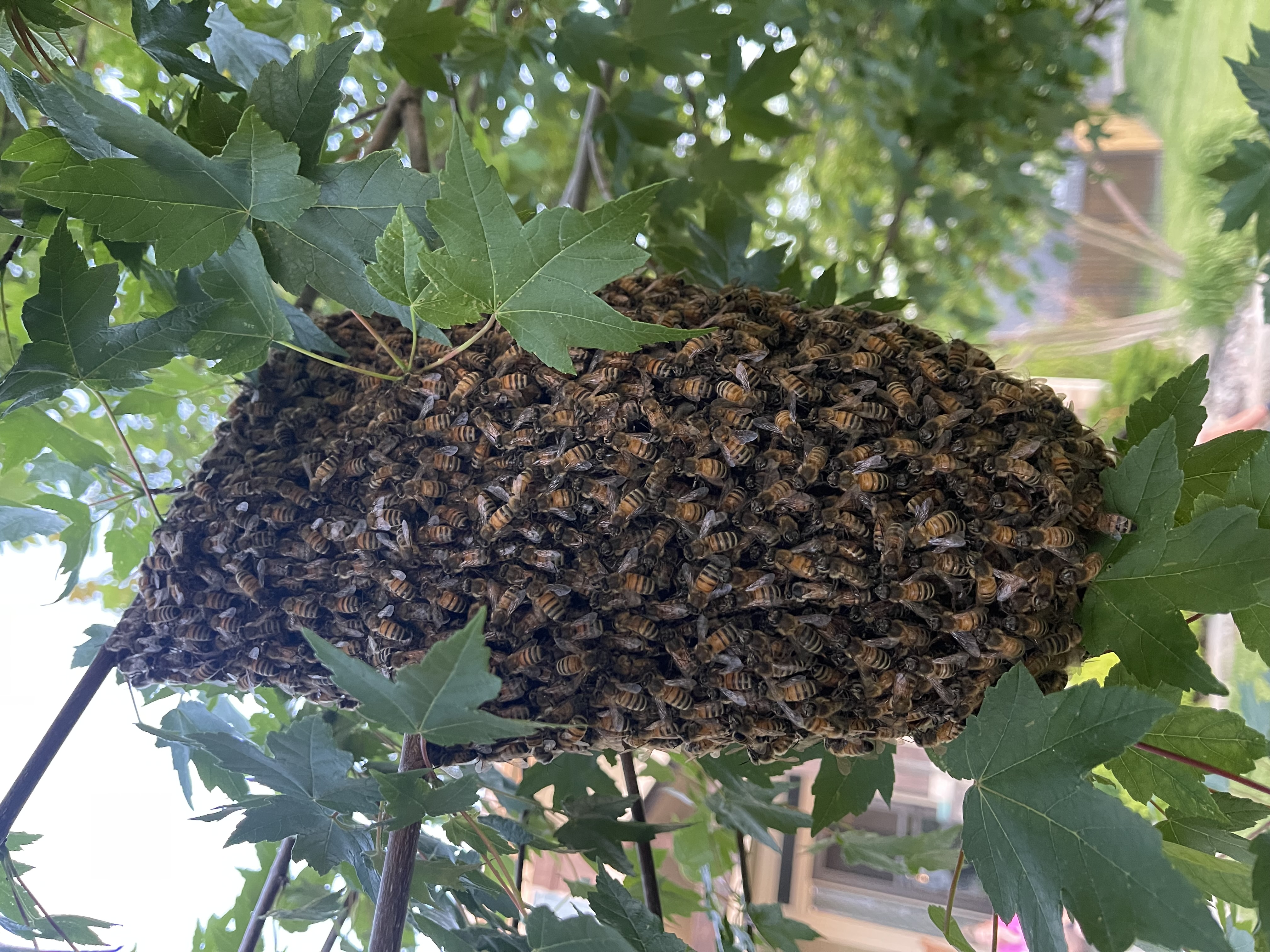
Honeybee Democracy: What Swarms Can Teach Us
A Lesson in Democracy from the Natural World Each spring, as the world awakens, honey bee colonies also stir with the instinct for expansion. This drive culminates in...
Read More...May 14, 2026
Home > Blog > How Many Bees Are in a Swarm? A Guide to Reporting
May 14, 2026
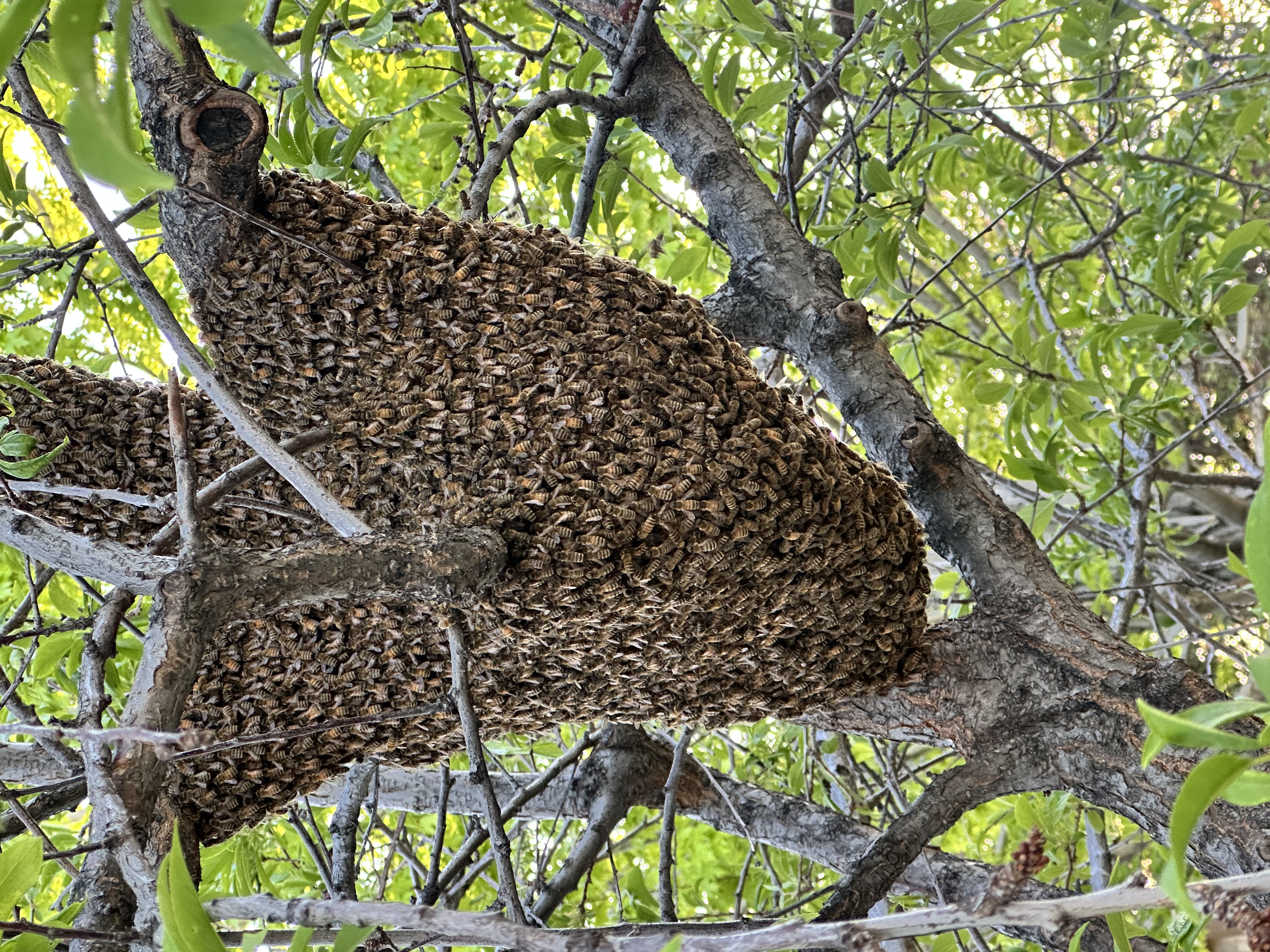
During the warm days of late spring, you might look out your window and see something astonishing: a large, buzzing cluster of honey bees clinging to a tree branch, a fence post, or the side of a building. The sight of thousands of bees gathered in one place can be alarming, but this is one of nature’s most incredible spectacles. This is a honey bee swarm, and it’s a sign of a healthy, thriving bee population.
Understanding what a swarm is, how many bees it contains, and what to do when you see one can transform a moment of concern into a positive action that helps protect these vital pollinators and supports your local beekeeping community.
So, just how many bees are in that buzzing mass? The answer is impressive. A typical honey bee swarm contains between 10,000 and 30,000 bees. This traveling colony includes thousands of female worker bees and, at its center, one all-important queen bee.
To put that in perspective, a swarm can range in size from a grapefruit to a large basketball, and it can weigh between three and eight pounds. It’s a dense, living cloud of insects on a mission. But despite their overwhelming numbers, swarming bees are surprisingly gentle.
When a colony swarms, the bees prepare for their journey by filling their stomachs with honey from their old hive. This honey is their fuel for the trip and the energy they'll need to start building a new home. Because they are engorged with honey and have no home, no baby bees (brood), and no honey stores to defend, they are at their most docile. Their single focus is on protecting the queen and finding a suitable new location to build a hive.
A swarm is not a sign of aggression or danger; it's a sign of success. Swarming is the natural way honey bee colonies reproduce. When a colony becomes too large and successful for its current home, it prepares to split in two.
The original queen, along with about half of the worker bees, will leave the hive to create a new colony elsewhere. They leave behind a new, soon-to-emerge queen who will take over the original hive. This process ensures the survival and expansion of their species.
The cluster you see hanging from a branch is a temporary resting spot. Scout bees fly from this cluster in all directions, searching for a permanent, sheltered cavity to call home—like a hollow tree or a protected alcove. This search can take anywhere from a few hours to a few days. During this vulnerable, transitional period, the bees need our help the most.
Knowing what to do when you see bees depends on understanding a key distinction: are you looking at a temporary swarm or an established hive? This difference determines who you should call and whether removal services are free or paid.
A swarm is a transient group of bees in the process of moving. You can identify it by these characteristics:
Local beekeepers are almost always happy to come and rescue a swarm at no charge. For them, a swarm is a wonderful way to start a new, healthy colony in one of their apiaries.
An established hive, or established colony, is one where the bees have already moved into a permanent structure. Key signs include:
Removing an established hive is a complex process known as a “cutout.” It often requires specialized equipment, carpentry skills to open the structure, and repair work afterward. This is a skilled service that beekeepers provide for a fee. A professional will provide a quote based on the complexity, time, and labor involved.
If you see a temporary cluster of bees, you have a unique opportunity to help them. First, keep a safe distance and give them space. While they are docile, it's wise not to disturb them.
Your most important action is to report the swarm. An exposed swarm is vulnerable to weather and predators. By reporting it, you connect the bees with a local beekeeper who can provide them with a safe, managed home where they can thrive. Community reporting is incredibly effective. Last season, people like you helped local beekeepers rescue over 100 swarms in Nevada alone, giving those bees a chance to build a strong colony in a managed apiary.
When you report a swarm, you are playing a direct role in protecting honey bees and supporting the local beekeepers who are essential to our ecosystems and agriculture.
If you see a swarm, you can help. You can report the bee colony here: https://beeswarmed.org/report-bee-colony (opens in a new tab).
Seeing a swarm of 10,000 to 30,000 bees is a memorable experience. Now that you know it's a natural and beautiful part of their life cycle, you can be part of their story. These bees are not looking for trouble; they are looking for a home.
Protecting honey bees is a community effort. If you spot a cluster of bees, don't hesitate. You can provide essential information that leads to their safe rescue. Report the swarm through the Swarmed network and connect them with a local beekeeper, often for free removal. Visit https://beeswarmed.org/report-bee-colony (opens in a new tab) to make a report and help your local pollinators.
A Lesson in Democracy from the Natural World Each spring, as the world awakens, honey bee colonies also stir with the instinct for expansion. This drive culminates in...
Read More...May 14, 2026
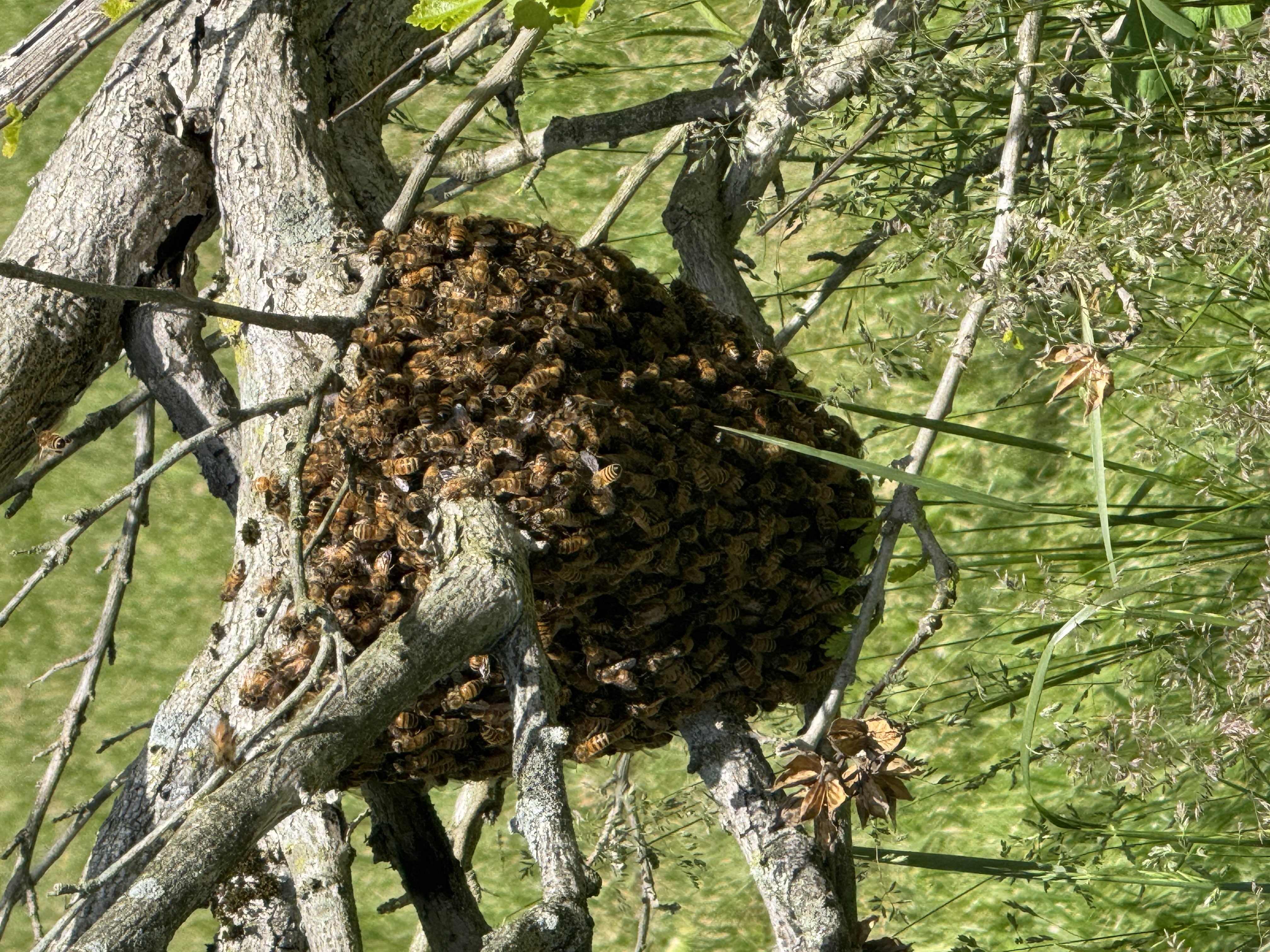
A honey bee colony is a complex, thriving society, operating with a singular focus on survival and reproduction. Understanding its lifecycle reveals not only the intri...
Read More...May 14, 2026
