
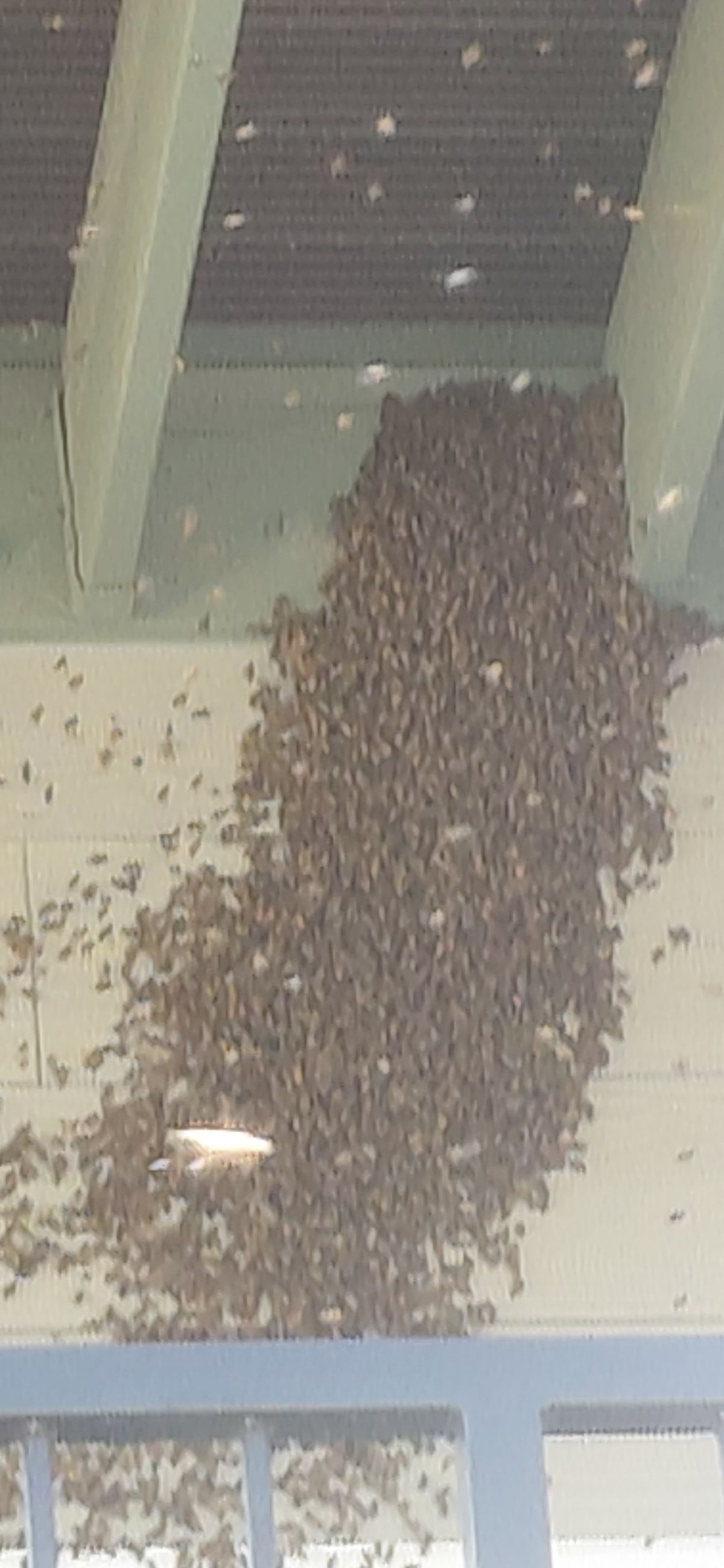
A Beekeeper's Guide to Swarm Season in California
California's Golden Opportunity: Harnessing the Spring Swarm For beekeepers across California, the arrival of spring signals more than just almond blossoms and wildflo...
Read More...May 18, 2026
Home > Blog > Understanding the Lifecycle of Honey Bees | Swarmed
January 17, 2026

Honey bees are remarkable creatures with a complex and highly organized lifecycle that ensures the survival and reproduction of the colony. Understanding this lifecycle is essential for beekeepers and those interested in the fascinating world of bees. Each stage of development plays a crucial role in maintaining the health and productivity of the hive.
The Lifecycle Stages
The lifecycle of a honey bee can be divided into four main stages: egg, larva, pupa, and adult. Each stage is vital for the development of the bees and the overall functioning of the colony.
1. Egg Stage
The lifecycle begins when the queen bee lays eggs in the hive's honeycomb cells. The queen can lay up to 2,000 eggs per day during peak season. The type of egg laid depends on the cell size and whether it has been fertilized. Fertilized eggs develop into worker bees or queens, while unfertilized eggs become drones (male bees).
This stage lasts about three days. During this time, the eggs are closely monitored by worker bees, who ensure the right temperature and humidity are maintained within the hive.
2. Larva Stage
After three days, the eggs hatch into larvae, which resemble tiny, white grubs. At this stage, they are fed royal jelly, a nutrient-rich secretion produced by worker bees. After a few days, worker bee larvae transition to a diet of pollen and honey, while queen larvae continue to receive royal jelly.
The larva stage lasts about six days. During this time, larvae are fed and tended to by nurse bees. The care provided during this stage determines whether a larva will develop into a worker bee or a queen.
3. Pupa Stage
Once the larva reaches maturity, it spins a cocoon around itself within the cell, transitioning into the pupa stage. During this period, the larva undergoes metamorphosis, developing the distinct features of a honey bee, such as wings, legs, and eyes.
The pupa stage lasts approximately 12 days for workers, 14 days for drones, and 8 days for queens. At the end of this stage, the fully developed bee chews through the cell cap and emerges as an adult.
4. Adult Stage
The newly emerged adult bee begins its role within the colony based on its caste: worker, drone, or queen. Worker bees take on cleaning, nursing larvae, guarding, comb building and foraging, but not all at once and not in any order she chooses. Those duties arrive in a fixed sequence as she ages, described in the next section. Drones are responsible for mating with a queen from another colony, and the queen's primary role is to lay eggs and maintain the colony's population.
The lifespan of a honey bee varies depending on its role and the time of year. Worker bees typically live for several weeks to a few months, drones live for about 8 weeks, and queens can live for several years.
The Order of a Worker's Life
A worker bee does not have a job. She has a career, and she moves through it in a fixed order.
Entomologists call this temporal polyethism: the same bee holds a sequence of roles as she ages, rather than one role for life. She begins in the dark, cleaning the cell she emerged from. She becomes a nurse, feeding the larvae in the cells around her. Later she takes on guard duty and comb building. Only in the final stretch of her life does she leave the hive for good and become a forager. It is a one-way door. A bee who has begun flying for a living does not go back to the nursery.
That last stage is far shorter than most people expect. Continuous automated tracking puts a worker's foraging life at roughly eight days (Bordier et al. 2020), a figure that closely matched what Fukuda and Sekiguchi had measured more than fifty years earlier, and what Dukas and Visscher found in between. Three independent efforts, half a century apart, arriving at seven to eight days. What ends it is not old age. Foragers die at a steady exponential rate, which is the signature of predation and accident rather than wearing out. She is not retired. She simply does not come back one afternoon.
Into those eight days she fits a remarkable amount of work. Bees fitted with miniature radio tags averaged 4.6 foraging trips a day, each lasting a little under fifty minutes (Minahan & Brunet 2018), and a single trip typically takes in fifty to a hundred flowers. Multiplied through, a worker visits somewhere around 2,600 flowers across her whole life, with a defensible range of roughly 1,600 to 3,700 depending on the season and what happens to be in bloom.
How She Knows Where to Go
She is not wandering. Karl von Frisch spent decades decoding the waggle dance, the figure-eight a returning forager performs on the comb to tell her sisters where she has been. The angle of her straight run against vertical encodes the direction relative to the sun. Its duration encodes the distance. Reading those dances lets researchers map where an entire colony is flying without following a single bee.
The maps are more dramatic than most people expect. During a heather bloom near Sheffield, the median flight was 6.1 kilometres from the hive, and one dance in ten described a journey beyond 9.5 kilometres (Beekman & Ratnieks 2000). Most foraging is closer to home, usually within about three kilometres, because a bee with a good patch next door has no reason to cross a moor. But the range is there when the season demands it, in an insect the size of a fingernail clipping.
She is also more particular than she looks. A foraging bee tends to stay with one kind of flower for an entire trip, learning its colour and its reward and passing over everything else. Aristotle noticed it. It is now called flower constancy, and it has been measured under realistic reward conditions (Grüter et al. 2011). For the plant, this is the whole point: a bee working only apple blossom does not waste apple pollen on a hawthorn.
One honest caution about numbers like these. What researchers count is visits, not confirmed pollinations. How reliably a visit pollinates varies by plant species, and a synthesis of 1,564 single-visit measurements across 240 species found that honey bees matter less through the quality of any one visit than through sheer numbers (Page & Nicholson 2021). "Flowers visited" is what the evidence supports. "Flowers pollinated" is the friendlier way of saying it, and is best read as an approximation rather than a measurement.
The Role of Swarming in the Lifecycle
Swarming is a natural and essential part of the honey bee lifecycle. It is the process by which a colony reproduces and establishes new colonies. Swarming usually occurs in spring or early summer when the colony becomes overcrowded, and the queen's pheromone control weakens.
During swarming, the old queen leaves the hive with about half of the worker bees to find a new home. Scout bees search for a suitable location, while the swarm temporarily clusters on a branch or structure. This behavior allows the colony to expand and colonize new areas, ensuring the survival and genetic diversity of honey bees.
Supporting Healthy Bee Development
Beekeepers play a crucial role in supporting the lifecycle of honey bees. By providing a suitable environment, monitoring hive health, and managing pests and diseases, beekeepers can ensure the colony thrives.
Some key practices include:
Understanding the lifecycle of honey bees is essential for appreciating their complexity and the vital role they play in our ecosystems. By supporting healthy bee development and recognizing the importance of swarming, we can contribute to the sustainability of honey bee populations and their crucial pollination services.
References
Beekman, M. & Ratnieks, F. L. W. (2000). Long-range foraging by the honey-bee, Apis mellifera L. Functional Ecology, 14(4), 490-496.
Bordier, C., Klein, S., Le Conte, Y., Barron, A. B., & Alaux, C. (2020). Colony-level foraging patterns and foraging tenure in the honey bee. Royal Society Open Science.
Grüter, C., Moore, H., Firmin, N., Helanterä, H., & Ratnieks, F. L. W. (2011). Flower constancy in honey bee workers (Apis mellifera) depends on ecologically realistic rewards. Journal of Experimental Biology, 214(8), 1397-1402.
Minahan, D. F. & Brunet, J. (2018). Strong interspecific differences in foraging activity observed between honey bees and bumble bees using miniaturized RFID technology. Frontiers in Ecology and Evolution, 6:156.
Page, M. L. & Nicholson, C. C. (2021). Meta-analysis of single-visit pollination effectiveness across 240 plant species.
von Frisch, K. (1967). The Dance Language and Orientation of Bees. Harvard University Press.
California's Golden Opportunity: Harnessing the Spring Swarm For beekeepers across California, the arrival of spring signals more than just almond blossoms and wildflo...
Read More...May 18, 2026
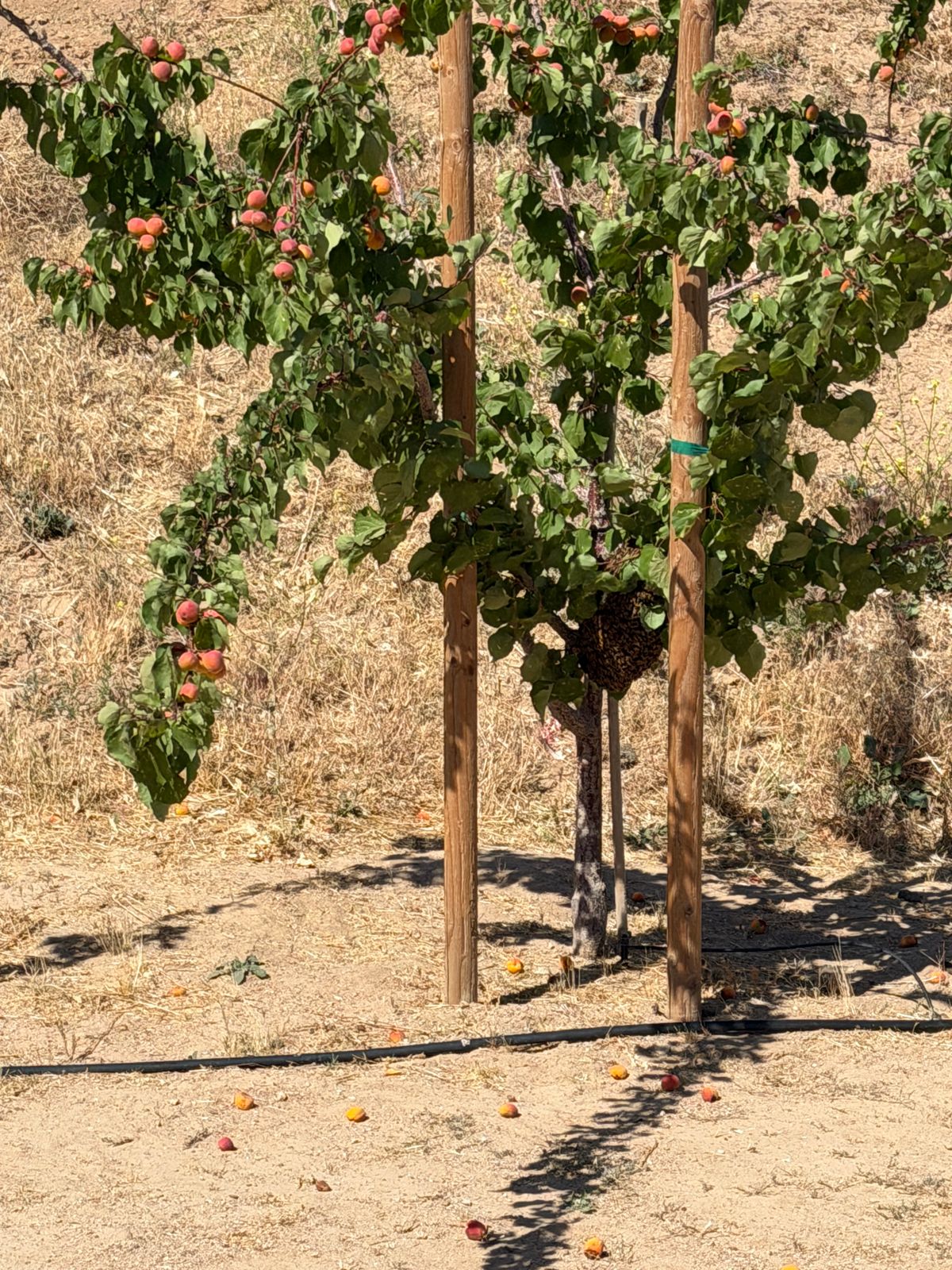
A Beekeeper's Guide to Swarm Collection in Idaho Spring has arrived in the Gem State, and with it, the unmistakable hum of honey bee swarms. For beekeepers, this is a...
Read More...May 18, 2026