
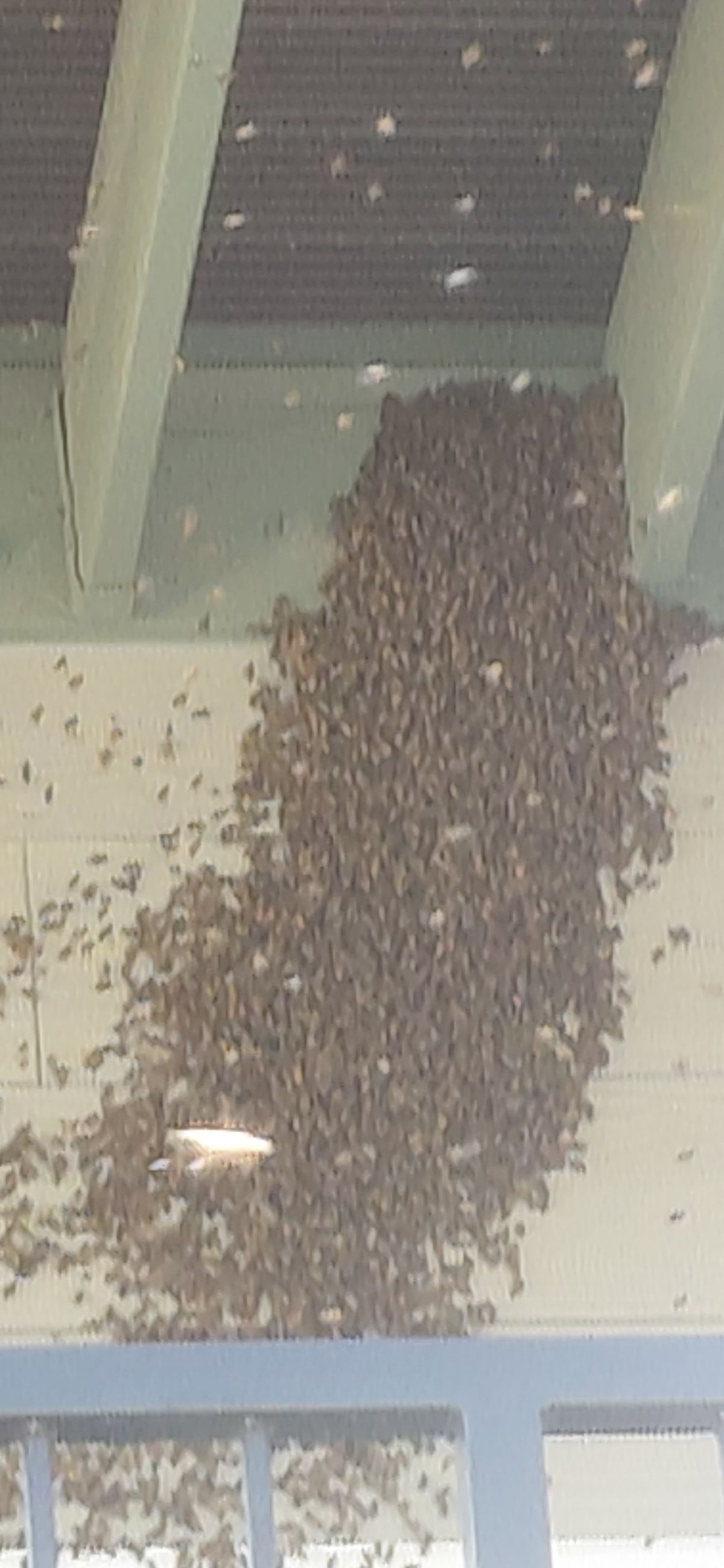
A Beekeeper's Guide to Swarm Season in California
California's Golden Opportunity: Harnessing the Spring Swarm For beekeepers across California, the arrival of spring signals more than just almond blossoms and wildflo...
Read More...May 18, 2026
Home > Blog > How Many Bees in a Swarm? A Science-Based Way to Report
January 17, 2026

Most honey bee swarms hold between about 5,000 and 20,000 bees. The best single figure comes from a six-year field study in Ithaca, New York, where researchers weighed 126 natural swarms and found an average of 1.53 kg, or roughly 11,800 bees. Swarms at the extremes are real but less common: field studies have recorded clusters as small as 1,000 bees and primary swarms as large as 21,000.
If you have found a swarm and want to report it to a local beekeeper (opens in a new tab), you do not need to count anything. You only need to compare it to something familiar. This page explains what the beekeeper will do with that comparison, and why the numbers below are what they are.
These are the estimates Swarmed applies to a report, with the range we consider plausible for each:
If a swarm sits between two of these, take the nearer one. Precision beyond that is false comfort: the difference between a rugby ball and a basketball matters to a beekeeper deciding what equipment to bring, while the difference between 11,000 and 12,000 bees does not.
The method is volume multiplied by packing density. The volume comes from the object you compare the swarm to. The density, meaning how many bees occupy each litre, is the harder half, and it is where most published estimates go wrong.
Search for a bees-per-litre figure and you will usually find 1,500 to 2,000. That number is real, but it measures the wrong thing. It traces to Seeley and Morse's work on nest cavity selection, which measured the tree hollows that colonies choose to move into permanently. Those cavities include room for comb, brood, and honey stores that a colony has not built yet. A swarm hanging on a branch is not a furnished home. It is a temporary, tightly packed cluster of bees holding onto each other, and it is considerably denser.
Two independent lines of evidence describe the cluster itself:
Both land far above the nest-cavity figure. We use a working range of 2,800 to 5,560 bees per litre, leading with the lower, field-measured end.
A model built from geometry can be internally tidy and still wrong, so we test it against swarms that were physically weighed rather than estimated.
Doing that revealed a problem worth being open about. Applying cluster density to our reference volumes produced an average swarm noticeably heavier than the 11,800-bee field average, and at the top of the scale the mismatch was severe: a 28.7-litre beach ball computes to well over 80,000 bees, which is several times larger than any single-colony swarm in the published record. So the raw geometry cannot be right across the whole range.
We correct for this rather than ignore it. The likeliest causes are that a hanging cluster's visible silhouette is looser than its core, that people judging a moving mass of insects from a distance tend to overestimate, and that a public reporting network hears about conspicuous large swarms more readily than small quiet ones. All three push the same direction. The correction we apply brings the average across all reported sizes back in line with the weighed field average, which is why the figures above are lower than a naive volume calculation would give.
One honest caveat remains at the top end. "Beach ball or larger" has no fixed size, since retail beach balls run from about 30 cm to 90 cm across, an eightfold spread in volume under one label. Our estimate for that tier is anchored to the field-measured ceiling rather than extrapolated from volume, and it is the least precise number on this page.
You do not need to approach a swarm to report it usefully. Swarming bees are typically docile, since they have no honey stores or brood to defend, but there is no reason to get close.
Size alone does not tell the whole story, which is worth knowing if you keep bees.
A colony's first swarm of the season, the prime swarm, leaves with the old mated queen and roughly half to two thirds of the workers. If conditions allow, the same colony can then send out afterswarms, each led by a newly emerged virgin queen and each smaller than the last. Winston's field records from unmanaged colonies in Kansas show first afterswarms running anywhere from about half to over 90 percent of the prime swarm's size, with second and third afterswarms dropping to roughly a quarter of it. A more recent study of wild colonies found afterswarms averaging 58 percent of prime-swarm size.
The practical consequence is seasonal. A swarm reported in May is more likely to be a full prime swarm. A same-sized swarm reported in August is more likely to be a cast with a virgin queen and a shorter runway to build comb and stores before winter. The bee count may match; the odds of that colony surviving its first year do not.
Consistent size estimates make swarm reports comparable across thousands of people who have never met and have no shared training. That is what turns individual sightings into something a researcher can use to study reproduction rates, urban and rural differences, and how swarming season shifts with the weather. It also helps the beekeeper on the other end of the report decide what to bring and how urgently to go.
What happens next is worth knowing too. The workers in that cluster are not starting long lives; a honey bee worker spends her first two to three weeks on jobs inside the hive and only becomes a forager at the end, flying for roughly seven to eight more days before predation or accident stops her. In that short window she will visit somewhere near 2,600 flowers, and she may range several kilometres from home to reach them. The honey bee life cycle (opens in a new tab) explains the order those jobs arrive in, and how researchers measured it.
Have you spotted a bee swarm? Estimate its size using the comparisons above and report it to a local beekeeper for free (opens in a new tab). Beekeepers can join the largest database of swarm responders in the world here (opens in a new tab).
Fell, R.D., Ambrose, J.T., Burgett, D.M., De Jong, D., Morse, R.A., Seeley, T.D. (1977). The seasonal cycle of swarming in honeybees. Journal of Apicultural Research 16(4), 170-173.
Heinrich, B. (1981). The mechanisms and energetics of honeybee swarm temperature regulation. Journal of Experimental Biology 91(1), 25-55.
Ocko, S.A., Mahadevan, L. (2014). Collective thermoregulation in bee clusters. Journal of the Royal Society Interface 11(91), 20131033.
Seeley, T.D., Morse, R.A. (1976). The nest of the honey bee (Apis mellifera L.). Insectes Sociaux 23, 495-512.
Winston, M.L. (1980). Swarming, afterswarming, and reproductive rate of unmanaged honeybee colonies (Apis mellifera). Insectes Sociaux 27(4), 391-398.
California's Golden Opportunity: Harnessing the Spring Swarm For beekeepers across California, the arrival of spring signals more than just almond blossoms and wildflo...
Read More...May 18, 2026
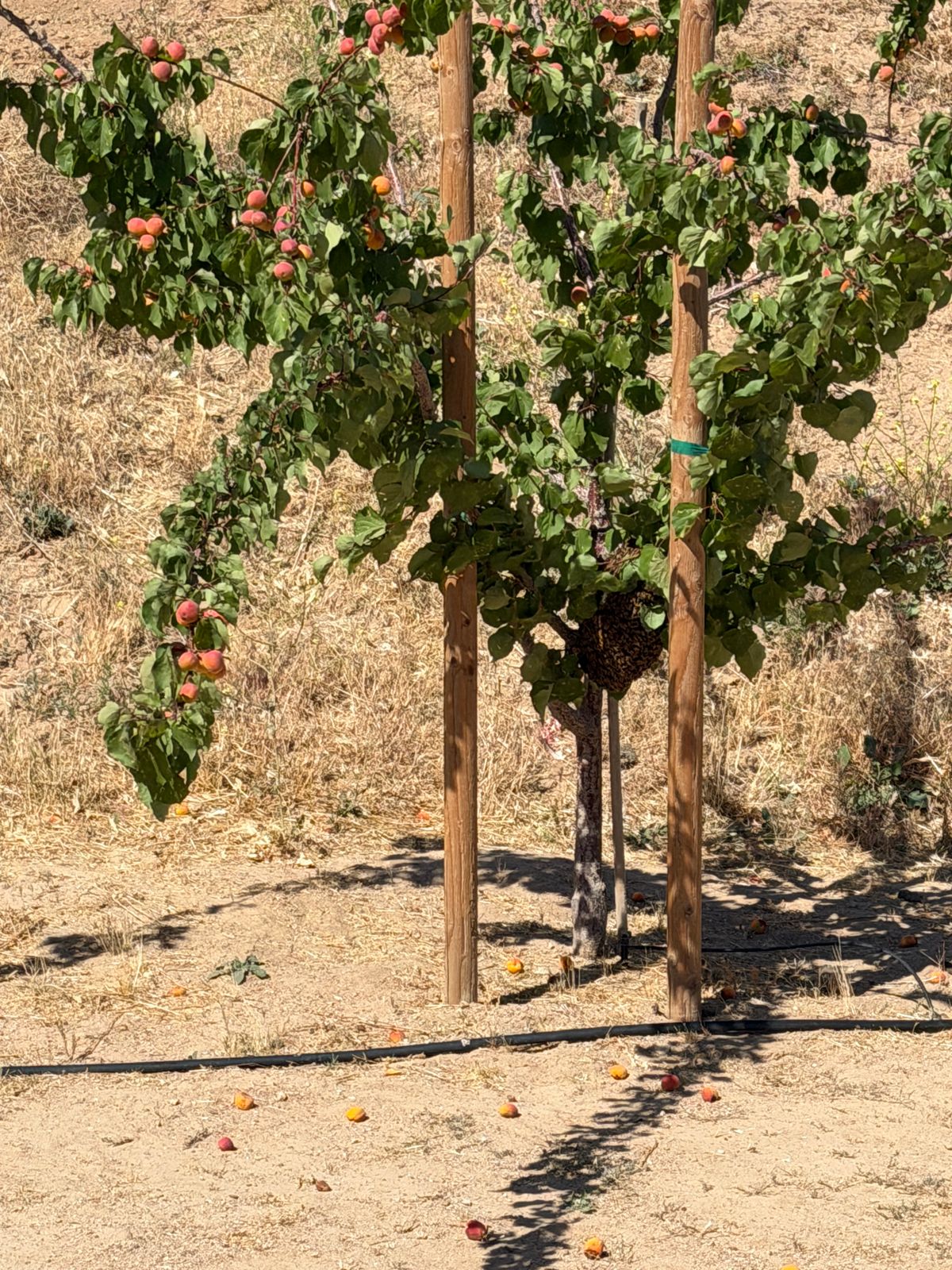
A Beekeeper's Guide to Swarm Collection in Idaho Spring has arrived in the Gem State, and with it, the unmistakable hum of honey bee swarms. For beekeepers, this is a...
Read More...May 18, 2026