
A Beekeeper's Guide to Swarm Season in California
California's Golden Opportunity: Harnessing the Spring Swarm For beekeepers across California, the arrival of spring signals more than just almond blossoms and wildflo...
Read More...May 18, 2026
Home > Blog > History of Honey Bee Swarms Through Time | Swarmed
January 17, 2026

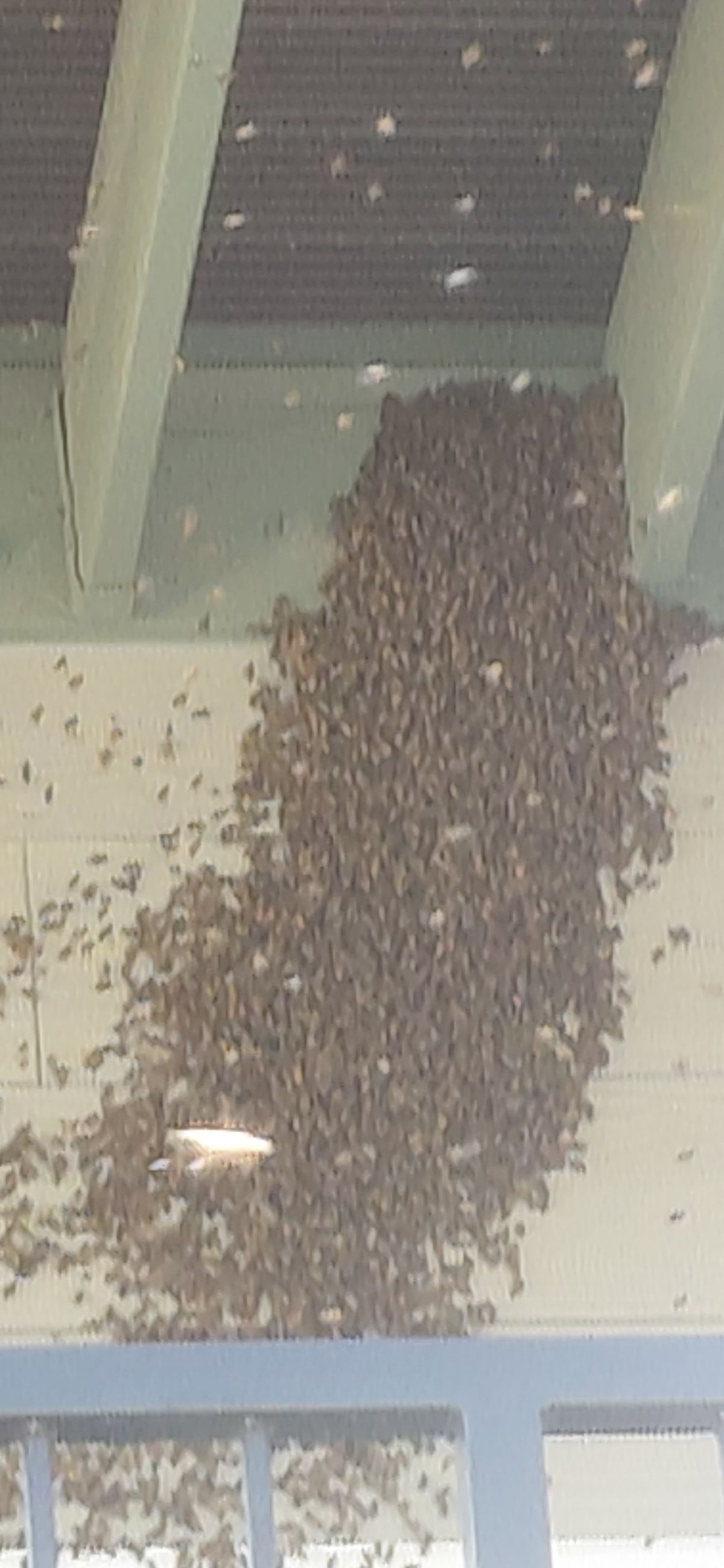
Honey bee swarming is one of nature's most remarkable spectacles, and for millennia, it has captivated human imagination. The phenomenon, where a colony splits and the queen leads half of the bees in search of a new home, has been observed and revered across cultures—from ancient civilizations to modern beekeeping. Let’s take a deep dive into the history of bee swarming, exploring the myths, practices, and technological advancements that have shaped beekeeping over thousands of years.
The relationship between humans and honey bees dates back thousands of years, with early civilizations recognizing the value of bees not only for their honey and wax but for their spiritual and symbolic significance.
Egypt: Swarms as Symbols of Divinity
In ancient Egypt, bees were considered sacred creatures. They were associated with the sun god Ra, whose tears were said to transform into bees upon touching the ground. The importance of bees was so profound that honey was often buried with the dead to provide sustenance in the afterlife. Swarms were seen as divine signs, and beekeeping was highly respected—so much so that it was depicted in hieroglyphs, with the bee symbol representing royalty.
Interestingly, Egyptian beekeepers practiced migratory beekeeping, transporting hives along the Nile on boats to follow the blooming of flowers. This method was likely used to manage swarms by keeping colonies well-fed and preventing the overcrowding that leads to swarming.
Greece and Rome: The Mythology of the Swarm
In ancient Greece, bees and their swarming behavior were intertwined with myth and religion. The god Aristaeus, known as the protector of herdsmen and beekeepers, was said to have received the gift of beekeeping from the nymphs. According to Greek mythology, Aristaeus’s bees died as punishment for his actions, and he was advised to make sacrifices to the gods. Afterward, bees were miraculously reborn from the carcasses of the animals he sacrificed, a myth symbolizing renewal and rebirth. This myth reflects the mysterious nature of swarming, as bees were seen to emerge from seemingly nowhere.
- Greek Beekeeping: Beekeeping was advanced in Greece, with scholars like Aristotle studying bees’ behavior in detail. Aristotle wrote about swarming in his work History of Animals, observing how colonies would split and form new hives, though the exact mechanics of swarming were not fully understood at the time.
In Rome, bees and their swarming behavior were also revered. The Roman poet Virgil, in his epic poem The Georgics, provided instructions on how to catch and care for swarms. Virgil described swarming as a wondrous, yet dangerous event, where the air would fill with bees searching for a new home, and urged beekeepers to use smoke and music to calm and capture the swarm.
Medieval European Traditions: The Swarm and the Soul
By the medieval period, bee swarms were shrouded in superstition and folklore. Bees were often believed to be messengers of the gods, carrying the souls of the departed, which is why beekeepers were expected to "tell the bees" when a major life event, like a birth, death, or wedding, occurred. If this ritual was neglected, it was believed that the bees would abandon their hives or cease to produce honey.
Medieval beekeepers also believed that swarming could be influenced by magic or divine intervention. To attract swarms, some beekeepers would recite prayers or cast protective spells over their hives. The ringing of church bells was often used to calm swarming bees and prevent them from flying away—although this practice likely had more to do with the loud sound startling the bees and encouraging them to cluster together, rather than any mystical properties.
- Medieval Bee Gardens: Monasteries often had dedicated bee gardens where monks cultivated bees for honey and wax production. Beeswax was particularly valuable for candle-making, which was essential for religious ceremonies. The monks also practiced swarm catching, using smoke to calm bees and aromatic herbs like thyme to attract swarms into new hives.
The Renaissance: Observation and Discovery
During the Renaissance, scholars and beekeepers began to apply scientific principles to the study of bee behavior, including swarming. The development of the printing press enabled the spread of knowledge, with early beekeeping manuals becoming widely available. These texts documented observations about the swarming process, such as the formation of queen cells, the role of the queen, and the timing of swarms.
- Charles Butler’s Contribution: In 1609, Charles Butler, an English cleric known as the “Father of English Beekeeping,” published The Feminine Monarchie. In this groundbreaking work, Butler refuted the long-held belief that the leader of a swarm was a male “king bee,” revealing instead that the hive was ruled by a female queen. Butler’s observations helped demystify the swarming process and laid the foundation for modern beekeeping practices.
The 18th century brought even more scientific inquiry into the world of beekeeping. French naturalist François Huber made significant strides in understanding bee behavior, including swarming, despite being blind. Huber devised ingenious methods for observing bees, such as a leaf hive that could be opened like a book to reveal the inner workings of the colony without disturbing it.
Huber’s work debunked many myths about swarming, including the misconception that bees followed their queen solely by sight. He discovered that bees are guided by scent and other senses when forming a swarm.
- Scientific Hive Design: The inventions of the 18th and 19th centuries, such as the movable-frame hive by Lorenzo Langstroth in 1852, revolutionized swarm management. This innovation allowed beekeepers to prevent swarming by inspecting and manipulating the hive, providing bees with more space and preventing overcrowding, one of the main triggers of swarming.
Urban Swarming: The Challenge of Beekeeping in Cities
In the modern era, beekeeping has expanded beyond rural farms into urban areas. As cities have embraced rooftop gardens and urban agriculture, swarming has become a more frequent occurrence in densely populated environments. Urban beekeepers face unique challenges when managing swarms in crowded neighborhoods, where bees might settle in inconvenient or even dangerous places.
- Public Response to Swarming: Public perception of swarms has shifted over time. While they were once feared, many people today understand that swarming bees are typically not aggressive and are focused on finding a new home. Educational campaigns, spearheaded by beekeepers, have helped dispel myths and encourage people to report swarms to beekeepers rather than resort to extermination.
As beekeeping has evolved, so too has the management of swarms. When someone spots a swarm, they can quickly report it using on Swarmed (opens in a new tab) to notify nearby beekeepers who will safely capture and relocate the swarm. This ensures that the bees are protected and continue to play their vital role in pollination.
In many ways, the practices of ancient civilizations, from the Egyptians transporting hives along the Nile to the medieval monks ringing bells to gather bees, have been preserved and modernized. Today’s beekeepers, equipped with centuries of knowledge and the latest technology, continue to uphold these traditions while ensuring the survival of honey bee populations.
The history of honey bee swarms is a testament to the enduring relationship between humans and bees. From the myths and rituals of ancient Egypt and Greece to the scientific discoveries of the Renaissance and the technological advancements of the modern era, humans have long been fascinated by swarming bees.
While the methods for managing swarms have evolved, the essential nature of swarming has remained unchanged—a vital process that ensures the health and growth of honey bee colonies. Today, as we face global challenges such as climate change and habitat loss, protecting swarming bees has become even more critical.
By reporting swarms on Swarmed (opens in a new tab) or by contacting your local association, you can help ensure the continued survival of these incredible creatures. Whether you’re a beekeeper or simply a concerned citizen, taking action to protect swarming bees is a small step that makes a big difference in safeguarding our environment and food supply.
California's Golden Opportunity: Harnessing the Spring Swarm For beekeepers across California, the arrival of spring signals more than just almond blossoms and wildflo...
Read More...May 18, 2026

A Beekeeper's Guide to Swarm Collection in Idaho Spring has arrived in the Gem State, and with it, the unmistakable hum of honey bee swarms. For beekeepers, this is a...
Read More...May 18, 2026