
A Beekeeper's Guide to Swarm Season in California
California's Golden Opportunity: Harnessing the Spring Swarm For beekeepers across California, the arrival of spring signals more than just almond blossoms and wildflo...
Read More...May 18, 2026
Home > Blog > Science Behind Honeybee Swarms: Queen Bee's Role Explained
January 17, 2026

Swarming is one of the most captivating and essential behaviors of honeybees. For beekeepers, understanding the science behind honeybee swarms is crucial to maintaining healthy colonies and managing hive growth. But beyond practical management, swarming plays a vital role in the lifecycle of bees, their survival in the wild, and even the future of beekeeping itself.
In this post, we’ll explore why honeybees swarm, what happens during a swarm, and how beekeepers can harness this natural behavior for the benefit of their hives.
What Is Swarming and Why Do Honeybees Do It?
Honeybee swarming is the process by which a single colony splits into two or more colonies. This phenomenon usually occurs during the spring and early summer when the hive becomes overcrowded, and resources are plentiful. The reigning queen and about half the worker bees leave the original hive in search of a new home. Meanwhile, the remaining bees stay behind to raise a new queen and keep the original colony thriving.
Swarming is primarily a form of reproduction on the colony level. While individual bees reproduce through egg-laying, swarming allows the entire colony to multiply. This ensures not only genetic diversity but also the bees' ability to spread and adapt to different environments. It’s a survival mechanism that’s been honed through millions of years of evolution.
Swarming is also triggered by environmental factors such as the availability of nectar and pollen, weather conditions, and the space available within the hive. When the hive is too crowded and resources are abundant, the bees receive signals to prepare for a swarm. For more information on the swarming process and its triggers, visit the University of Florida IFAS Extension (opens in a new tab), which offers detailed research on honeybee biology and behavior.
The Swarming Process: From Preparation to Departure
The swarming process begins long before the bees actually take flight. The hive must first create new queens. Worker bees start by constructing special “queen cells,” larger than the standard cells where worker bees are raised. The current queen will lay eggs in these cells, and the workers will feed the larvae royal jelly, a nutrient-rich substance that allows them to develop into queens.
As the new queens grow, the old queen and the workers preparing to swarm begin gorging on honey, which fuels their journey. Once the first queen cells are capped, signaling that the new queens are ready to emerge soon, the old queen and her followers prepare to leave.
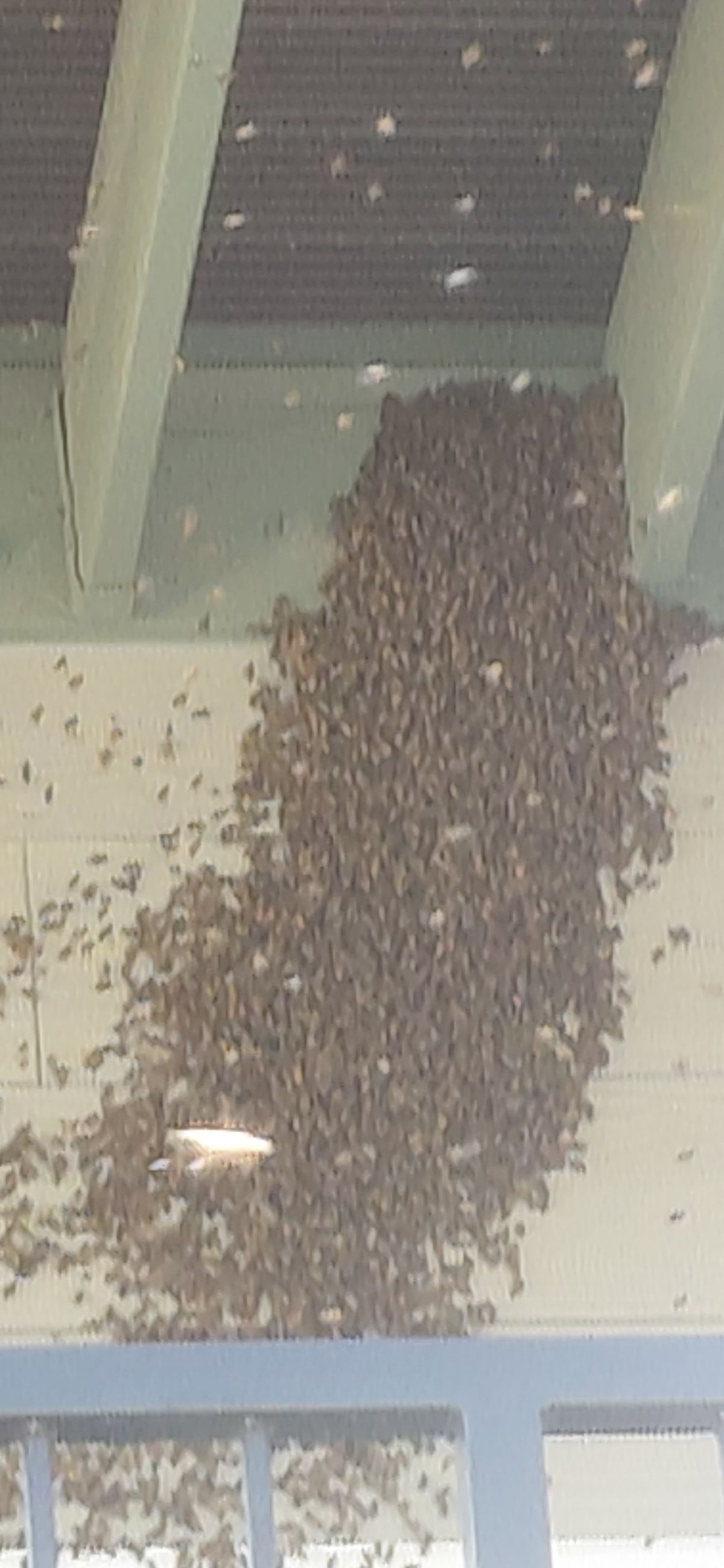
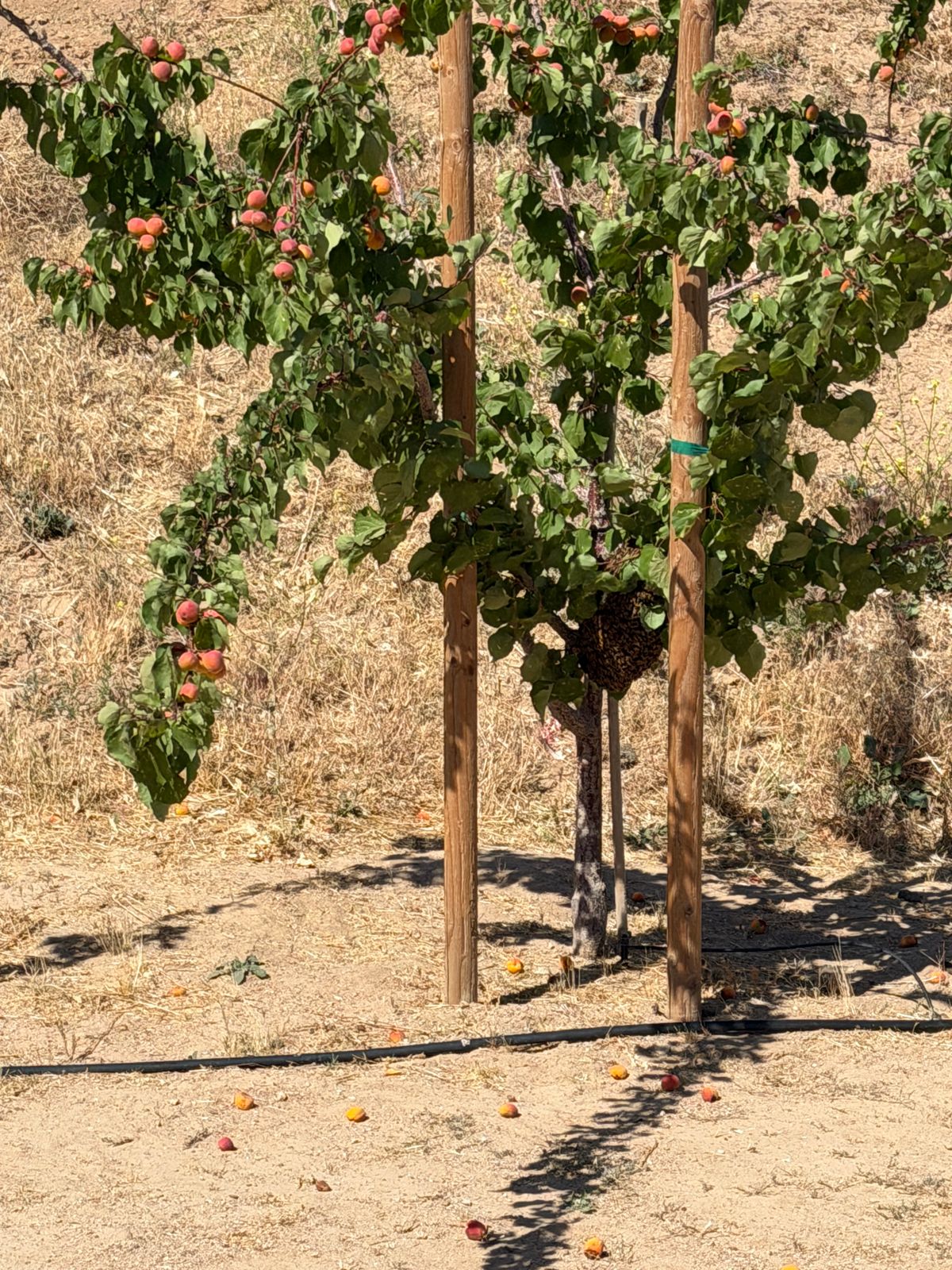
When the conditions are right—usually a warm, sunny day—the swarm takes off. The queen is accompanied by thousands of worker bees, and together they form a dense, swirling mass. This swarm will often rest on a nearby tree branch or structure while scout bees search for a suitable new home. During this time, the swarm is relatively docile and focused on finding shelter.
Once the scouts have identified a new location, which could be a hollow tree, an empty hive, or sometimes even a building, the swarm will relocate to its new home and begin building comb, gathering food, and establishing their new colony. More detailed insight into the scout bees' behavior and how they select new homes can be found in the work of Dr. Thomas Seeley, author of Honeybee Democracy, or via Cornell University's Honey Bee Research Program (opens in a new tab).
Why Swarms Matter for Beekeeping
For beekeepers, understanding and managing swarms is key to maintaining healthy, productive colonies. While swarming is a natural process, it can lead to a decrease in honey production and, in some cases, the loss of bees if the swarm is not captured and rehoused.
However, swarming can also provide beekeepers with opportunities. Capturing a swarm can result in a new, healthy colony, expanding the beekeeper’s operation. Some beekeepers even encourage swarming as a way to create new hives without purchasing bees from outside sources. Swarms can also be an indicator of a thriving colony, as bees only swarm when the hive is robust and resources are plentiful.
To manage swarming, beekeepers can employ several strategies, including:
Understanding the triggers and timing of swarming helps beekeepers maintain stronger colonies while allowing for natural growth and expansion. Those who embrace this knowledge are better equipped to foster sustainable beekeeping practices.
The Role of Swarms in Bee Conservation
Beyond their practical implications for beekeeping, swarms play an important role in bee conservation. Swarming allows bees to colonize new areas, which is crucial in maintaining the genetic diversity of honeybee populations. In the wild, swarms can help repopulate areas where bee colonies have been lost due to disease, habitat destruction, or environmental changes.
For beekeepers and conservationists alike, preserving and understanding the swarming process is vital for the long-term health of bee populations. Capturing and rehousing swarms not only helps beekeepers grow their apiaries but also contributes to the overall health of the local ecosystem. Bees are essential pollinators, and supporting their natural behaviors ensures that they can continue to thrive and fulfill their ecological roles.
Organizations like The Xerces Society (opens in a new tab) provide valuable information on the role of honeybees in ecosystems and the importance of maintaining healthy populations for the benefit of biodiversity.
Final Thoughts
Swarming is one of the most fascinating aspects of honeybee behavior. Though it can present challenges for beekeepers, it also offers opportunities to expand colonies and ensure the health of honeybee populations. By understanding the science behind swarming, beekeepers can develop better practices to manage their hives while promoting sustainability and conservation.
Swarmed (opens in a new tab) offers resources and advice for both new and experienced beekeepers. Sign up to receive notifications when a swarm is reported near you, or report a swarm.
California's Golden Opportunity: Harnessing the Spring Swarm For beekeepers across California, the arrival of spring signals more than just almond blossoms and wildflo...
Read More...May 18, 2026
A Beekeeper's Guide to Swarm Collection in Idaho Spring has arrived in the Gem State, and with it, the unmistakable hum of honey bee swarms. For beekeepers, this is a...
Read More...May 18, 2026