Honeybee Democracy: What Swarms Can Teach Us
A Lesson in Democracy from the Natural World Each spring, as the world awakens, honey bee colonies also stir with the instinct for expansion. This drive culminates in...
Read More...May 14, 2026
Home > Blog > 5 Signs a Bee Swarm is Nearby (And What to Do Next)
May 14, 2026
Spring brings warmer weather, blooming flowers, and one of nature’s most fascinating spectacles: the honey bee swarm. While a large mass of bees might seem alarming, it’s a perfectly natural and vital part of the honey bee life cycle. Understanding the signs of a nearby swarm can help you act correctly, ensuring both your safety and the bees' survival.
A swarm is a method of reproduction for a honey bee colony. When a colony becomes overcrowded, the old queen will leave with roughly half of the worker bees to find a new home. The remaining bees stay behind to raise a new queen.
The bees that leave are a swarm. They are a transient cluster of bees, temporarily resting while scout bees search for a suitable permanent location. During this phase, the bees are remarkably docile. They have filled their stomachs with honey for the journey and have no home, brood, or food stores to defend.
This is very different from an established colony. If a swarm moves into a structure like a wall, attic, or shed, they build wax comb and begin raising young. At this point, they are no longer a swarm; they are an established hive. These bees will be defensive of their home, and their removal is a complex, specialized task known as a "cutout," which typically involves a fee. This is why it's so important to act quickly when you spot a swarm.
Recognizing the signs of swarming activity allows you to alert a beekeeper before the bees settle into an inconvenient location.
One of the earliest signs is a noticeable uptick in the number of bees in your area. You might see hundreds or even thousands of bees flying in a coordinated, determined fashion. This isn't just a few bees foraging on flowers; it's a directed movement, often looking like a river of bees in the air. This is the colony beginning to leave its original hive.
The collective hum of 10,000 to 30,000 bees flying together creates a powerful, low-frequency buzz that is often compared to the sound of a small engine or a low-flying aircraft. If you hear an unusually loud and persistent buzzing that you can't immediately identify, it could very well be a swarm in transit.
As the swarm moves through the air, it often forms a swirling, dynamic cloud of bees. This "bee tornado" can be an awe-inspiring sight. The cluster moves as one, with the queen protected in the center, as they travel from their old home toward a temporary resting spot. This airborne phase is usually short-lived, lasting from a few minutes to an hour.
Before the main swarm arrives at its final destination, scout bees are sent out to find potential new homes. You may notice a few bees meticulously inspecting small openings on your property—eaves, vents, holes in walls, or empty flower pots. They are measuring the cavity and assessing its suitability. If you see this behavior, a swarm may be considering your home for its new residence, making it a critical time to act.
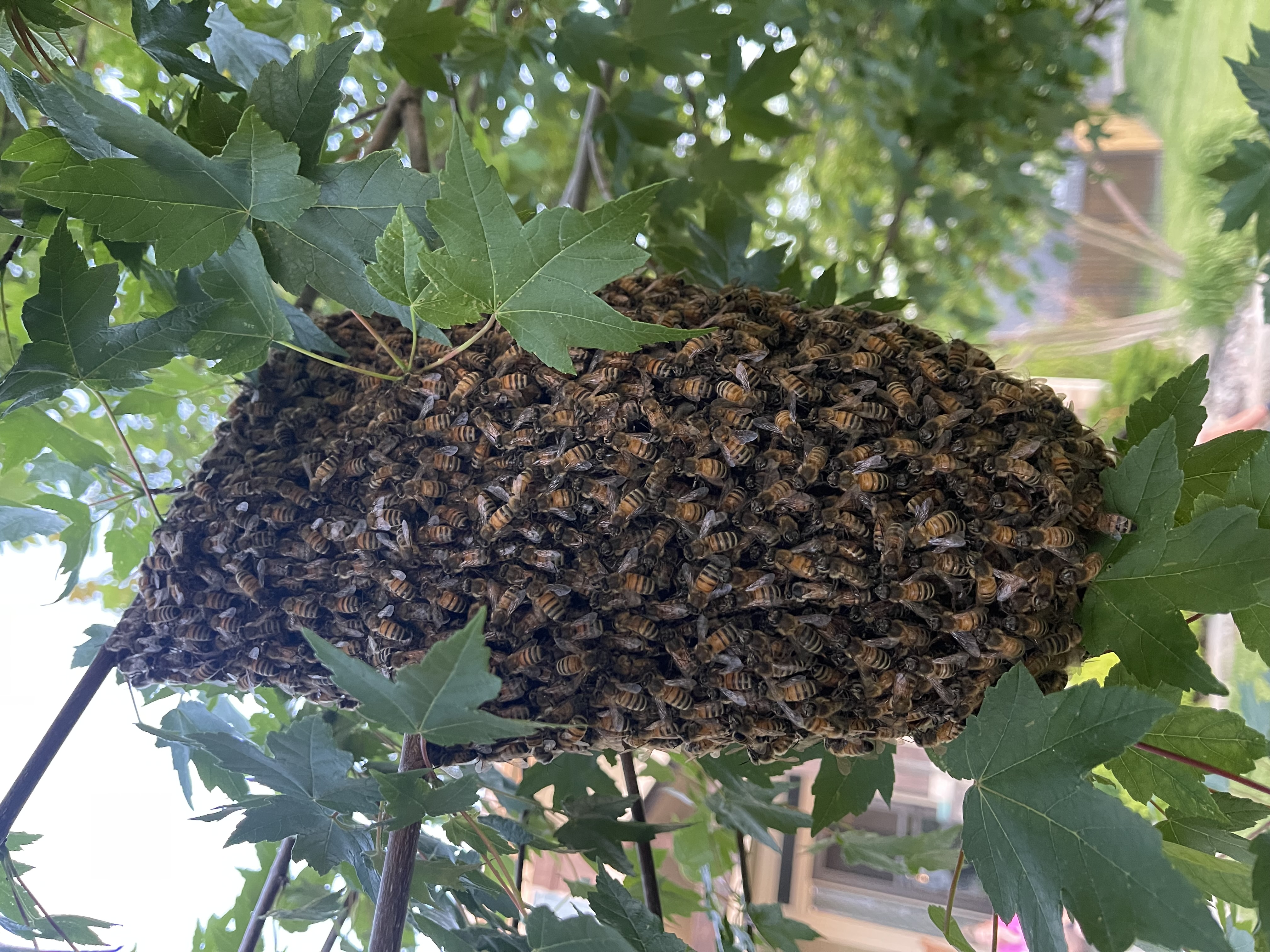
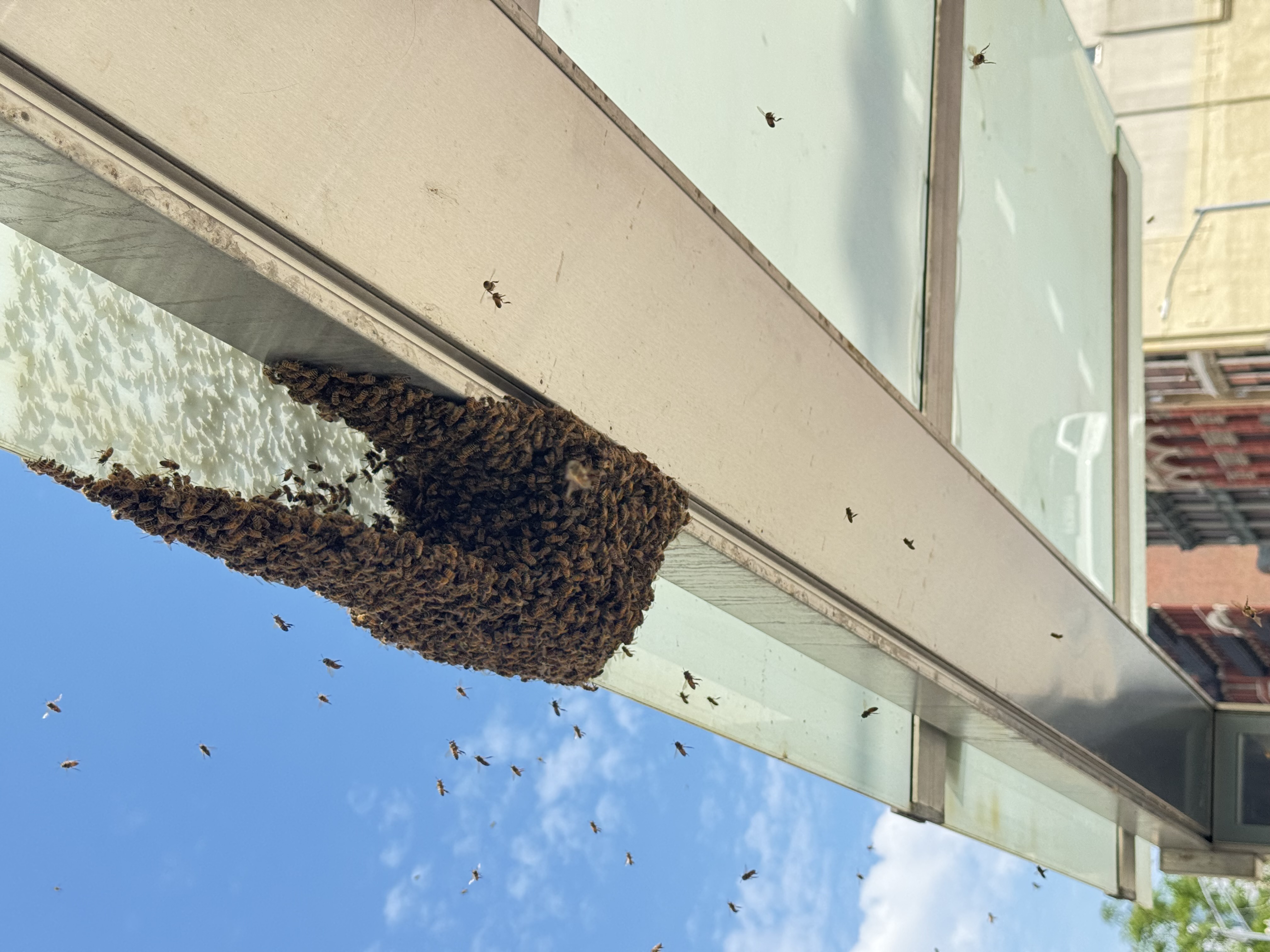
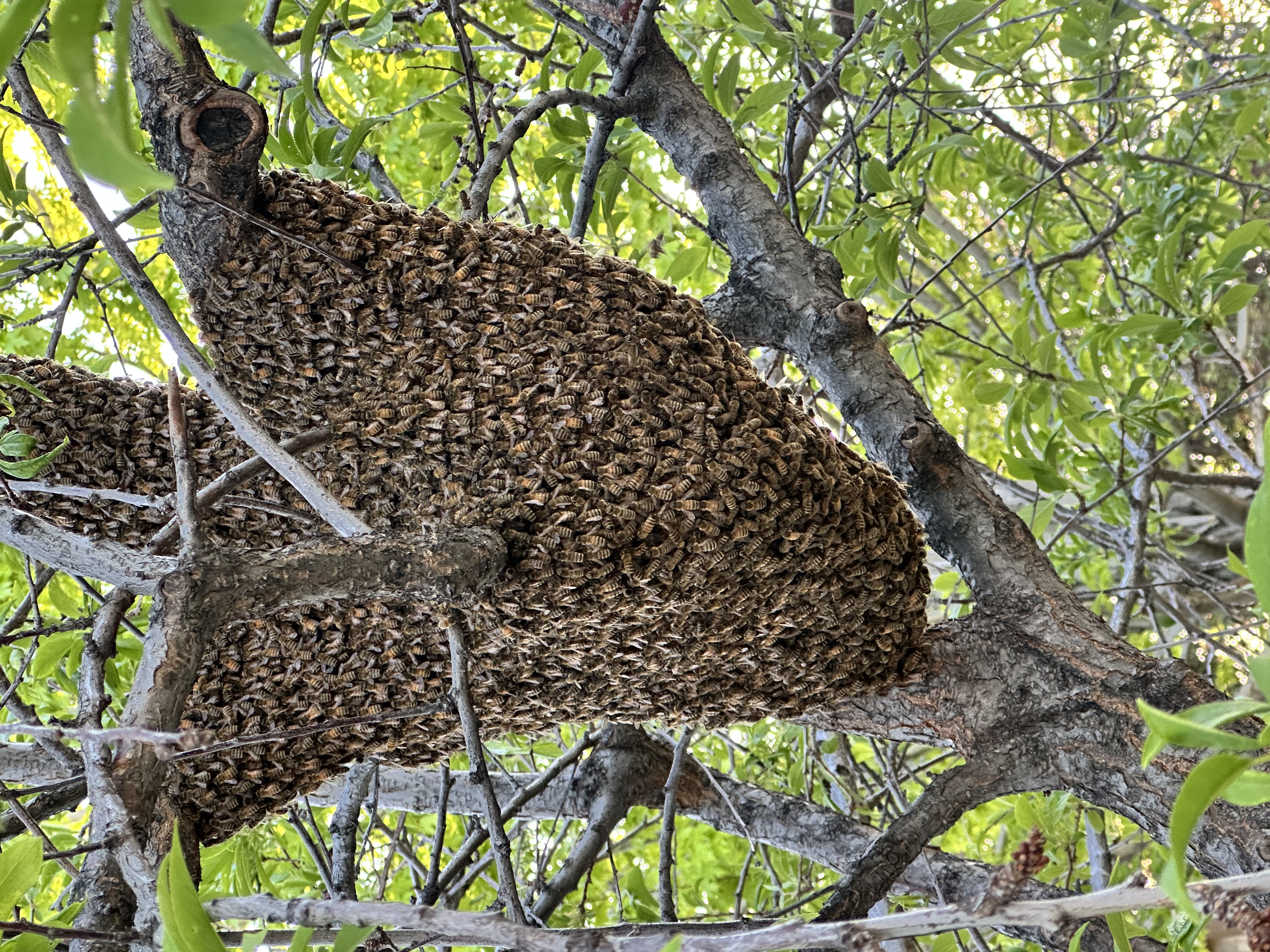
This is the most definitive and commonly recognized sign. The swarm has temporarily landed to rest. They will form a dense, beard-like cluster around their queen, often on a tree branch, fence post, mailbox, or piece of outdoor furniture. This cluster can range from the size of a grapefruit to a basketball. The bees will remain here for a few hours or, in some cases, a couple of days while the scouts finalize their search for a permanent home.
If you see any of these signs, especially a clustered swarm, follow these simple steps.
Rescuing a swarm is a service that beekeepers are typically happy to provide for free. By reporting it, you are preventing the bees from moving into a wall where their removal would become costly and difficult.
Honey bees are essential for pollinating a vast portion of the food we eat. When you report a swarm, you are playing an active role in their protection. Instead of becoming a pest control problem, the colony is given a safe, managed home where it can thrive and continue its important work of pollination.
Platforms like the Swarmed network connect people who spot swarms with local beekeepers who are ready to help. The process is simple and helps ensure a positive outcome for everyone involved—the homeowner, the beekeeper, and most importantly, the bees.
By reporting a honey bee swarm, you become a vital part of the solution for protecting these essential insects. It's a simple act of community cooperation that supports local beekeepers and strengthens our ecosystem. If you see a swarm, don't wait for it to move into an inconvenient spot. Help protect our pollinators by reporting it to a local beekeeper through the Swarmed network at https://beeswarmed.org/report-bee-colony (opens in a new tab).
A Lesson in Democracy from the Natural World Each spring, as the world awakens, honey bee colonies also stir with the instinct for expansion. This drive culminates in...
Read More...May 14, 2026
Seeing a Swarm is Seeing Nature in Action During the warm days of late spring, you might look out your window and see something astonishing: a large, buzzing cluster o...
Read More...May 14, 2026
