
A Beekeeper's Guide to Swarm Season in California
California's Golden Opportunity: Harnessing the Spring Swarm For beekeepers across California, the arrival of spring signals more than just almond blossoms and wildflo...
Read More...May 18, 2026
Home > Blog > 5 Honey Bee Swarm Facts to Ease Your Worries
May 14, 2026
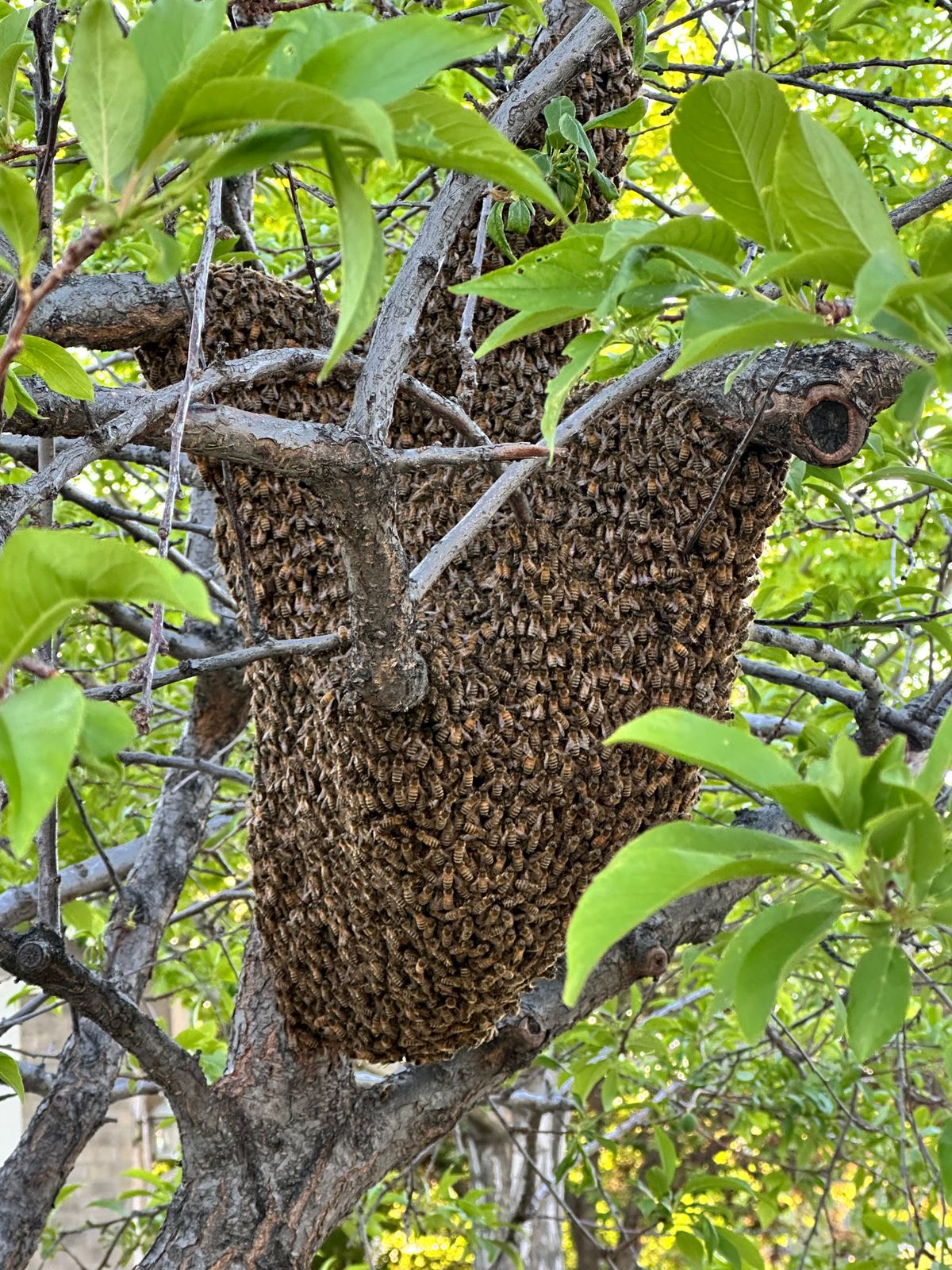
The sight of a large, buzzing cluster of thousands of honey bees can be startling. During the spring, as flowers bloom and temperatures rise, honey bee colonies that have grown strong over the winter begin to reproduce. This process, called swarming, is a natural and essential part of the honey bee life cycle. Yet, it is widely misunderstood. Understanding the facts about a honey bee swarm can transform apprehension into appreciation and empower you to take helpful, community-oriented action.
This article offers five key reasons why a honey bee swarm is not a cause for alarm, but rather an opportunity to help these vital pollinators.
A primary source of fear surrounding bee swarms is the potential for stings. However, honey bees in a swarm are at their most gentle. A swarm has no home to defend. There are no baby bees (brood) or honey stores to protect from threats. The bees' collective focus is on one mission: finding a new permanent residence.
Before leaving their original hive, each bee gorges on honey, packing enough fuel for the journey. This makes them full, lethargic, and physically less able to sting. Their goal is conservation of energy, not confrontation. They are simply resting while scout bees search for a suitable new cavity. You can typically walk within a few feet of a swarm without provoking any defensive reaction. An established colony that has built a home in a wall or tree, however, will be highly defensive. It's crucial to understand this difference in behavior.
If you discover a swarm on a tree branch, fence post, or the side of your house, it’s important to know they don't plan to stay. A swarm is a transient group in the process of house-hunting. This resting cluster is a temporary bivouac that typically lasts between 24 and 72 hours.
During this time, hundreds of scout bees fly out in all directions, investigating potential new homes. When they return, they perform a complex “waggle dance” to communicate the location and quality of their findings to the other bees. The colony holds a democratic process, eventually reaching a consensus on the best option. Once a decision is made, the entire swarm will take to the air and fly to their new home. By simply leaving them alone, the “problem” will almost always resolve itself within a day or two.
Far from being a sign of trouble, a swarm indicates that a nearby honey bee colony is so healthy and populous that it has run out of space. It's a natural method of reproduction for the colony as a whole. The old queen leaves with about half of the worker bees to create a new colony, while a new queen is raised in the original hive to continue its legacy.
This natural expansion is critical for the survival and genetic diversity of honey bees. Protecting these swarms supports local pollinator populations, which is especially important in areas where bee health is a concern. For instance, Swarmed network data from Nevada shows a recent declining trend in swarm reports, making the successful rescue of each reported swarm vital for sustaining the local bee population and the ecosystems they support.
Honey bee swarms are a valuable resource for beekeepers. A healthy swarm can be nurtured into a productive, honey-producing colony. Because of this, beekeepers are often eager to rescue swarms at no cost to the property owner. They have the right equipment and expertise to safely house the bees and transport them to a proper apiary.
This is where the distinction between a swarm and an established colony becomes critical. Rescuing a swarm from a branch is a straightforward process. However, if bees have already moved into a structure like a wall, attic, or chimney and have built comb, their removal is a much more complex and labor-intensive job called a “cutout.” This service requires carpentry skills and structural repair, and it is a paid service. A beekeeper will provide a quote based on the difficulty of the removal.
By reporting a swarm, you connect a local beekeeper with a free, healthy colony and ensure the bees are safely relocated instead of being exterminated or moving into an undesirable location.
Honey bees are essential pollinators responsible for about one-third of the food we eat. By encountering a swarm and choosing to act responsibly, you become an important participant in their survival. Instead of reaching for a can of pesticide, you can make a simple report that saves thousands of bees.
Platforms like Swarmed make it easy to connect with local beekeepers who are ready to help. When you report a bee colony on the Swarmed network (opens in a new tab), you provide crucial information that allows a nearby beekeeper to perform a safe and efficient rescue. Your action directly contributes to the health of your local environment and supports the beekeepers who manage these incredible insects.
If you encounter a honey bee swarm, follow these simple steps:
By taking a moment to report what you see, you help protect honey bees, support your local beekeeping community, and ensure these vital pollinators find a safe new home. If you see a honey bee swarm, report it to the Swarmed network (opens in a new tab) to help save the bees.
California's Golden Opportunity: Harnessing the Spring Swarm For beekeepers across California, the arrival of spring signals more than just almond blossoms and wildflo...
Read More...May 18, 2026
A Beekeeper's Guide to Swarm Collection in Idaho Spring has arrived in the Gem State, and with it, the unmistakable hum of honey bee swarms. For beekeepers, this is a...
Read More...May 18, 2026