For beekeepers
Swarm traps: how to build, bait and time one
Written by Mateo Kaiser, University of California certified Master Beekeeper. Last updated .
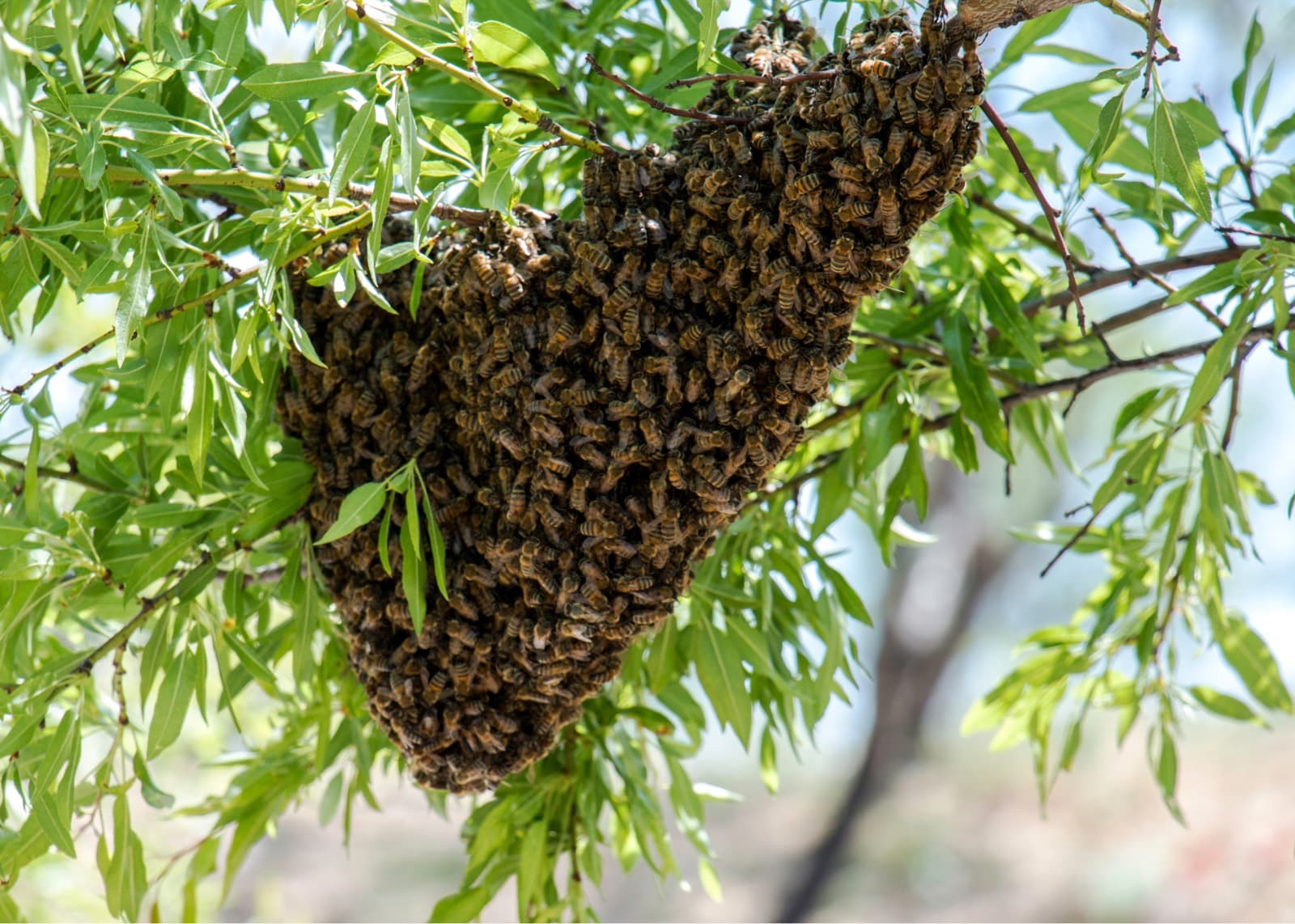
A swarm trap, or bait hive, is an empty box set up to look like the perfect home to the scout bees a swarm sends out house-hunting. Get the box, the bait and the timing right and a colony moves in on its own, for the price of the box. This guide covers all three, with the season’s start for 22 states worked out from the swarms reported to Swarmed.
What scout bees are looking for
Most of what we know about this comes from Thomas Seeley’s nest box experiments at Cornell and on Appledore Island, where he offered swarms a choice of boxes that differed in one thing at a time. The scouts were consistent, and a good trap copies what they chose:
- A cavity of about 40 litres (roughly 11 US gallons). Swarms passed over much smaller and much larger boxes for this size. A single ten-frame deep hive body is close to it, which is why many beekeepers build traps from spare deeps.
- A small entrance, between about 2 and 12 square inches (12 to 75 cm²), near the bottom of the box and facing roughly southeast. A one-inch hole or a reduced slot both work.
- Height off the ground. Scouts favoured boxes high up; the experiments used about 4.5 metres (15 feet). Go as high as you can safely reach, remembering you’ll be lowering it again with a colony inside.
- Dry, dark and solid. No light leaking through seams, a lid that sheds rain, and a box that doesn’t sway in the wind.
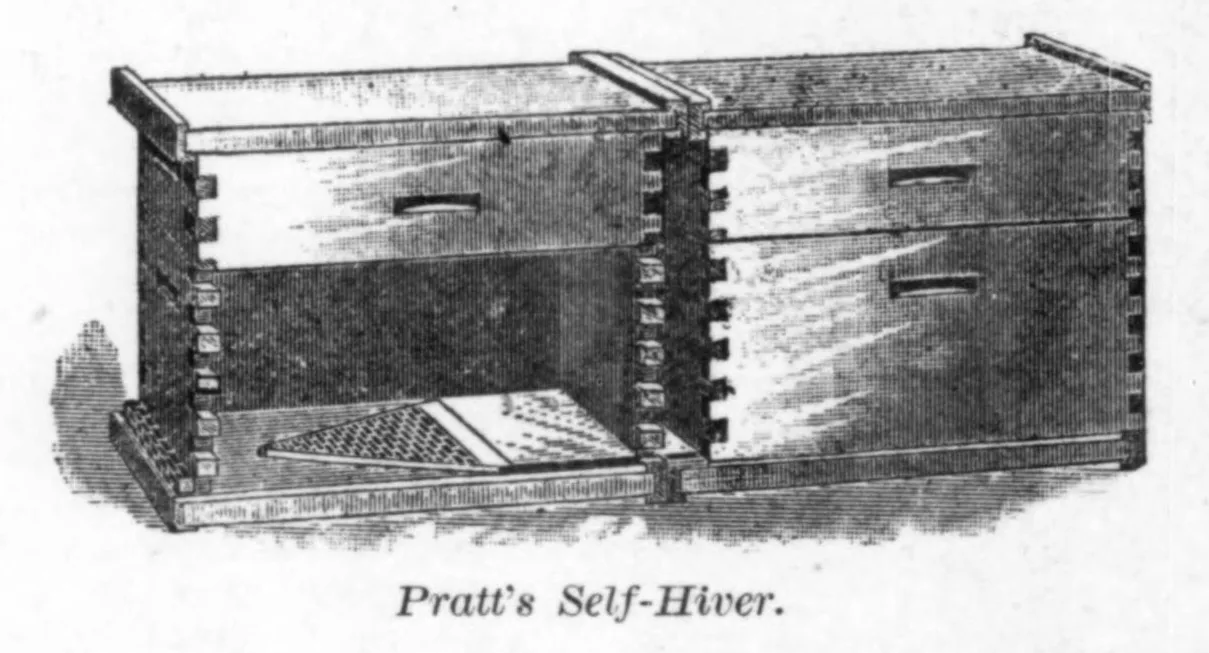
Inside, a few frames make the catch far easier to move later. Use one old, dark brood comb if you have a clean one, and fill the rest with frames carrying starter strips of foundation so the bees build straight comb you can lift out.
Baiting a swarm trap
Scent does most of the work of getting a scout to look inside. The two baits beekeepers rely on:
- Old comb. The smell of a cavity bees have lived in before is the strongest signal there is. Freeze it first to kill wax moth and use comb from a colony you know was healthy, or you can hand a disease to the swarm you catch.
- Lemongrass oil or a commercial lure. Lemongrass smells like the Nasonov pheromone workers fan to call their sisters to a site. A few drops on a cotton swab inside the box is plenty; more can put scouts off, and it fades in a couple of weeks, so refresh it when you check the trap.
When to hang your swarm trap, by state
A trap has to be up before the scouts start searching, which means before the first swarms of the season, not at the peak. The table shows when the first swarms are typically reported in each state, and the point to have traps hung about two weeks earlier.
| State | Hang traps by | First swarms |
|---|---|---|
| Arizona | late February | early March |
| California | early March | late March |
| Georgia | mid March | late March |
| North Carolina | mid March | late March |
| South Carolina | mid March | late March |
| Tennessee | late March | mid April |
| Missouri | early April | mid April |
| Idaho | early April | mid April |
| Oregon | early April | mid April |
| Maryland | early April | mid April |
| Washington | early April | late April |
| Oklahoma | early April | late April |
| Indiana | mid April | late April |
| Ohio | mid April | late April |
| New Jersey | mid April | late April |
| New York | mid April | early May |
| Pennsylvania | mid April | early May |
| Illinois | late April | early May |
| Massachusetts | late April | mid May |
| Michigan | early May | mid May |
| Minnesota | early May | mid May |
| Wisconsin | early May | mid May |
How this is worked out: the date by which the first tenth of each state’s swarm reports had come in, across the 2025 and 2026 seasons (6,433 reports of swarms hanging in the open; colonies already living in walls or trees are left out). A state is listed only when both seasons have enough reports and their start dates agree within two weeks, which is why some large states, Florida and Texas among them, aren’t here yet. Inside a big state the season moves with elevation and latitude, so treat the date as the state’s early edge rather than your garden’s.
Leave traps up through the main season and check them every week or so. Some areas see a smaller second run of swarms later in the summer, so a trap that stays up can still pay off after the spring rush.
Where to hang it
The general rules are easy. A trap right beside your own hives mostly catches your own swarms back, so put some distance between them. A trap near where swarms have turned up before does better than one somewhere swarms never pass. And mature trees nearby are a good sign, because large old trees hold the natural cavities swarms move into.
Turning that into a spot on a map is the hard part, and it’s what Trap Placement on the Swarmed dashboard does. It scores the ground inside your catching radius on four things: where swarms have been reported over the years, how far each spot is from your apiary, how many other beekeepers keep bees close by, and mature tree canopy from satellite imagery. Then it marks the five best spots with numbered pins.

Trap Placement is part of a Contributor membership, which is pay what you want. Swarm alerts by email stay free for every beekeeper.
When a trap catches
Steady traffic of bees carrying pollen in, rather than a few scouts walking around the entrance, means a swarm has moved in. Wait until dusk, when the foragers are home, close the entrance, and bring the box down. Move the frames into a hive within a week or two, before the comb they build fills the gaps and welds itself to the box.
A trap is also only half of a swarm season. Swarms that land on a fence or a branch get reported by whoever finds them, and Swarmed sends those reports to the beekeepers nearby the moment they come in. If you’re weighing traps against buying bees, nucs, packages and caught swarms are compared on cost and timing here.
Sources
- Seeley, T. D. (2010). Honeybee Democracy. Princeton University Press.
- Seeley, T. D. (1977). Measurement of nest cavity volume by the honey bee (Apis mellifera). Behavioral Ecology and Sociobiology, 2(2), 201–227.
- Seeley, T. D., & Morse, R. A. (1978). Nest site selection by the honey bee, Apis mellifera. Insectes Sociaux, 25(4), 323–337.
- Villa, J. D. (2004). Swarming behavior of honey bees (Hymenoptera: Apidae) in southeastern Louisiana. Annals of the Entomological Society of America, 97(1), 111–116.
- Season-start dates: Swarmed swarm reports, 2025 to 2026, method as described above.
Common questions
- How big should a swarm trap be?
- About 40 litres inside, roughly 11 US gallons. In Thomas Seeley's nest box experiments swarms chose that size over much smaller and much larger boxes. A single ten-frame deep hive body with a solid bottom and lid is close to it.
- How high should I hang a swarm trap?
- Scouts prefer cavities well off the ground; the nest box experiments used about 4.5 metres (15 feet). In practice, go as high as you can safely reach, remembering you'll be lowering it again with a colony inside.
- Does a 5 gallon bucket work as a swarm trap?
- It can catch a swarm, but a 5 gallon bucket holds under half the volume scouts prefer, so it loses out to any better cavity nearby, and a colony outgrows it fast. A box closer to 40 litres (about 11 gallons) does better and is easier to move into a hive.
- What is the best bait for a swarm trap?
- Old brood comb from a healthy colony, frozen first to kill wax moth, is the strongest bait. Add a few drops of lemongrass oil or a commercial swarm lure, which smell like the pheromone bees use to mark a site, and refresh it every couple of weeks.
- When should I put out swarm traps?
- About two weeks before the first swarms of the season, which varies widely by state. In swarm reports to Swarmed, the season starts earliest in Arizona (first swarms around early March) and latest of the states we can date in Wisconsin (around mid May).
- Where is the best place to put a swarm trap?
- Away from your own hives, close to places swarms have turned up before, and near mature trees. Swarmed's Trap Placement, part of a pay what you want Contributor membership, scores the ground inside your catching radius on past swarm reports, distance from your apiary, nearby beekeepers and tree canopy, and marks the five best spots.